Featured

“Sacred Ground” ~ Normandy American Cemetery and Memorial

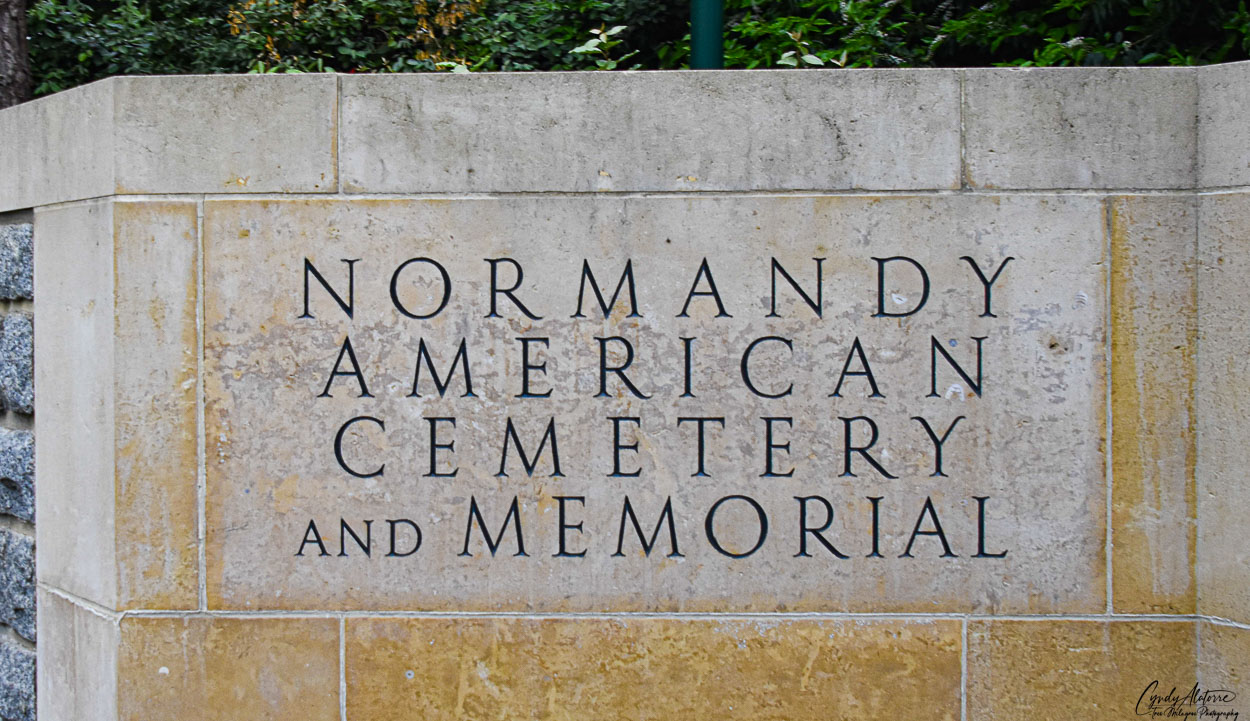
Sacred Ground. That is a pretty good definition of the Normandy American Cemetery and Memorial.  It is a final resting place for the 9,387 U.S. service members , most of whom died on D-Day on June 6, 1944. For some, it is where they come to remember their family member who died that day and for others it may be a pilgrimage to bring closure and healing. Others come to learn and understand. For me, it was our last stop before we wrapped up our trip to the Normandy region and and was the perfect way to end my bucket list trip.

Shortly after the war, France bestowed 172 acres of this beautiful space, just east of the original burial area, to the United States government to create a formal burial area to relocated those killed and immediately buried after the D-Day invasion. This generous act was a token of France’s deep appreciation and thanks to their American liberators for their service and great sacrifice to free their citizens and country.

As we walked along the entrance to the cemetery and memorial, we came across beautiful landscape. It was very pretty but I immediately noticed that it was different from what I had been seeing in the countryside the last few days. There were Pine trees, flowers and foliage I have seen back home. It felt familiar. But why was it here?

Our guide shared with us that in designing this special site, their goal was to create a resting place that would resemble being in the United States. During World War II, the casualties from the D-Day invasion were not returned home and instead were usually interred near where they died. Often families were not able to attend services for their loved one. This was all the more reason that the architects understood the importance and significance of creating a place ” like home” for these service members to be buried at. Utilizing trees, flowers, bushes as well as other greenery native to America, they successfully create a sacred and similar “home” for these allied members to be buried at to rest in peace.
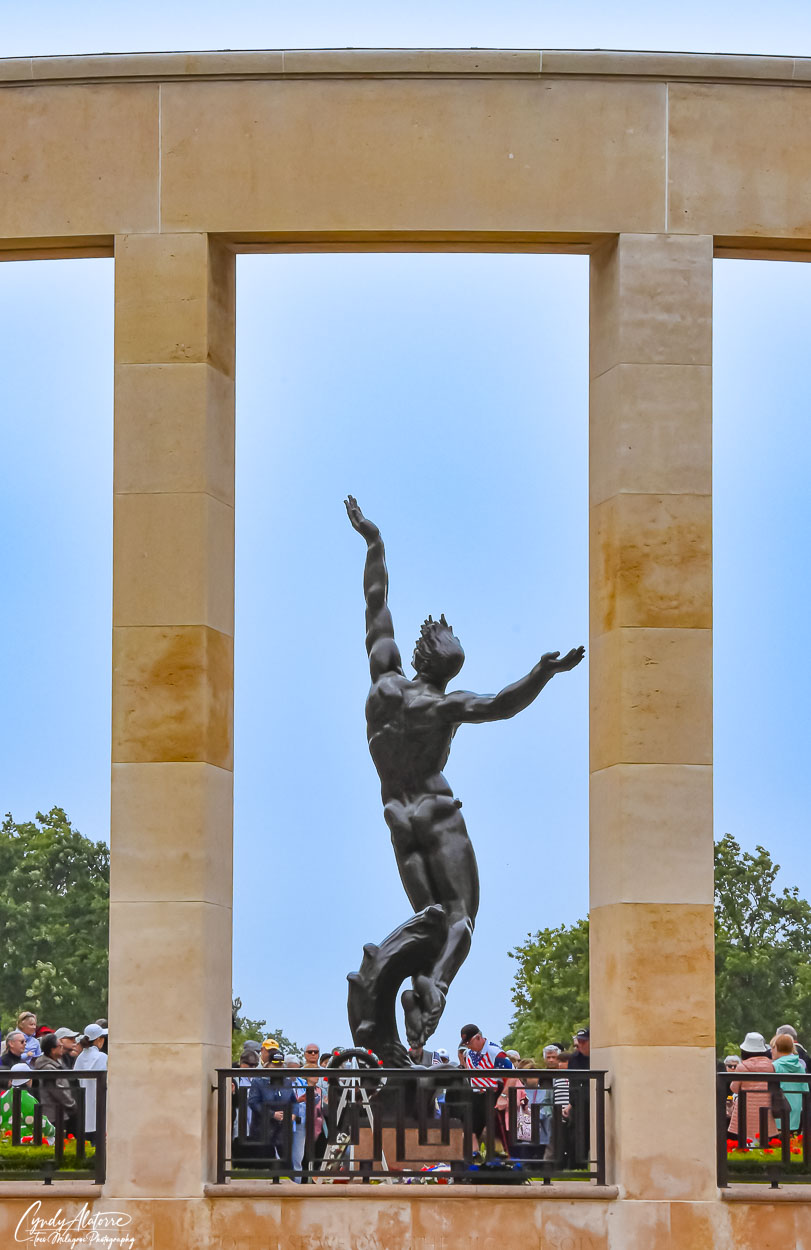
Coming into the memorial you can not help but notice the large and impressive statue between several tall stone columns, whose arms are open wide as if embracing the sky. Looking more like a work of art, my impression was that it was a tribute to the spirit of the young men who died on D-Day. It was beautiful, strong, and in a way gave a sense of hope. It was a reminder of the huge loss of youth and life on the beaches near by and that their spirit lives on.
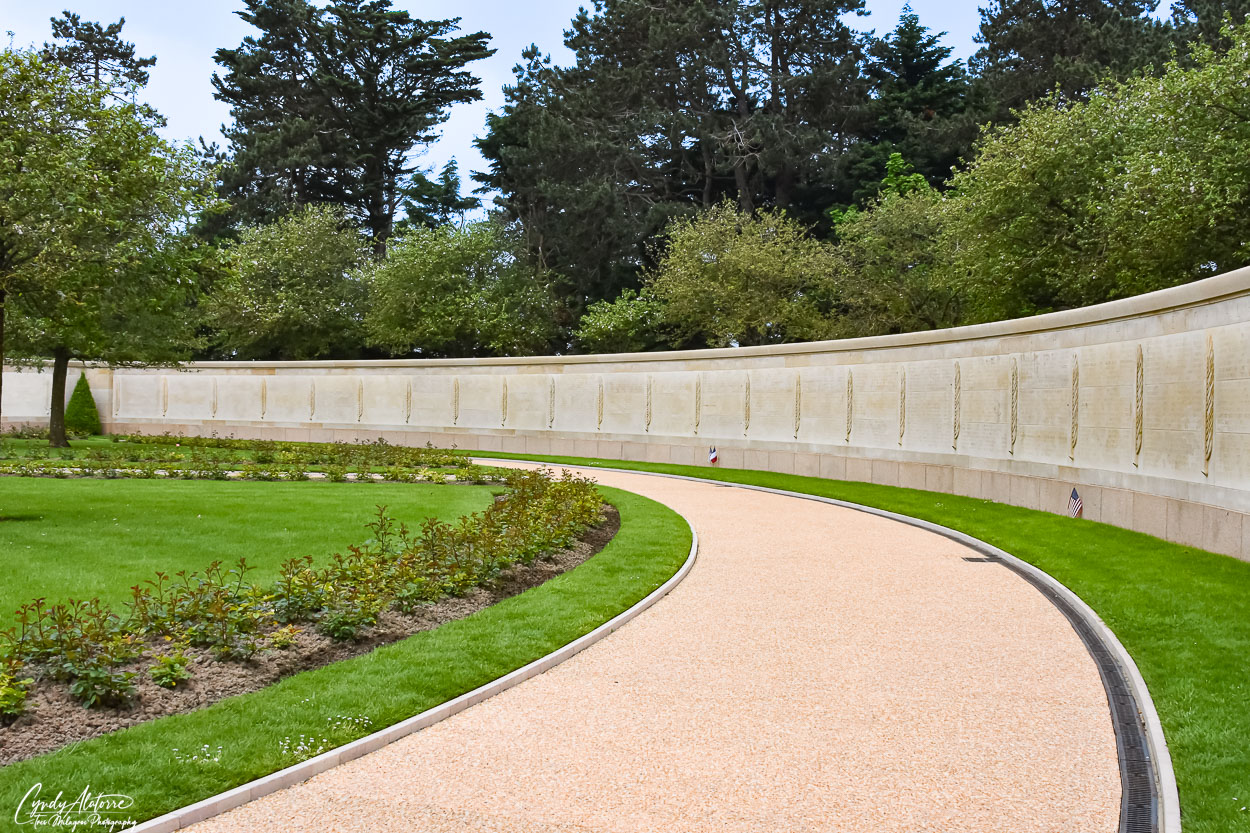
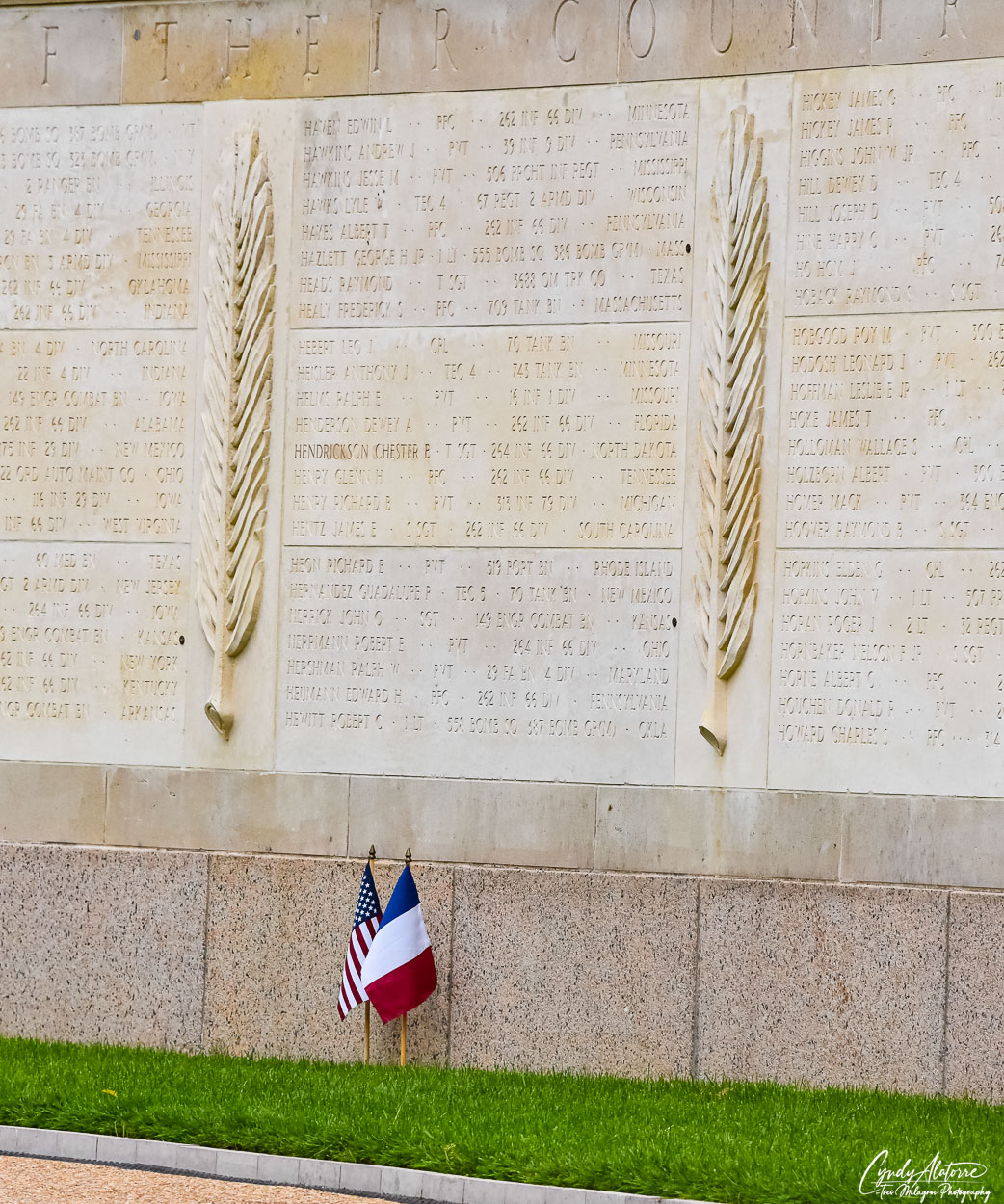
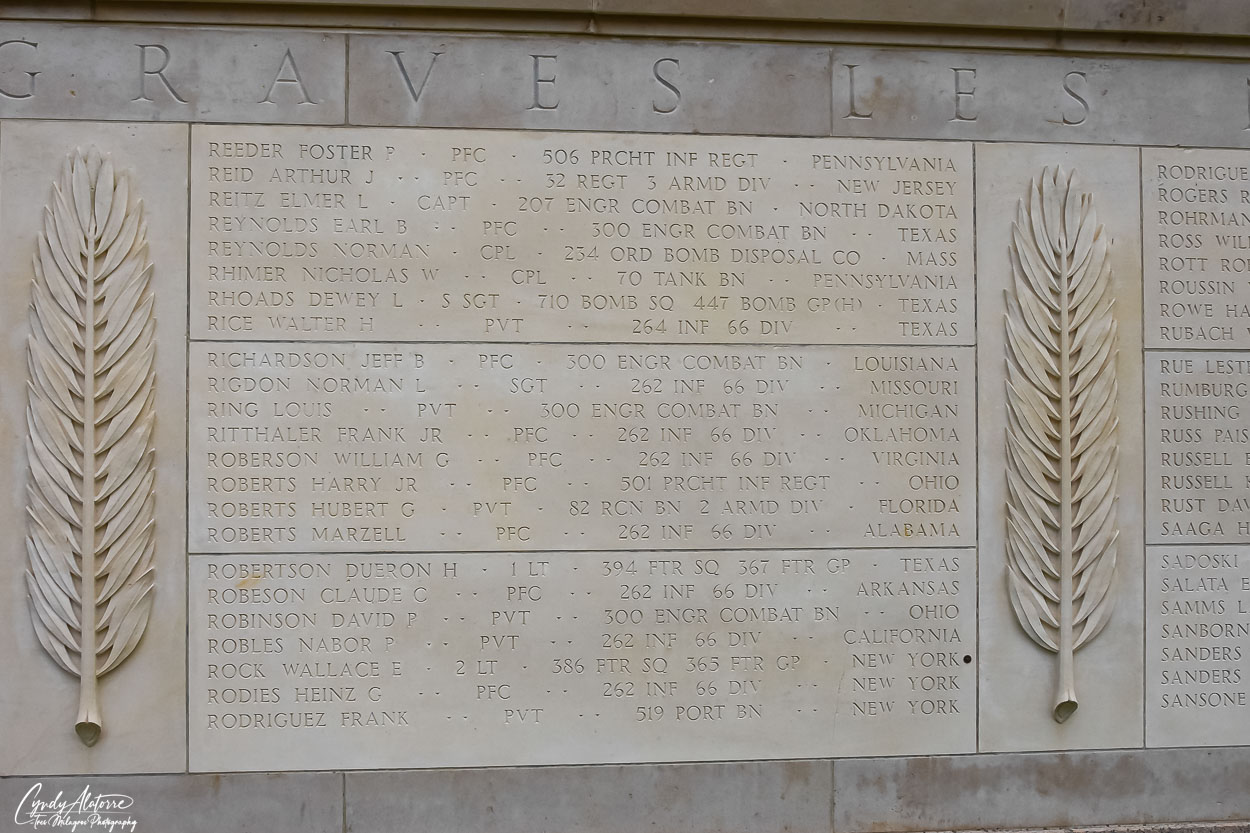
At the rear of the memorial was the Wall of the Missing. This garden is home to the names of 1,557 service members who were killed during the D-Day invasions and were missing or could not be identified or accounted for. The garden consist of roses, grass and trees encircled by two large semicircular walls that have the names of these service members engraved into the stone. There were so many names. It made its point. We were told that every so often, the remains of the servicemen would be found and they were able to render honors and properly bury them. When this happened, they would put a small marker next to the name on the wall to indicate that they had been found. Look at the photograph below and you will see a small black marker next to a name of a servicemen they located.
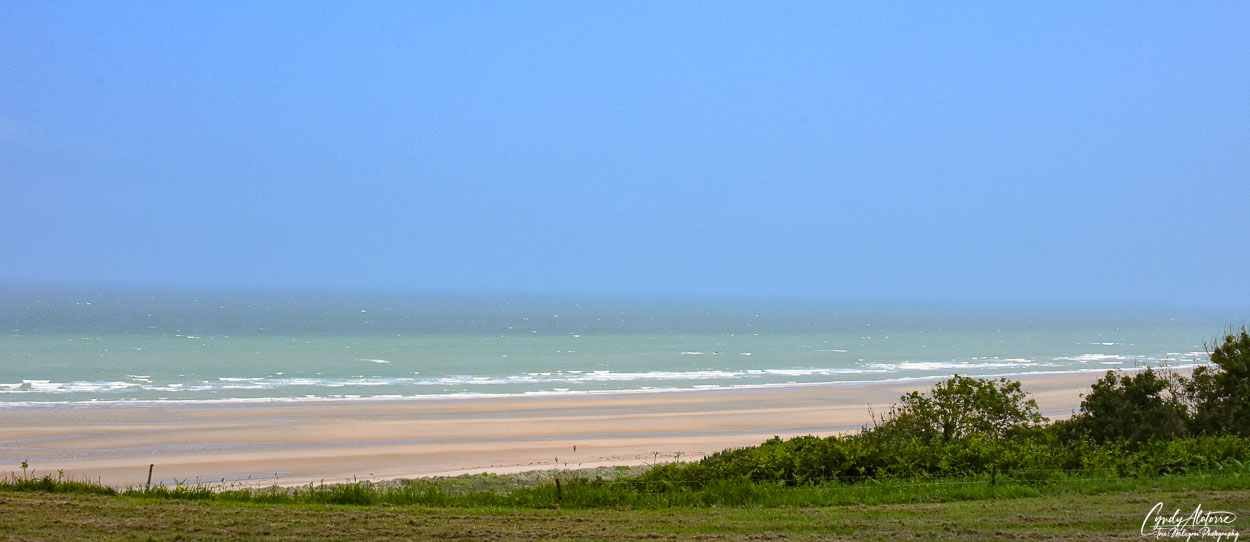
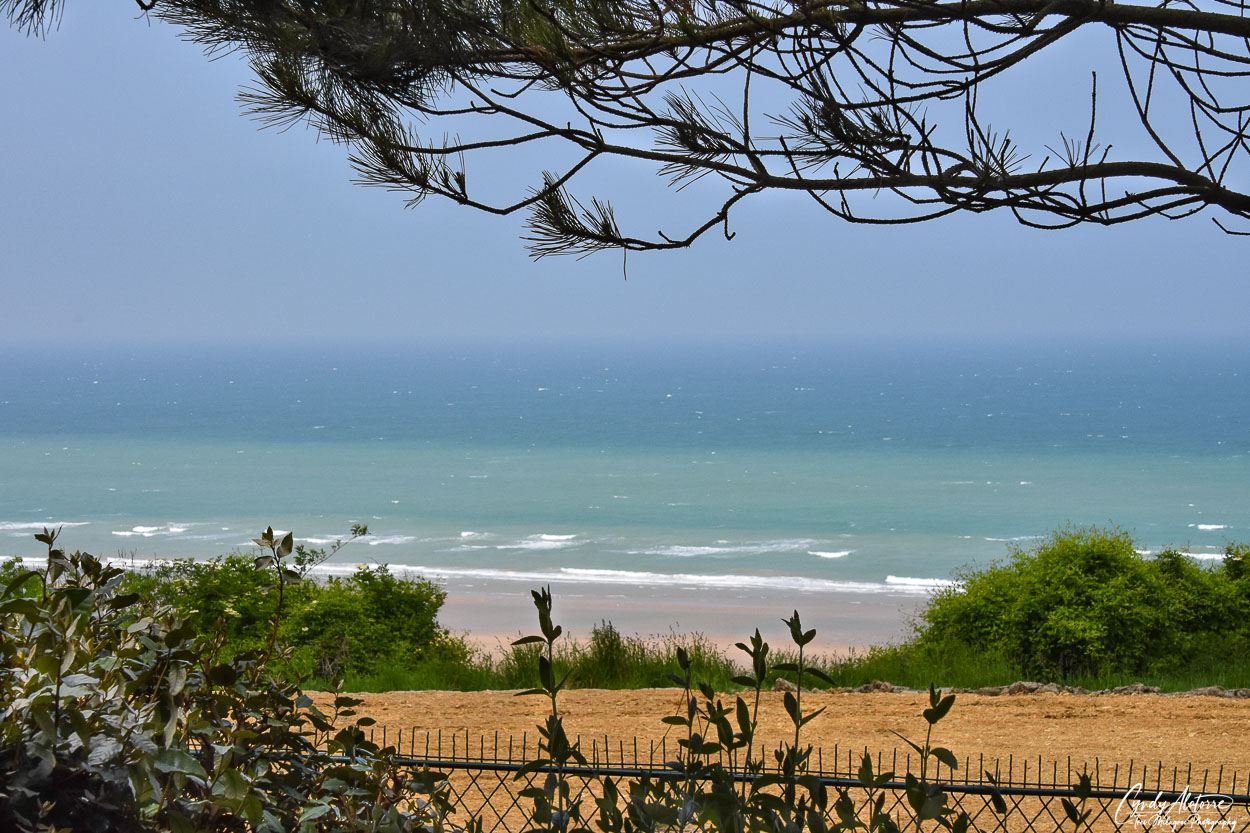
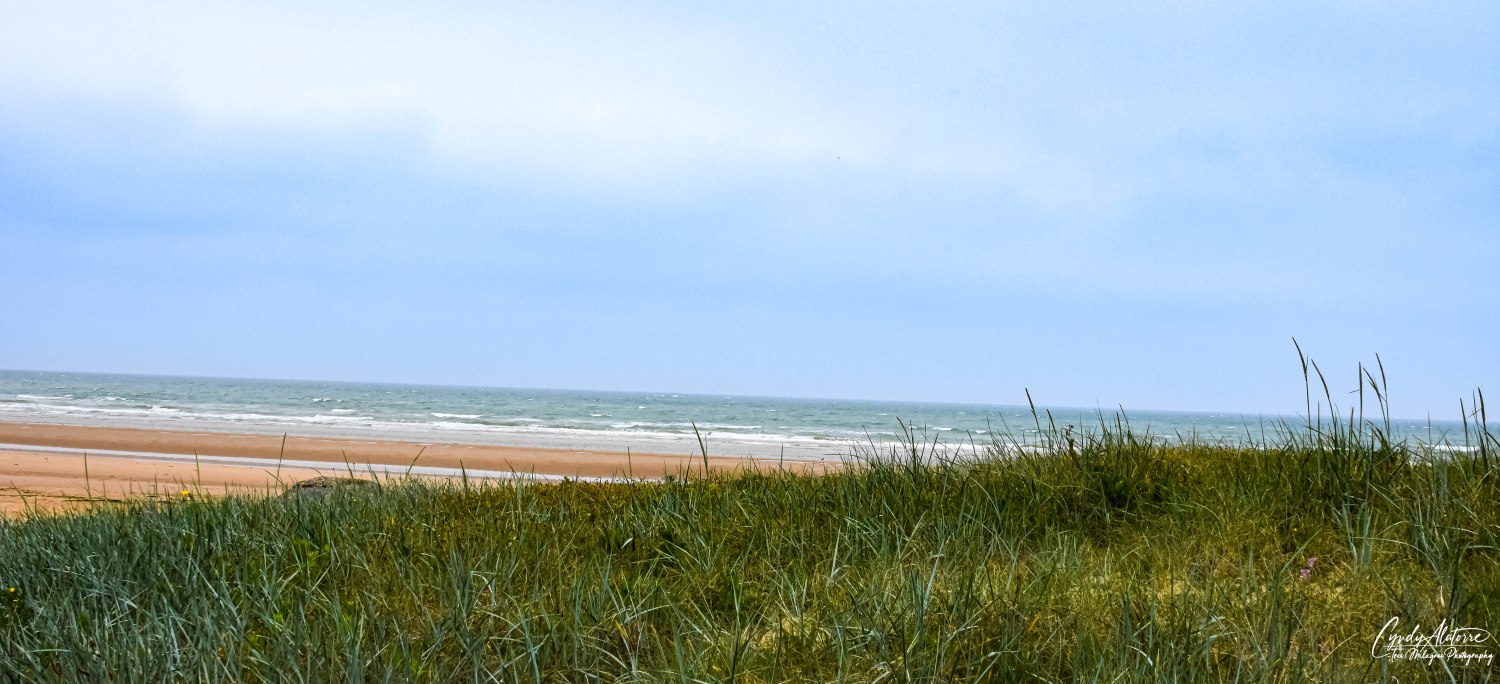
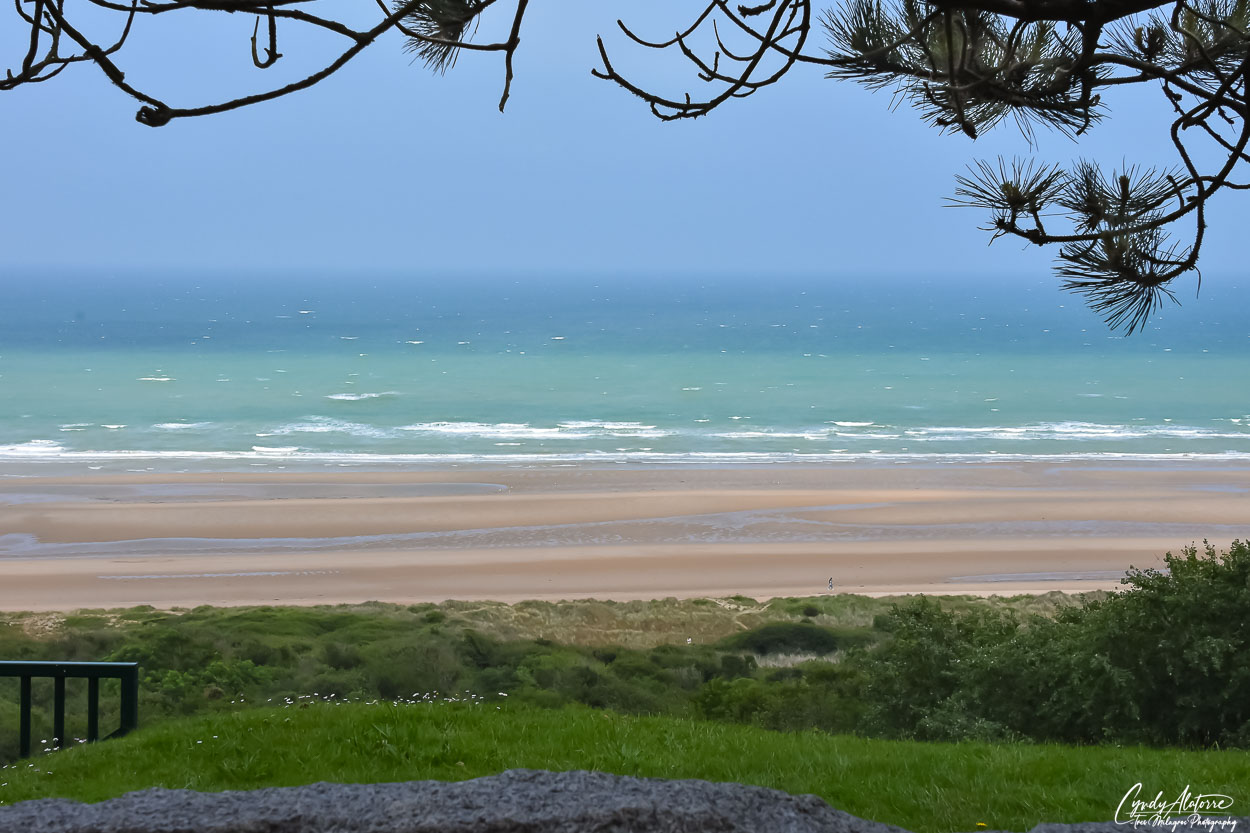
Being on the bluffs above Omaha Beach, you feel the sea breezes and could smell the ocean. From the walkway the view is scenic with pine trees lined along the walkway. Different hues of blue and green blended together in the water and the shore looked smooth and calm. Looking straight out, it’s hard to imagine that thousand of warships were out in those seas and 34,000 plus servicemen stormed the shore below. It is fitting that the cemetery is located where it’s at and so close to where so many met their demise on the beach below. 
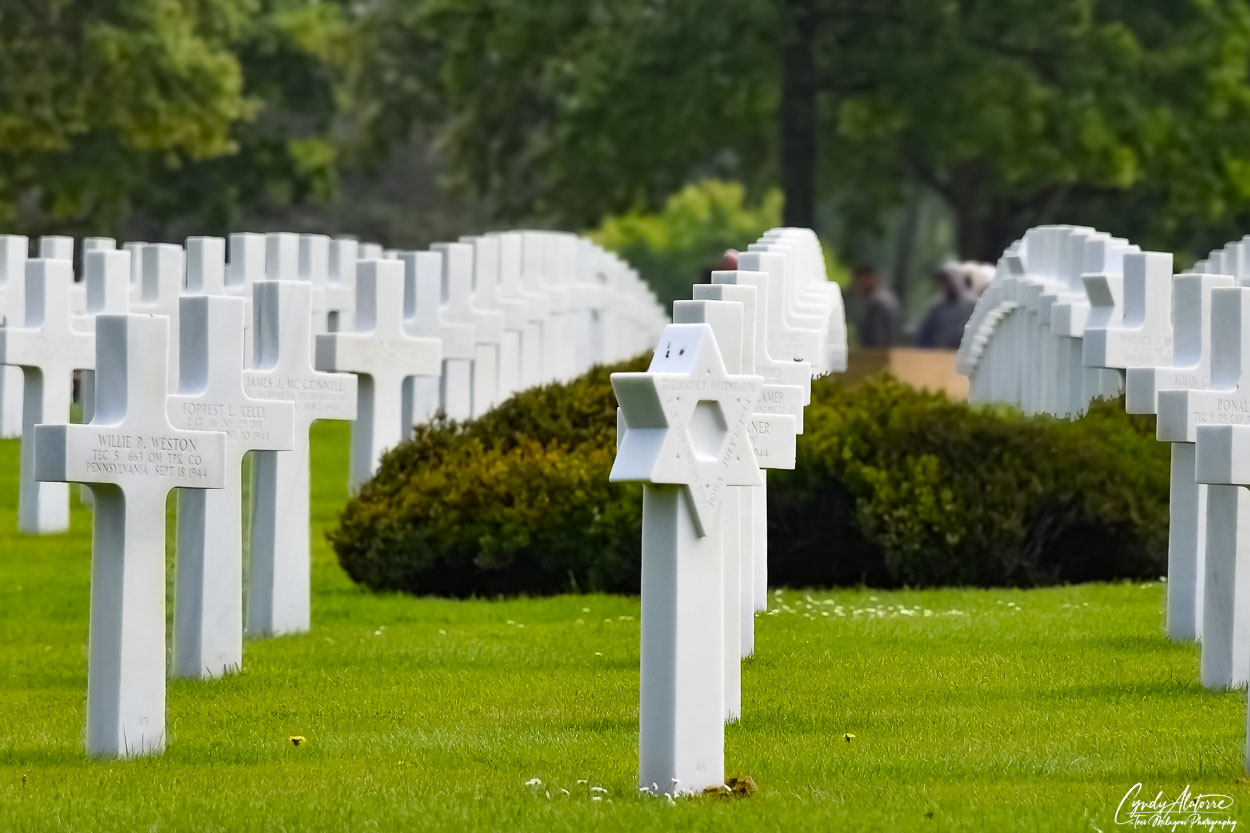
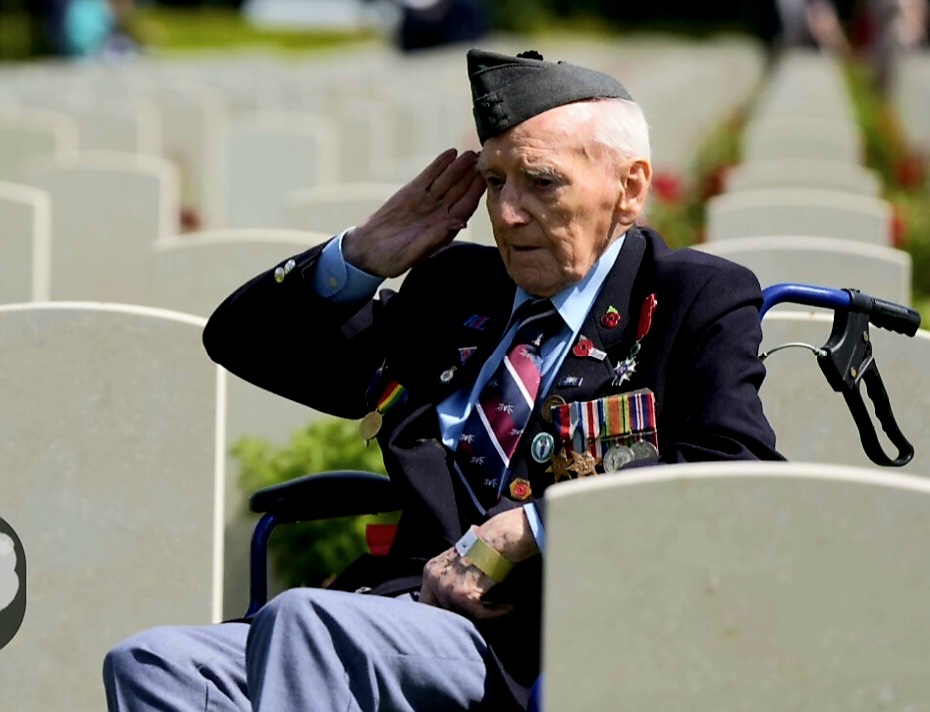
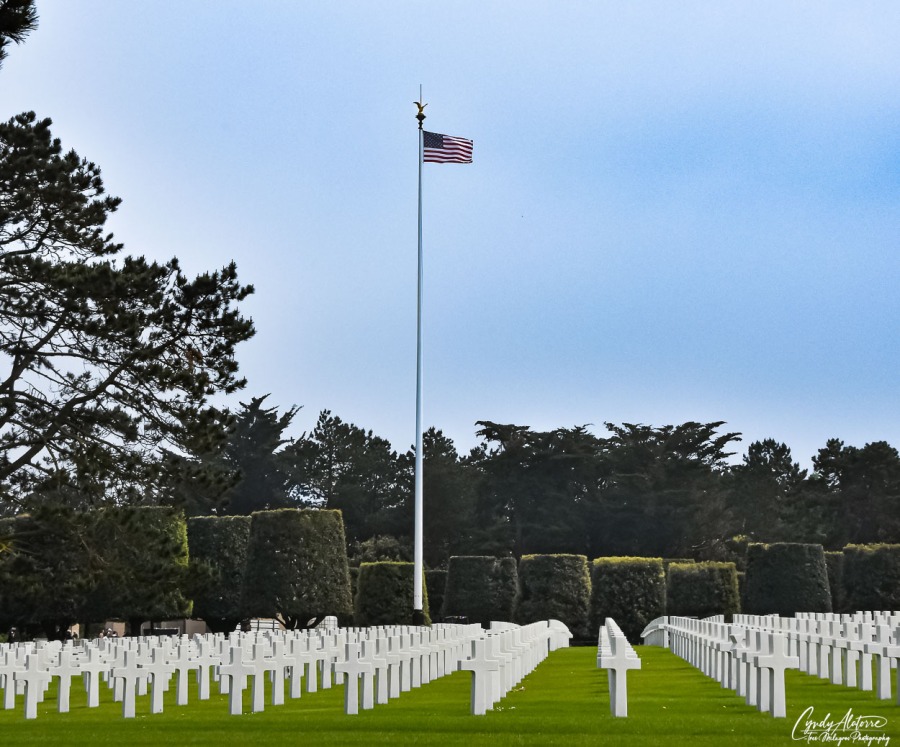
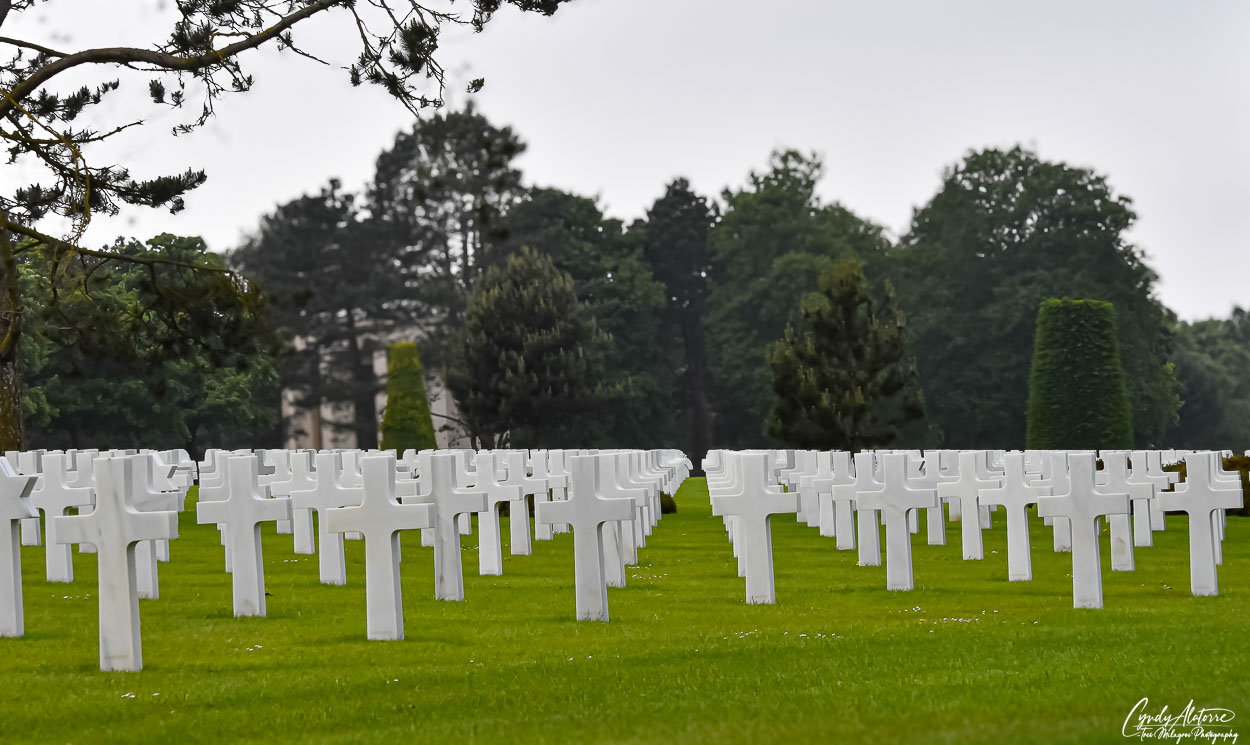
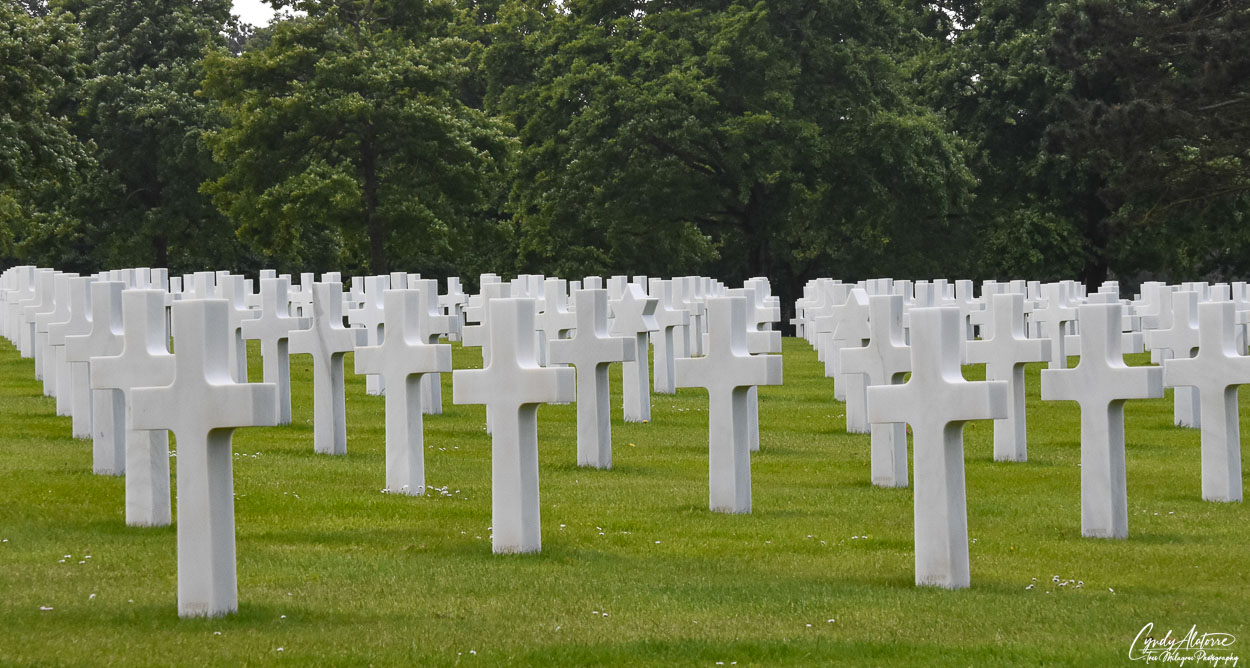
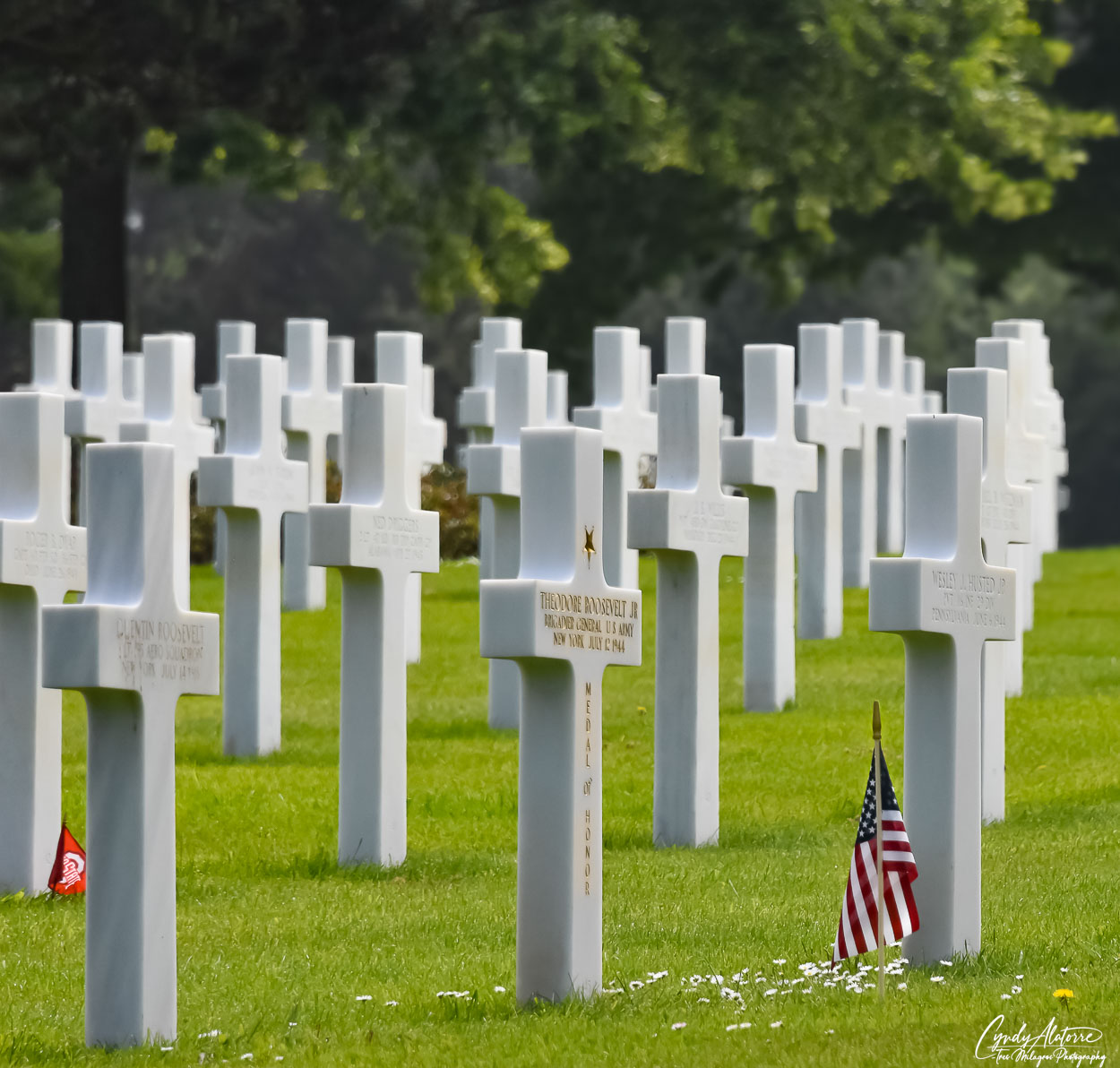
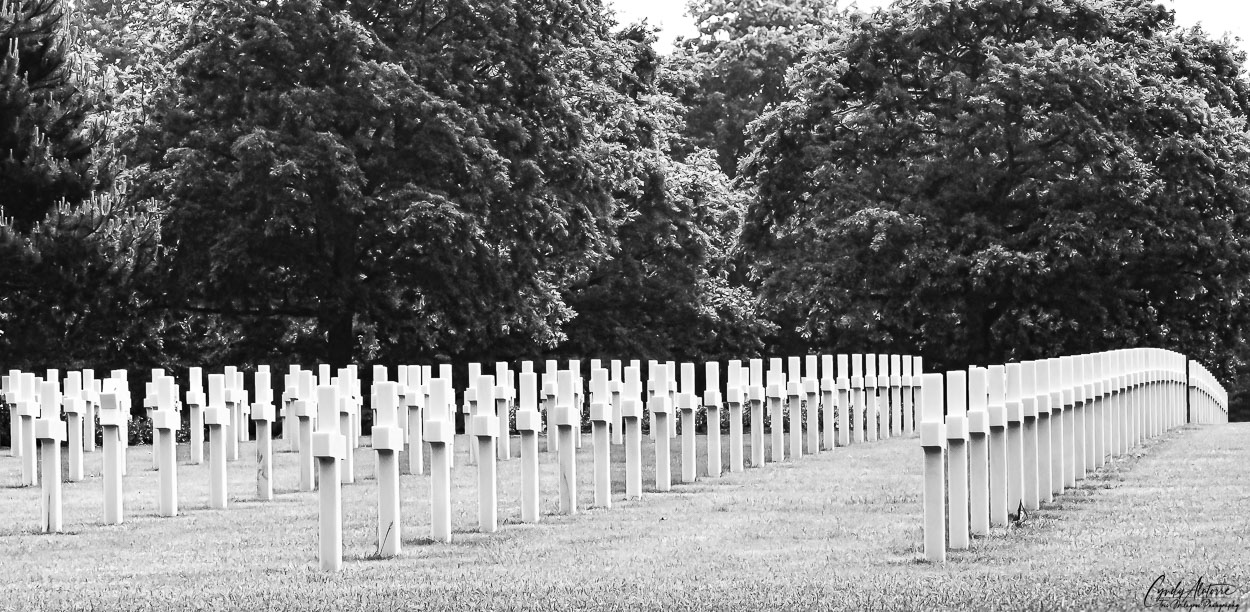
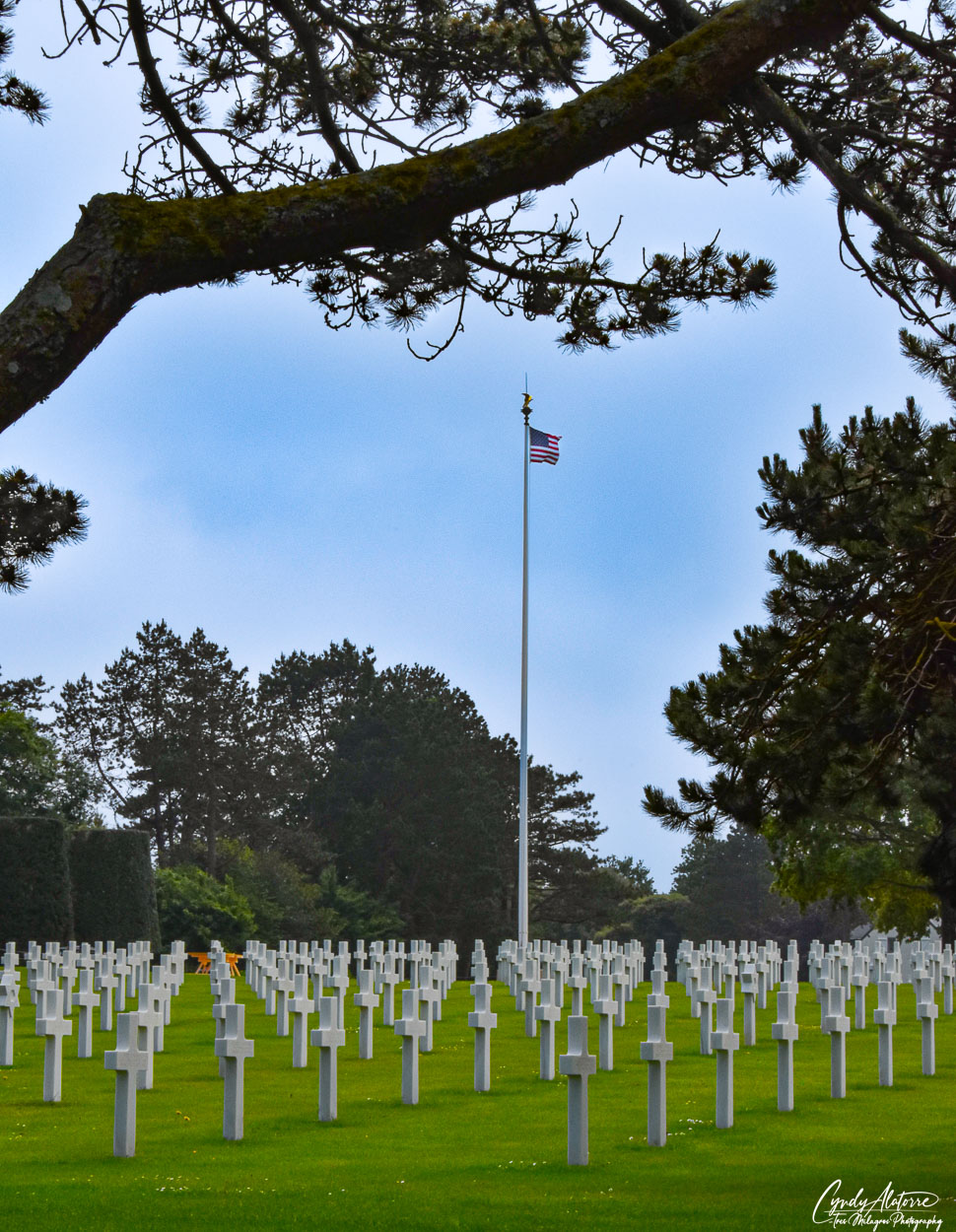
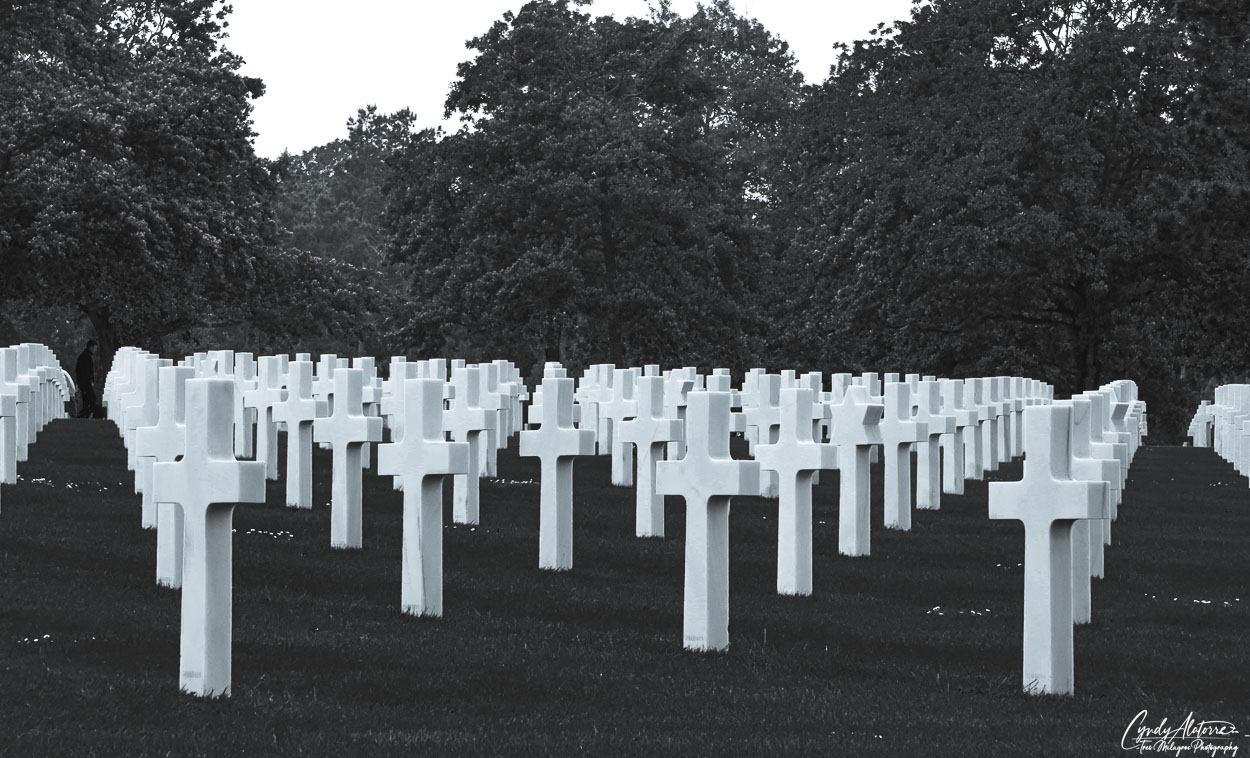
Just a few feet over on the other side of the walkway was the cemetery. Manicured lawns were filled with white Latin crosses and Star of David gravestones, all perfectly aligned as if they were in formation. It was peaceful and serene and you could sense the historical importance of it all .
Brothers bonded by serving together are buried here. Thirty three sets of biological brothers are buried side by side and another 12 brothers lie in the same cemetery, just different areas. There is even a father and son buried side by side as well as three Medal of Honor recipients, one of which is Theodore Roosevelt Jr., son of President Theodore Roosevelt. 
Walking around the grounds, there was an air of reverence and visitors were respectful as they made their way through the memorial, gardens and cemetery. The cemetery is also home to the The Normandy Memorial Center. It was good to see this center making an effort to teach current and future generations of the significance of D-Day and the sacrifice that were made by so many during World War II.
After experiencing the cemetery, surrounding grounds and various sites, I left with a better understanding and appreciation for many things. Among them is a greater appreciation for those that participated in the D-Day invasion, the sacrifice that these servicemen and their families made for this great cause and fortunate to be able to travel in person to see and sense where history occurred. Again, traveling proved to be a great teacher. 
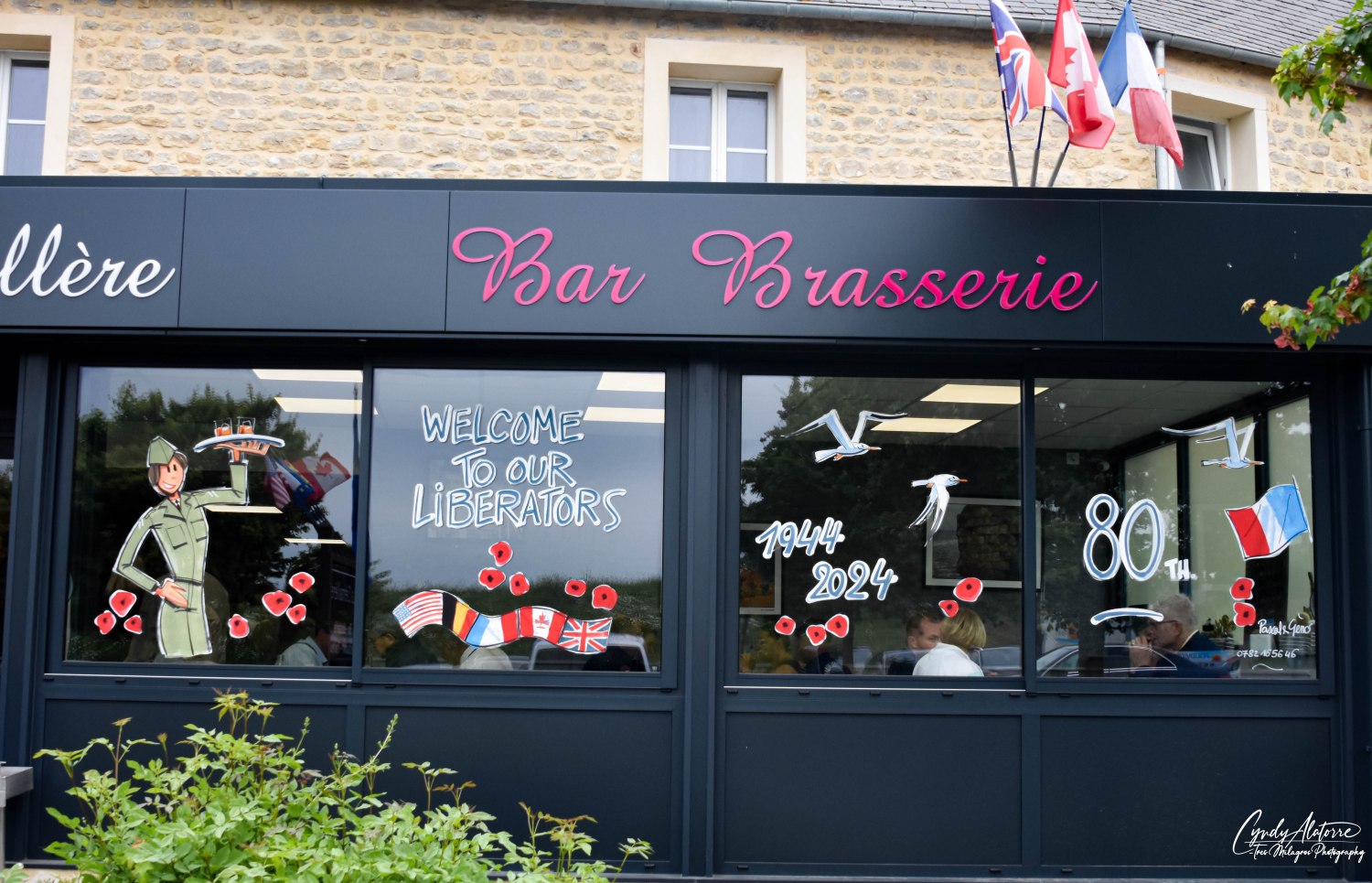
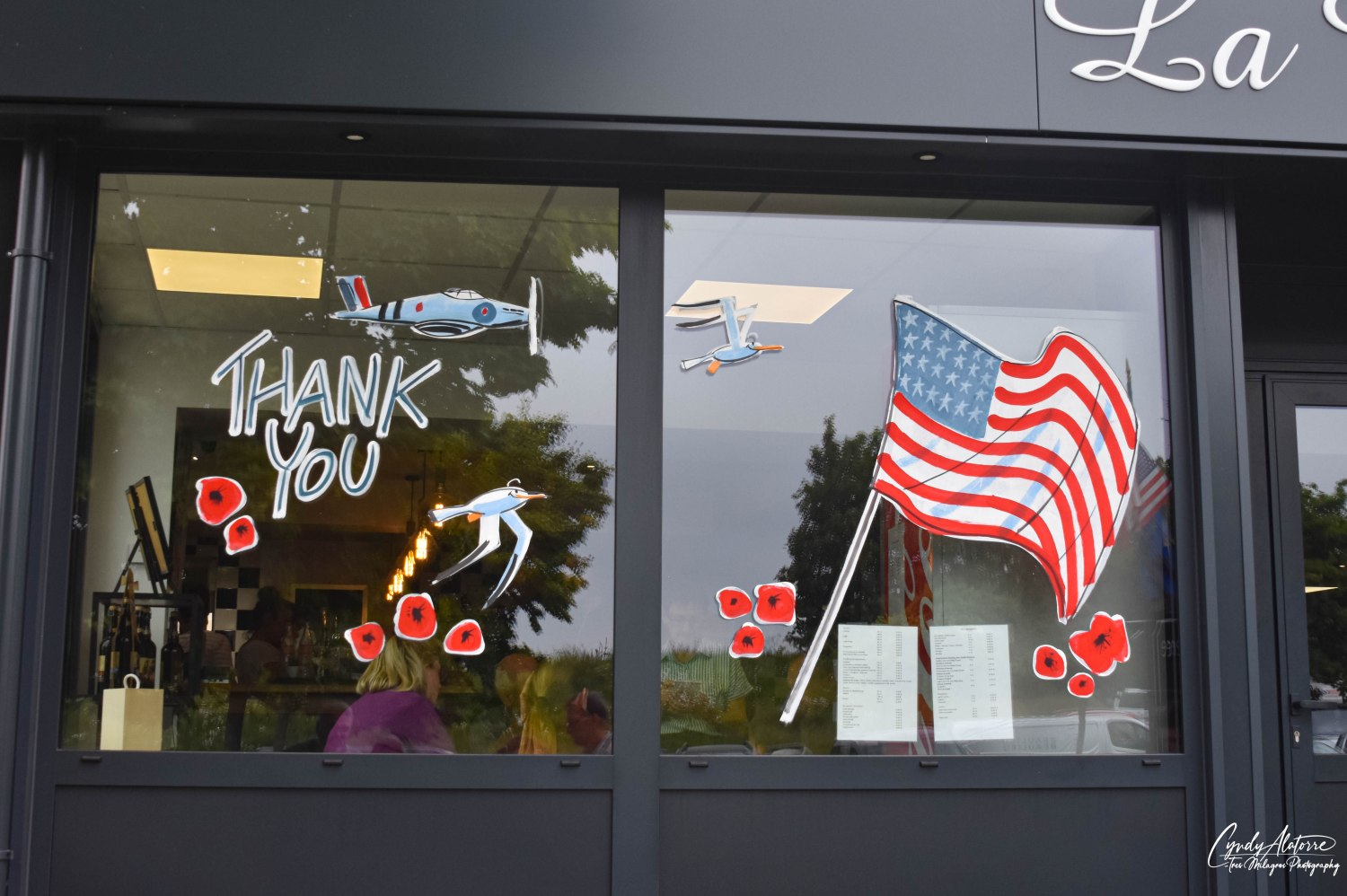
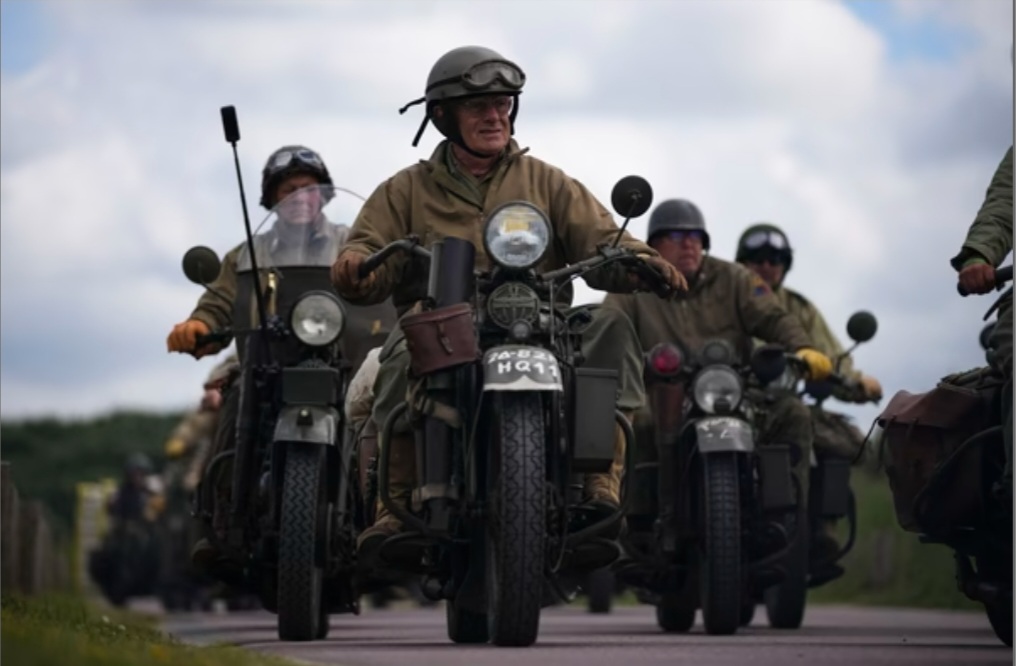
Wrapping up this “history” segment of our trip, it was time to leave. The Normandy region is a beautiful area with many towns, beaches and things to explore. Everywhere we went, the citizens of the various towns were friendly and willing to share about their small communities and expressed their appreciation for their American liberators, even 80 years later. My only regret is that we didn’t have enough time to see everything, but therein lies a silver lining in that we we just have to come to Normandy again! 

Until next time, we’ll keep moving on and see were we go via El Camino Thru My Lens.
Featured

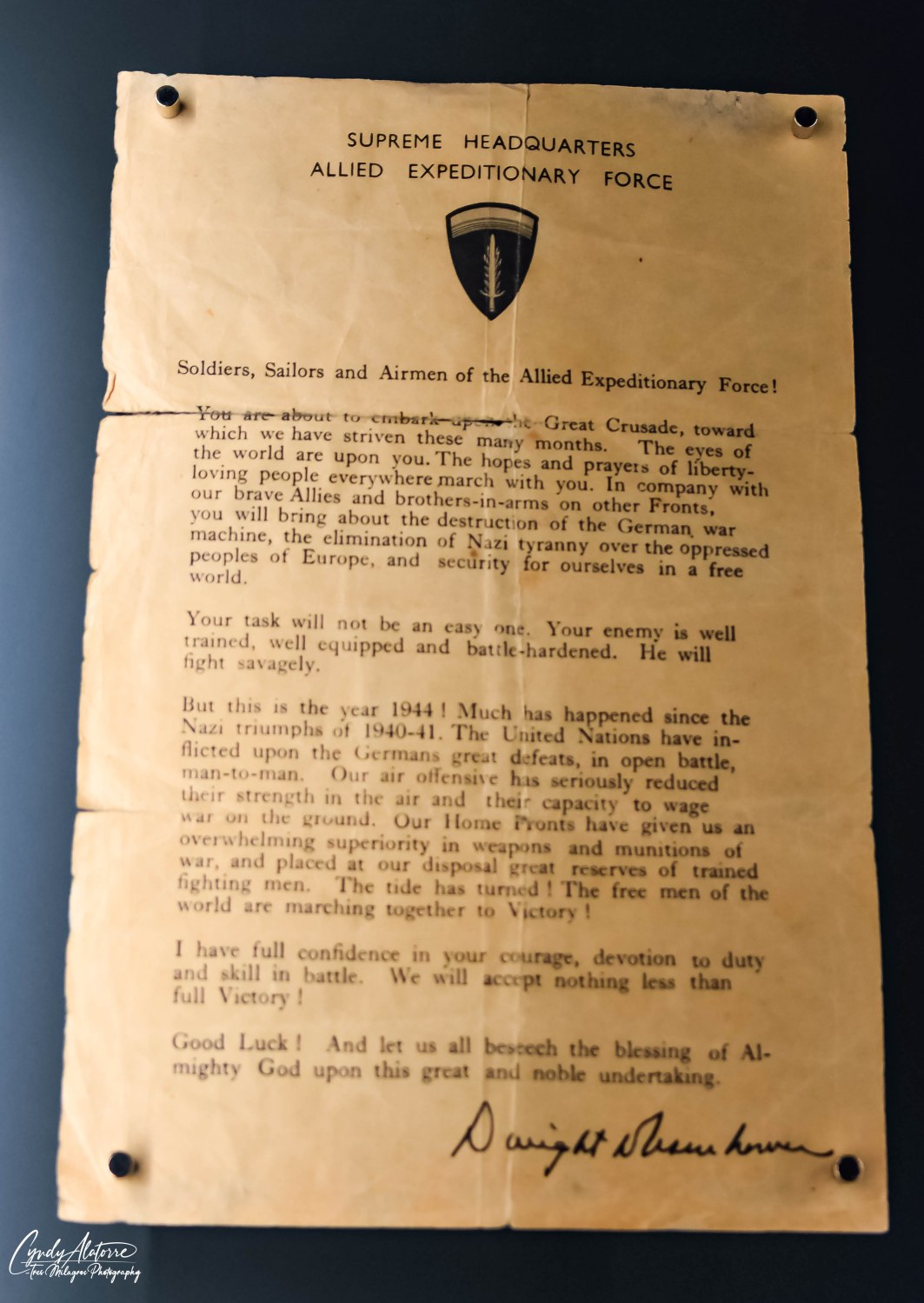
“Operation Overlord” ~ D-Day June 6, 1944 Normandy, France

Open green fields, tall lush trees that line the roads and local farm animals scattered along the landscape. This was my view as we begin our visits to the beaches and towns along the Normandy coastline. Driving down the road, I’m admiring this beautiful countryside as I know it was not always like this. Normandy has been on my bucket list and we were finally here. I did my research, learned as much as I could and now it was time to visit these places to see where history took place.

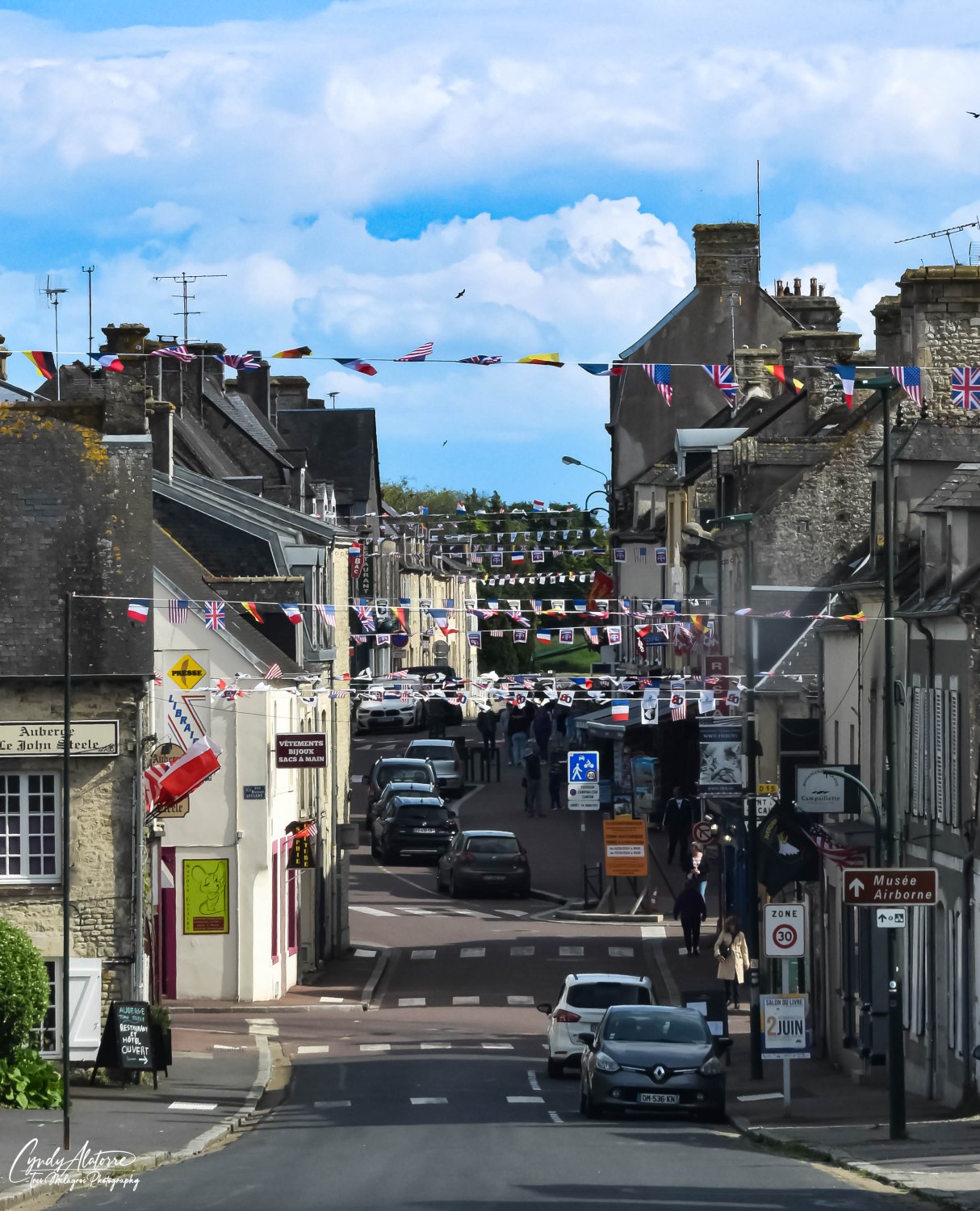
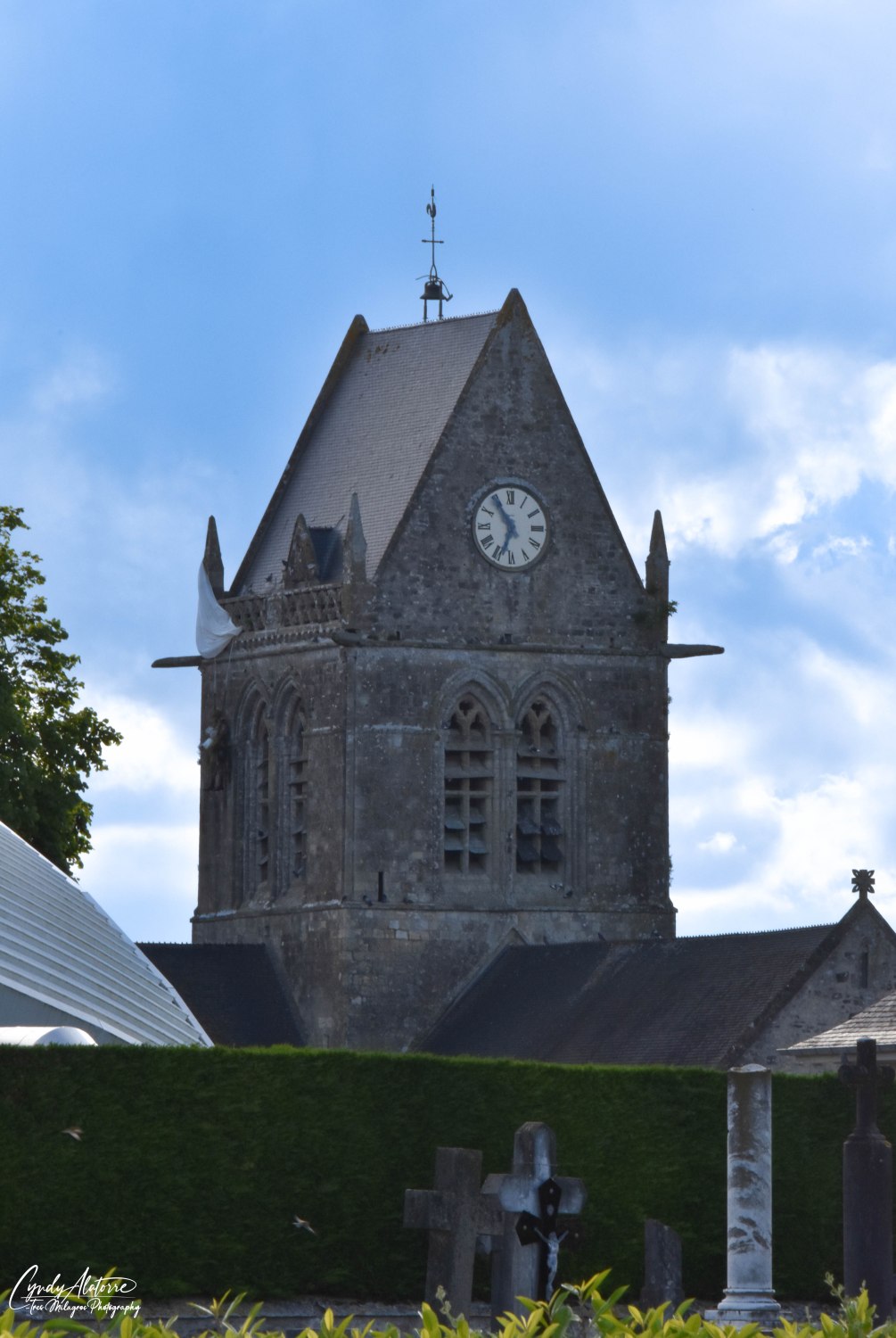
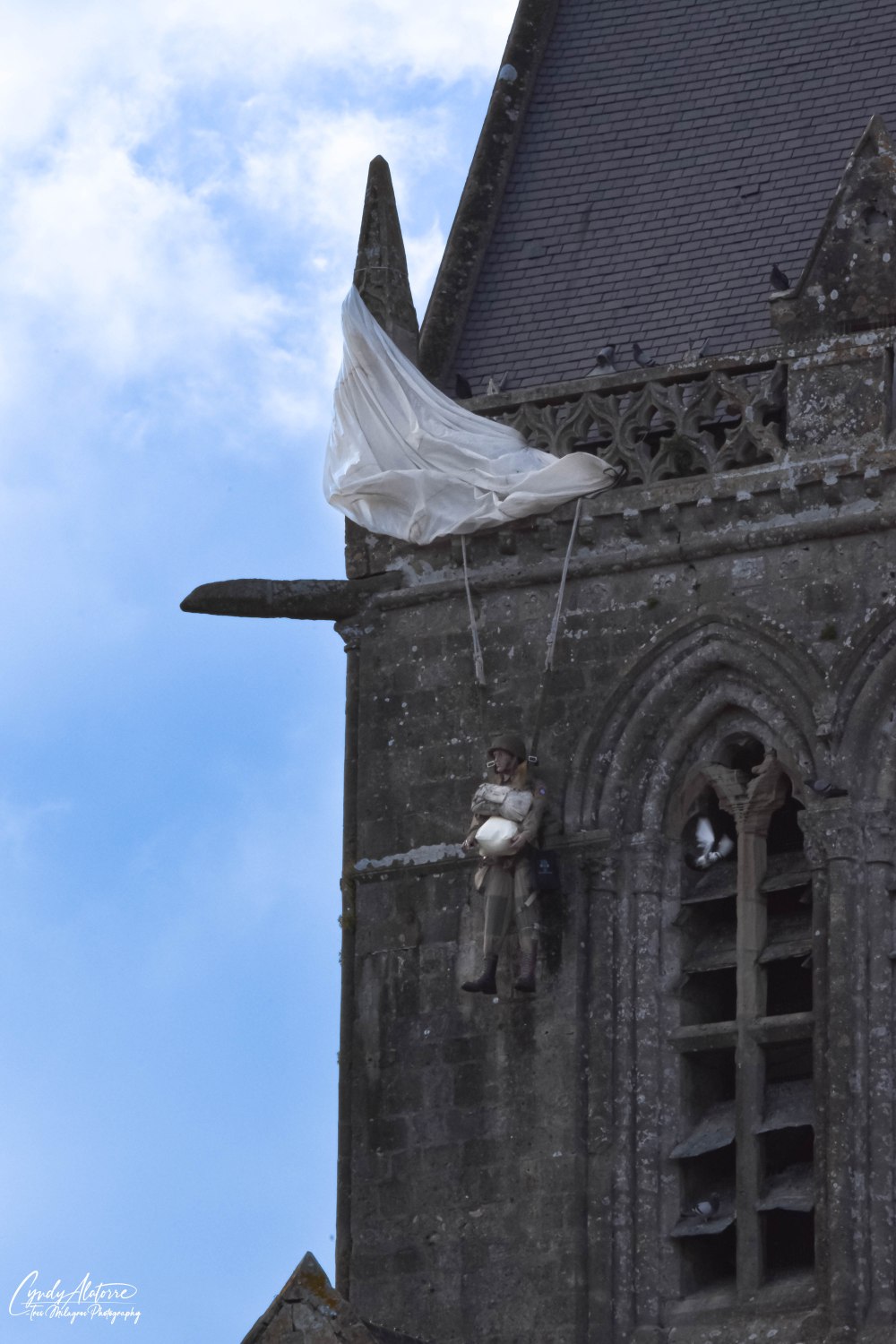
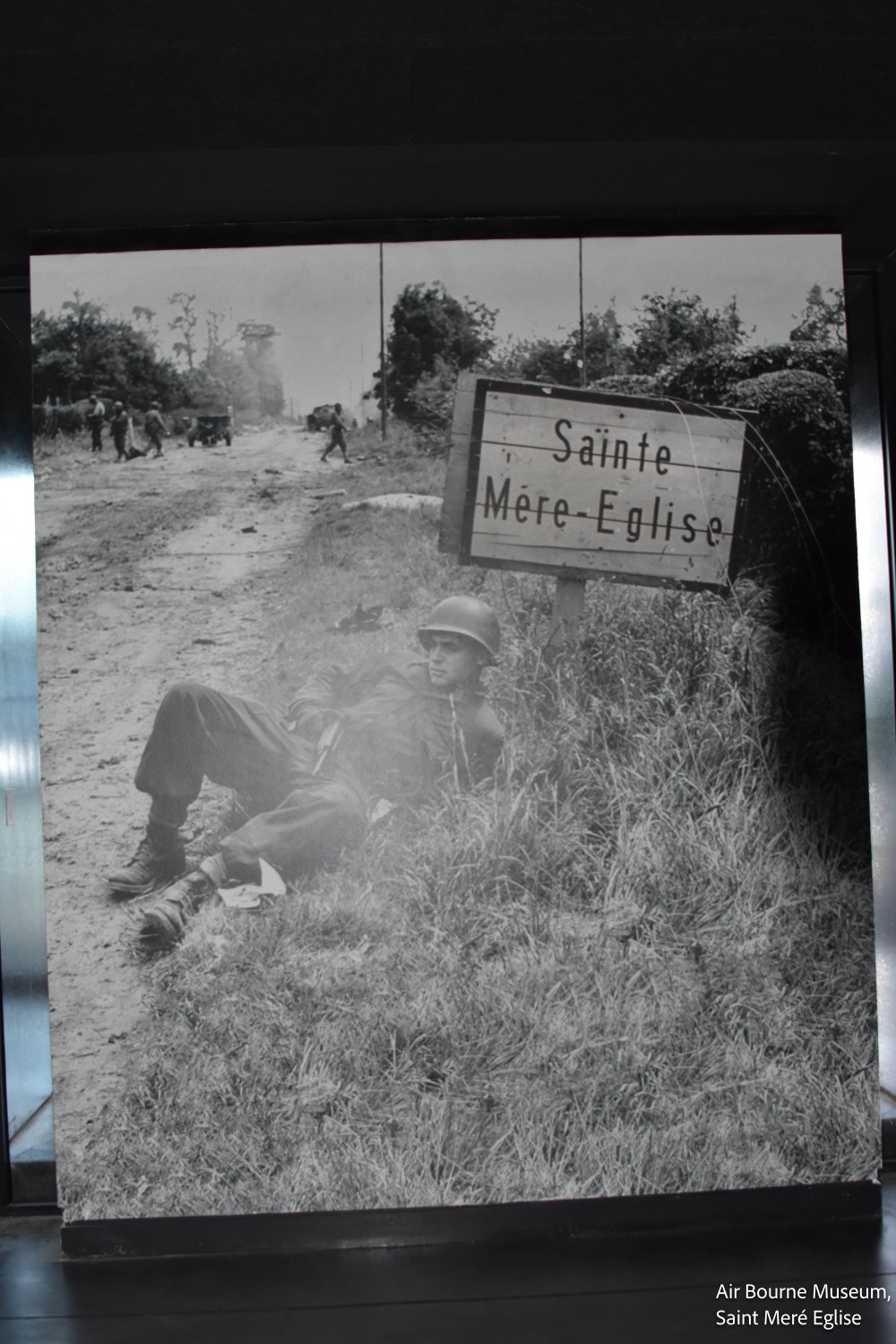
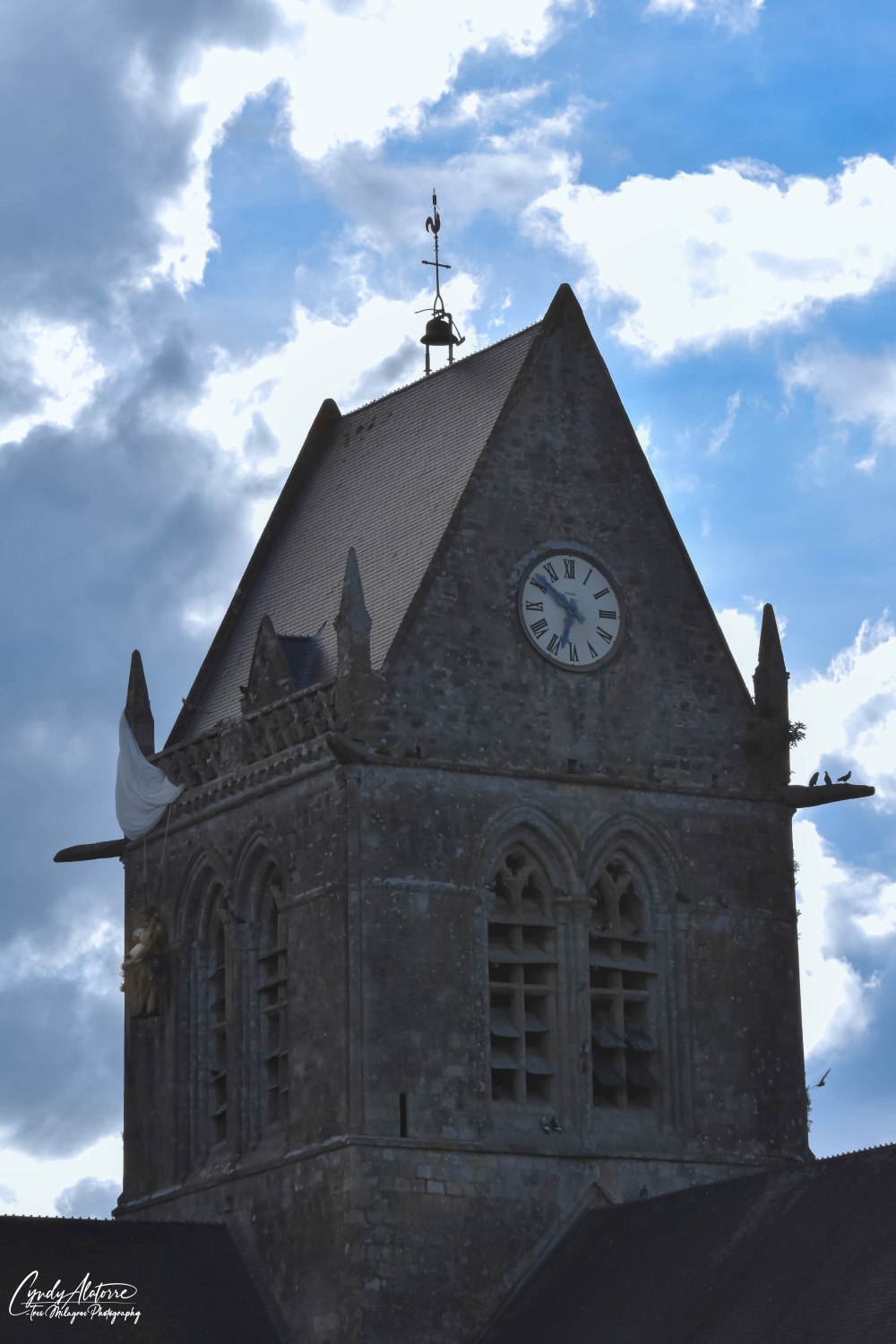
Our first stop was Saint Meré Eglise.  With its flag banners welcoming us, we drove in and parked near the town square and church. Glancing around, the first thing I noticed was a mannequin with a parachute hanging from the church spire. I figured there had to be an interesting story behind this. Pvt. John Steele, of the 82ndAirborne Division, was one of the 13,000 paratroopers that was landing behind enemy lines in the Normandy area on that early June 6th morning in 1944. As he descended into Saint Meré Eglise, he was hit by shrapnel, couldn’t direct his parachute and a wind current trapped him on the spire of the town church. Unable to get free, he hung there for two hours, pretending to be dead until the Germans took him prisoner. He later escaped and rejoined his division, and the story of John Steele was born for the town of Saint Meré Eglise. 

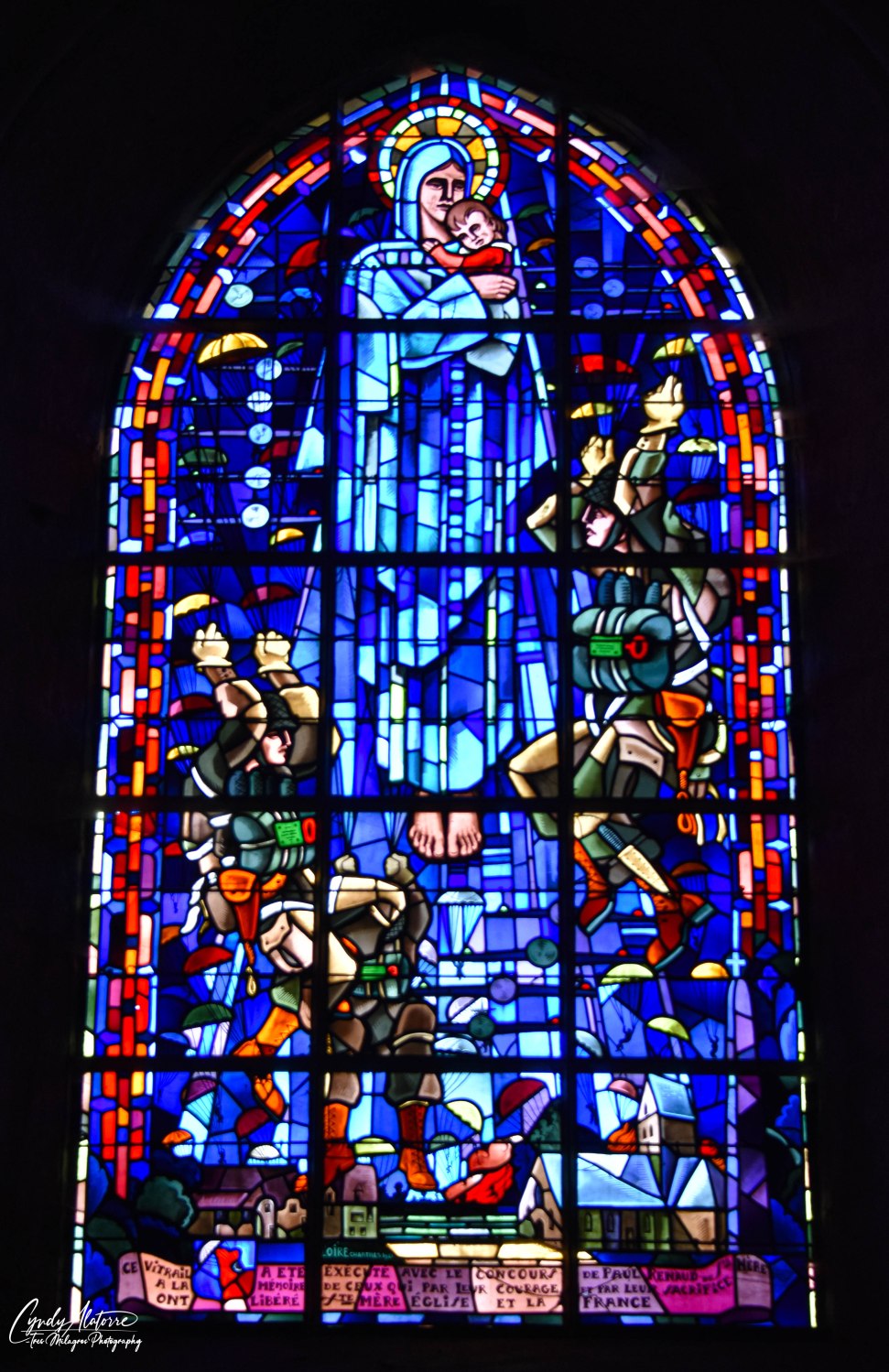
But this pretty little town was more significant than that. Saint Meré Eglise was centrally located on a route that goes directly to Utah and Omaha beaches, where the landings were to take place and the German forces would need to travel through it in order to counterattack the Allied Forces. Securing the town was crucial and so American paratroopers landed around the area, on rural farms and anywhere the wind took them. Many were being shot at as they landed, others got caught hanging from trees and utility poles. Two C-47 Dakota planes, transporting paratroopers, crashed near the town square and caught several buildings on fires. It must have been complete chaos. Yet with all this mayhem, the Americans were successful and Saint Meré Eglise was secured by the Allied Forces. This was one of the first major achievements on D-Day.

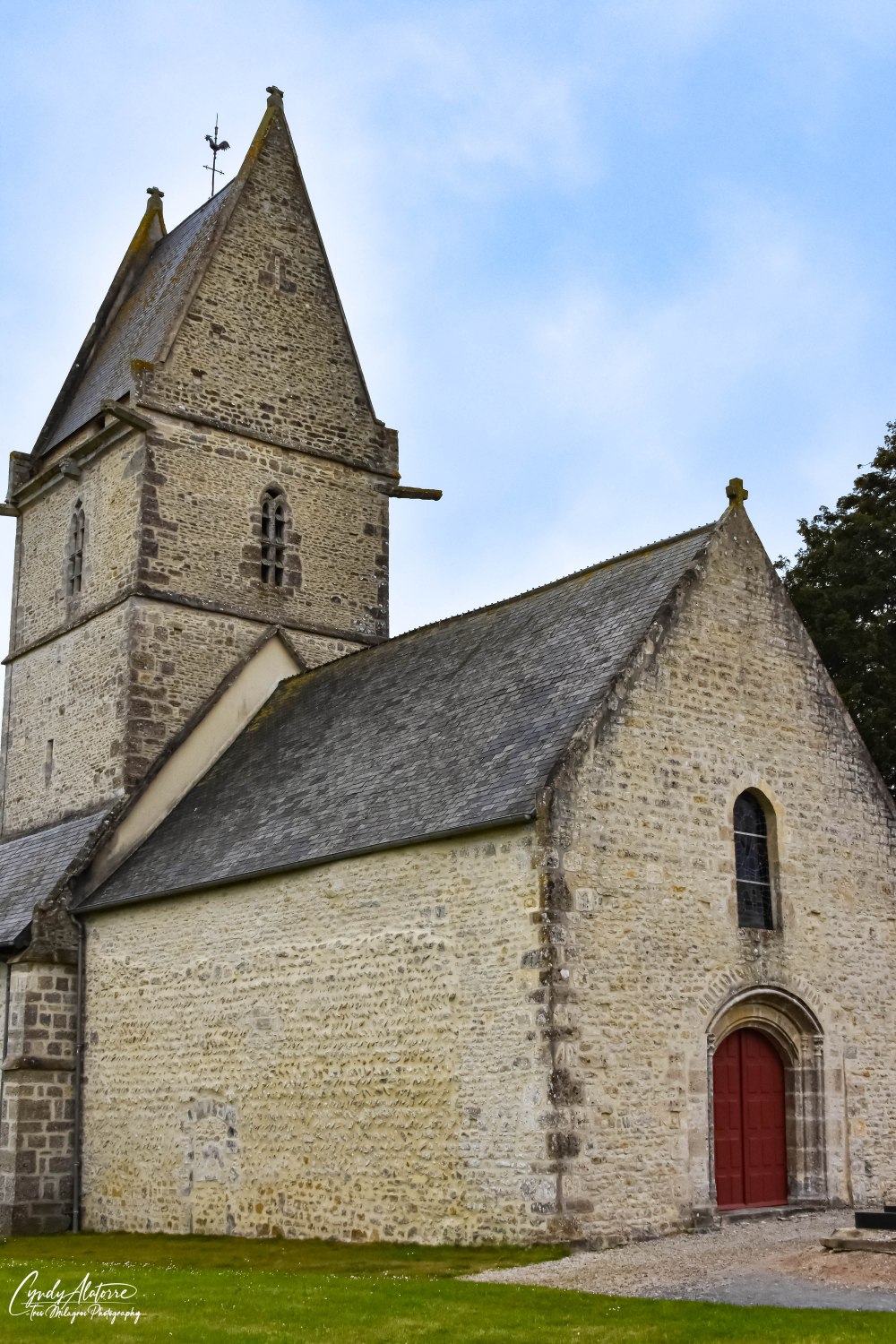
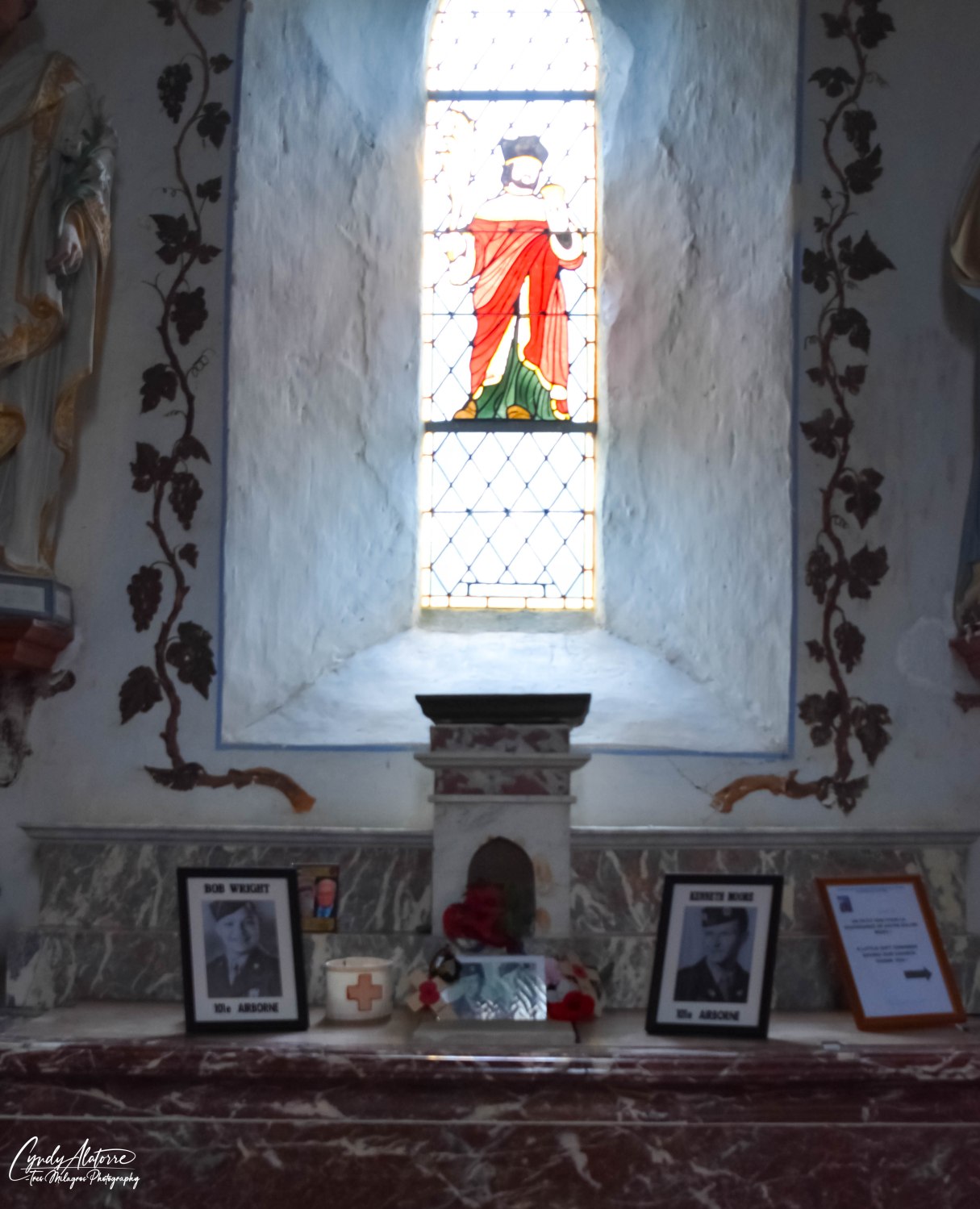
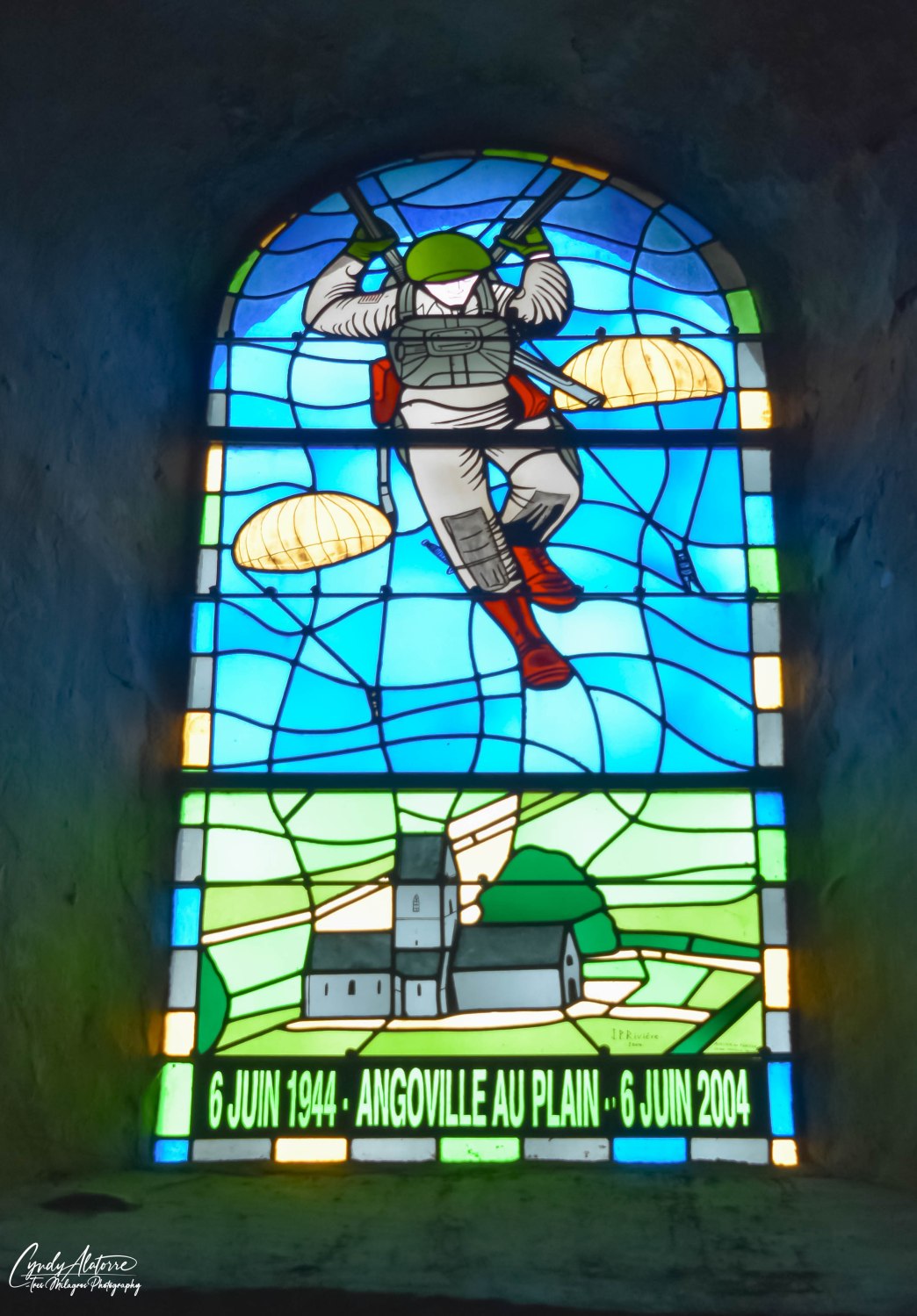
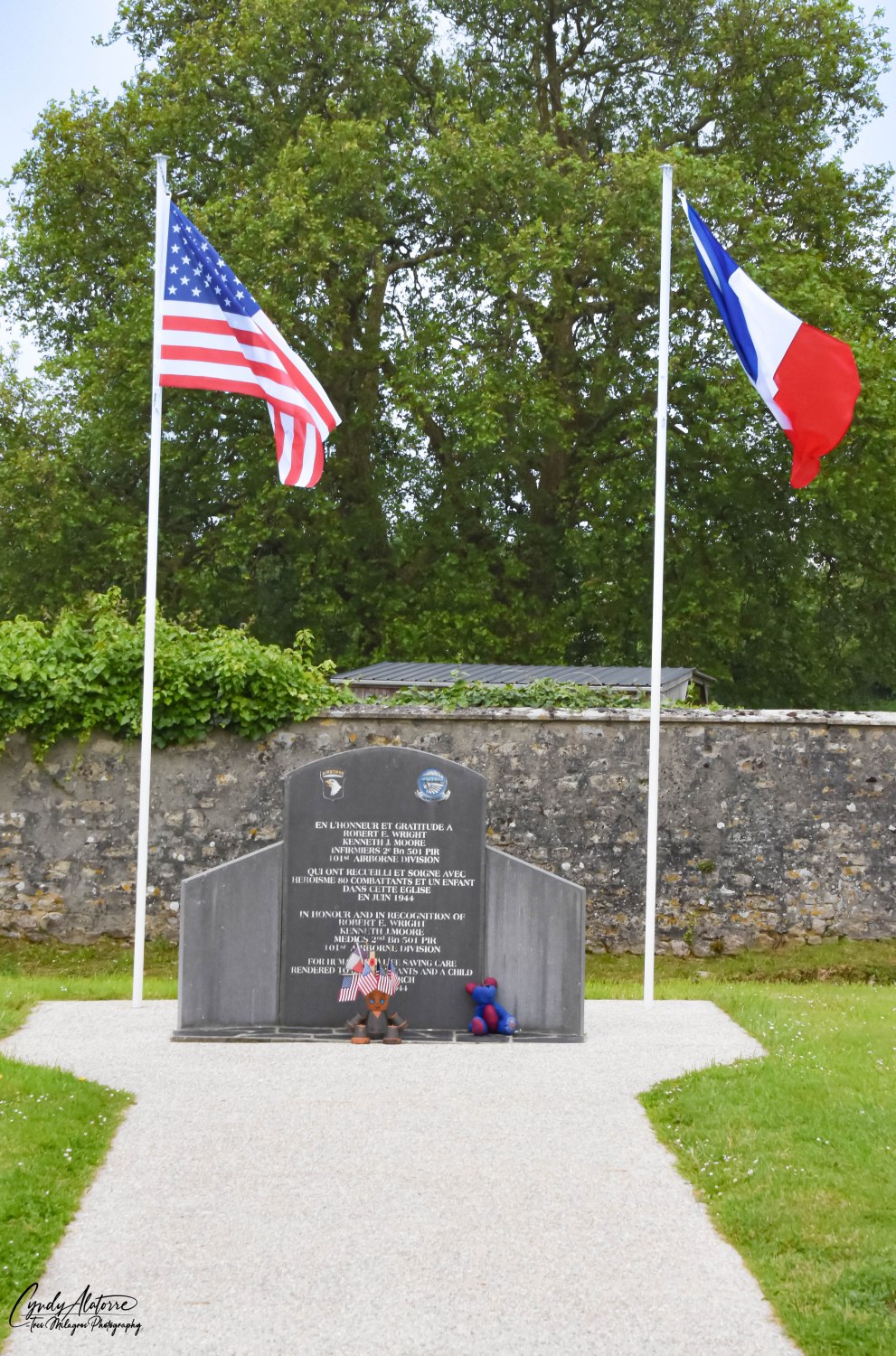
A short drive away, we next headed over to the small town of Angoville-au-Plain. Not as well known as its neighboring villages, this old small rural town had it’s own story to tell. Like neighboring areas, paratroopers quickly captured the town and two American medics, Kenneth J. Moore and Robert E. Wright, were tasked with setting up an improvised medical aid station.

Using the town’s old church, they immediately hung a white, red cross flag on the church and started to treat the wounded. What stands out about this story is that these two medics treated both American and German personnel and did not discriminate. They saw the injured as young men, not American or German, who needed help and the church was “sacred and safe” ground, both spiritually and literally. As fighting continued, German forces noticed the medics were treating both injured Americans and Germans indifferently. In response, the Germans did not attack the church and allowed these medics to tend to the injured. What is notable to me was the decency that was shown in a time of severe conflict. 

Angoville-au-Plain held a special place for the medics and Robert Wright’s wishes to be buried there were honored. His grave is located on the same church grounds where he practiced care and compassion for his fellow man without regard to their origin. 

Seeing these towns and learning their stories was putting together the visual puzzle in my head about what D-Day must have been like. It wasn’t only an invasion on the beaches that happened. It was a multitude of towns, people and events all jumbled together. Now it was time to head to the coastline to get some more pieces for my that mental puzzle. 

Picturesque and vast, the Normandy coastlines topography varies from high cliffs to flat shoreline. The targeted areas for the invasion was over a 50-mile stretch of coastline and the given names for the landing areas were Utah Beach, Omaha Beach, Gold Beach, Juno Beach and Sword Beach. With the American, British, Canadian and French forces making up the larger groups to lead the assault, each was assigned and responsible for their designated areas. So on June 6, 1944, at 6:30 a.m., the largest amphibious invasion in history began. 

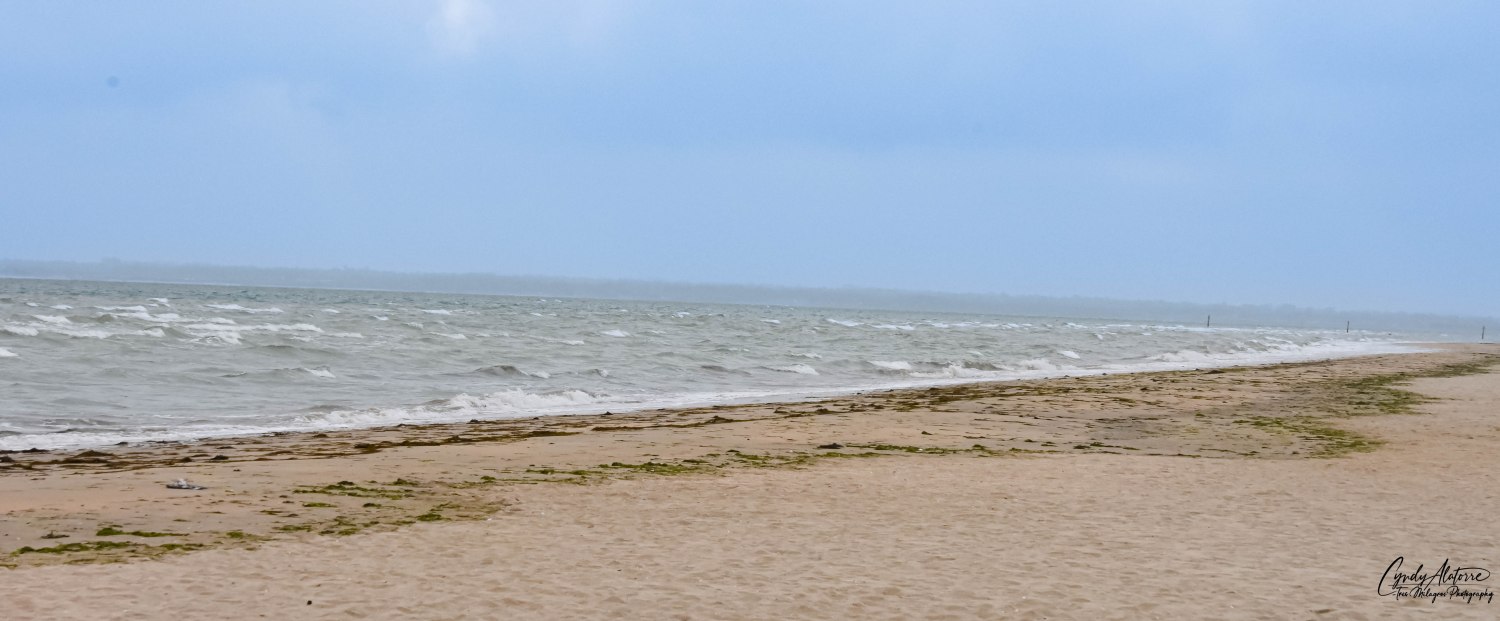
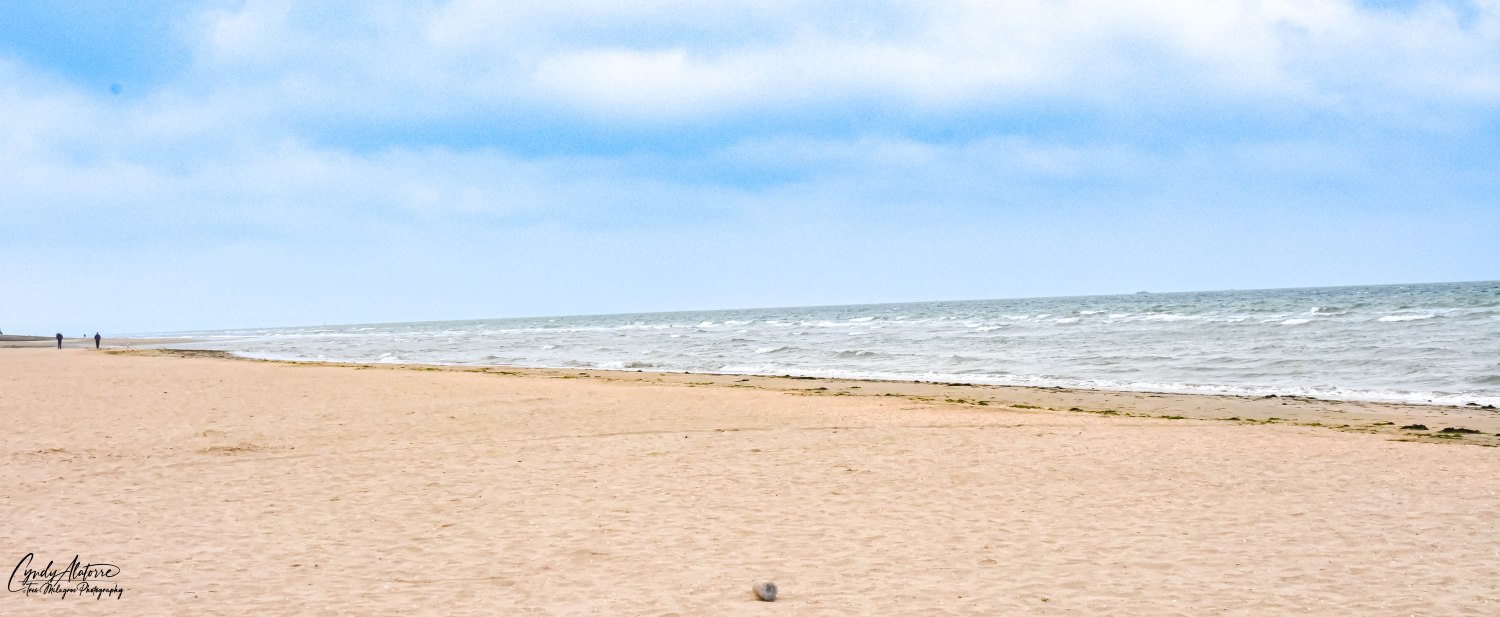
Located on Westernmost part of the frontline, Utah beach is scenic with its long and flat shoreline, soft sand and calm but steady waves. This was a drastic contrast to the high winds and cold rough seas the Allied Forces experienced.  23,250 American troops, of the U.S. 4th Infantry Division, initially landed 2000 yards south and off course. Concerned with this mishap it turned out to be in their favor as they ended up in an area that was less heavily fortified. Their landing and mission were successful, and they proceeded towards the port city of Cherbourg to support that fight.  

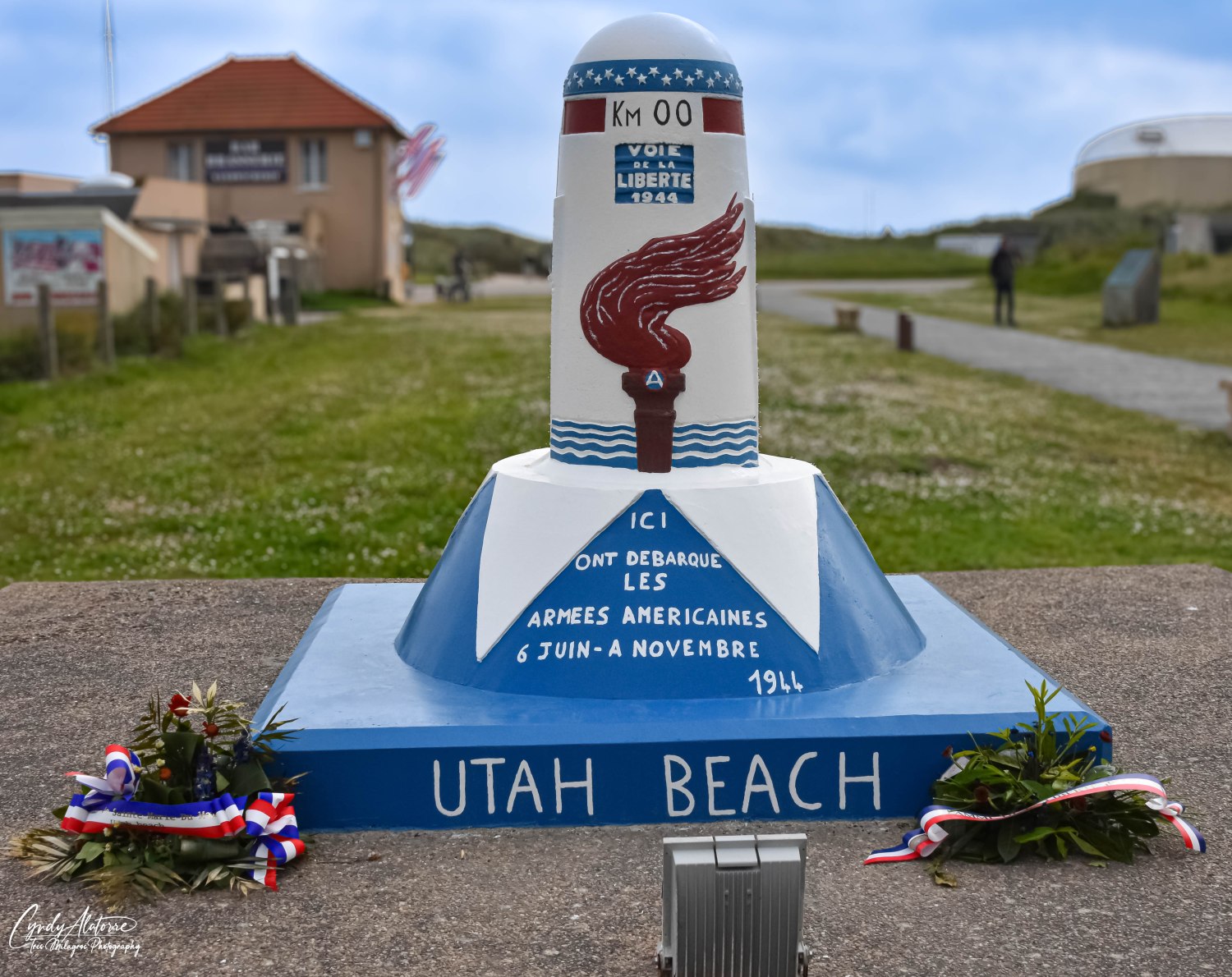
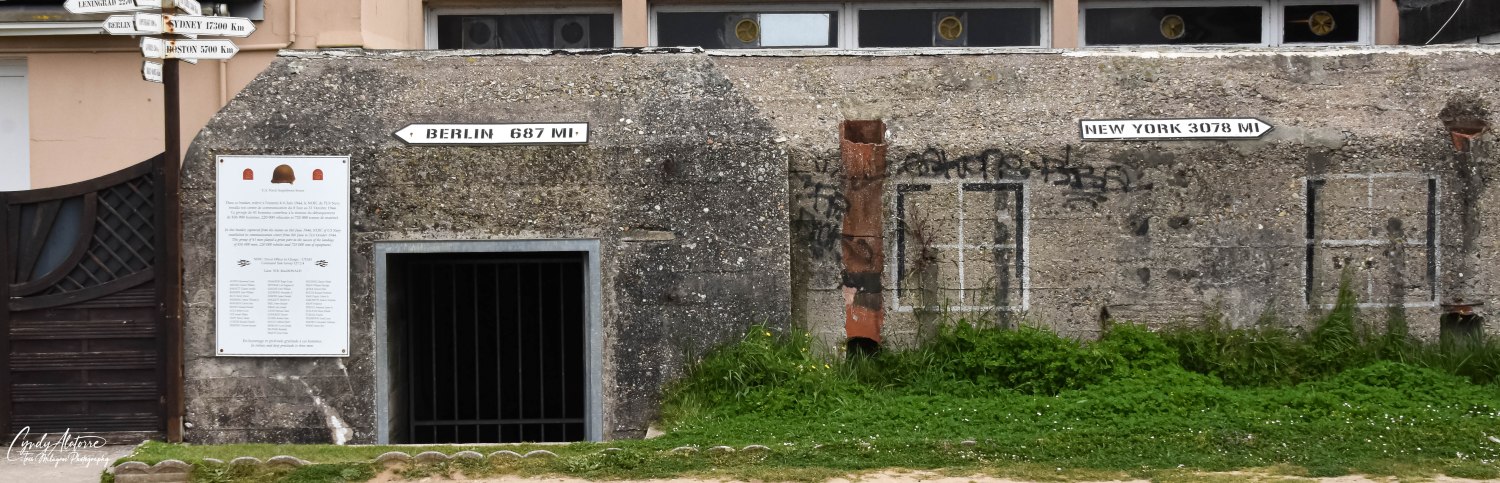
At the entrance to Utah Beach you see the Liberty Route marker, which they used as a starting point to measure distance. There’s also a German bunker you can go in and see. Below is a picture of it and if you look closely, take note of the fake windows painted on the bunker. They did this to trick the American planes, taking aerial photos, so they would think they were homes, not bunkers, and not be bombed.

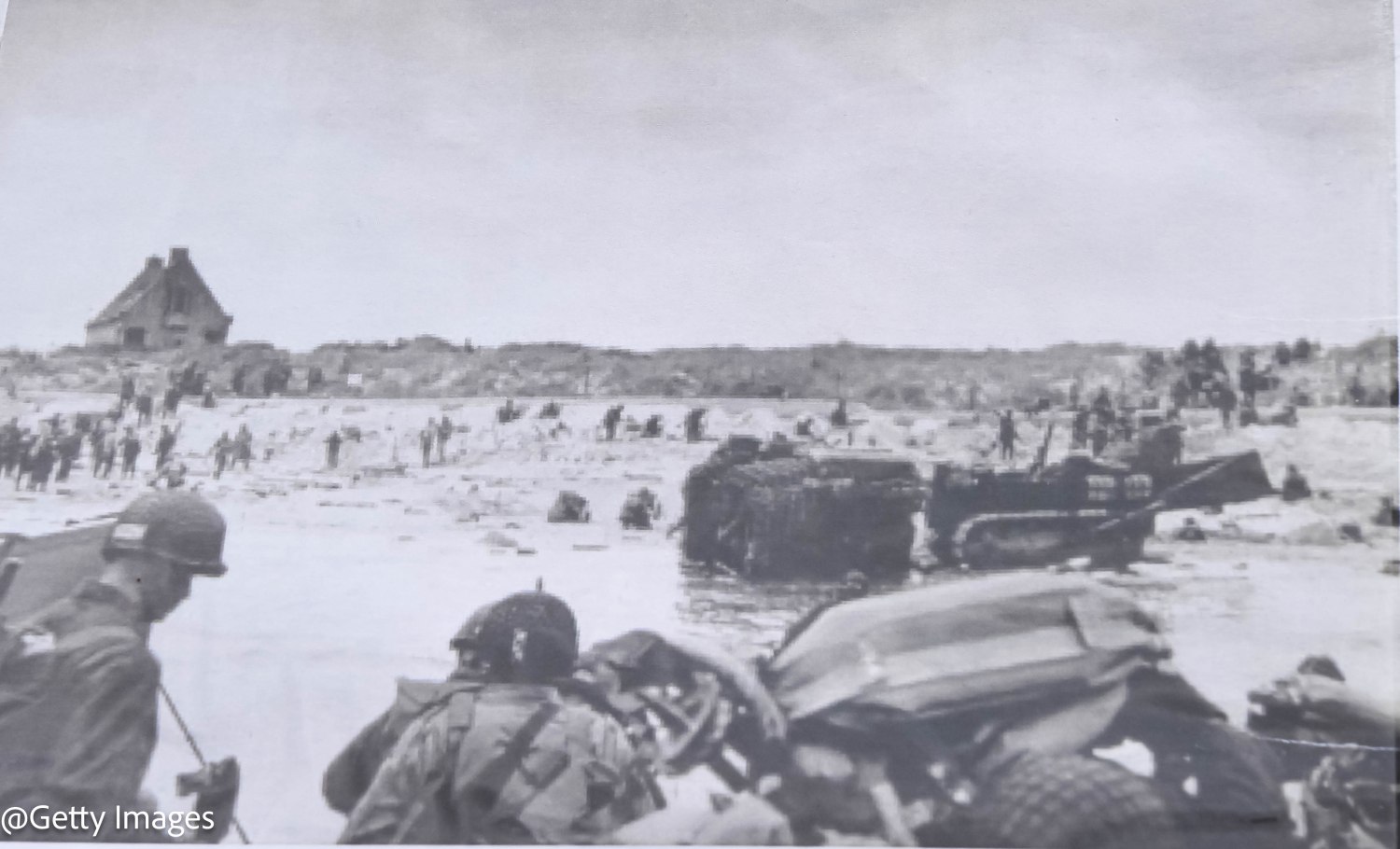
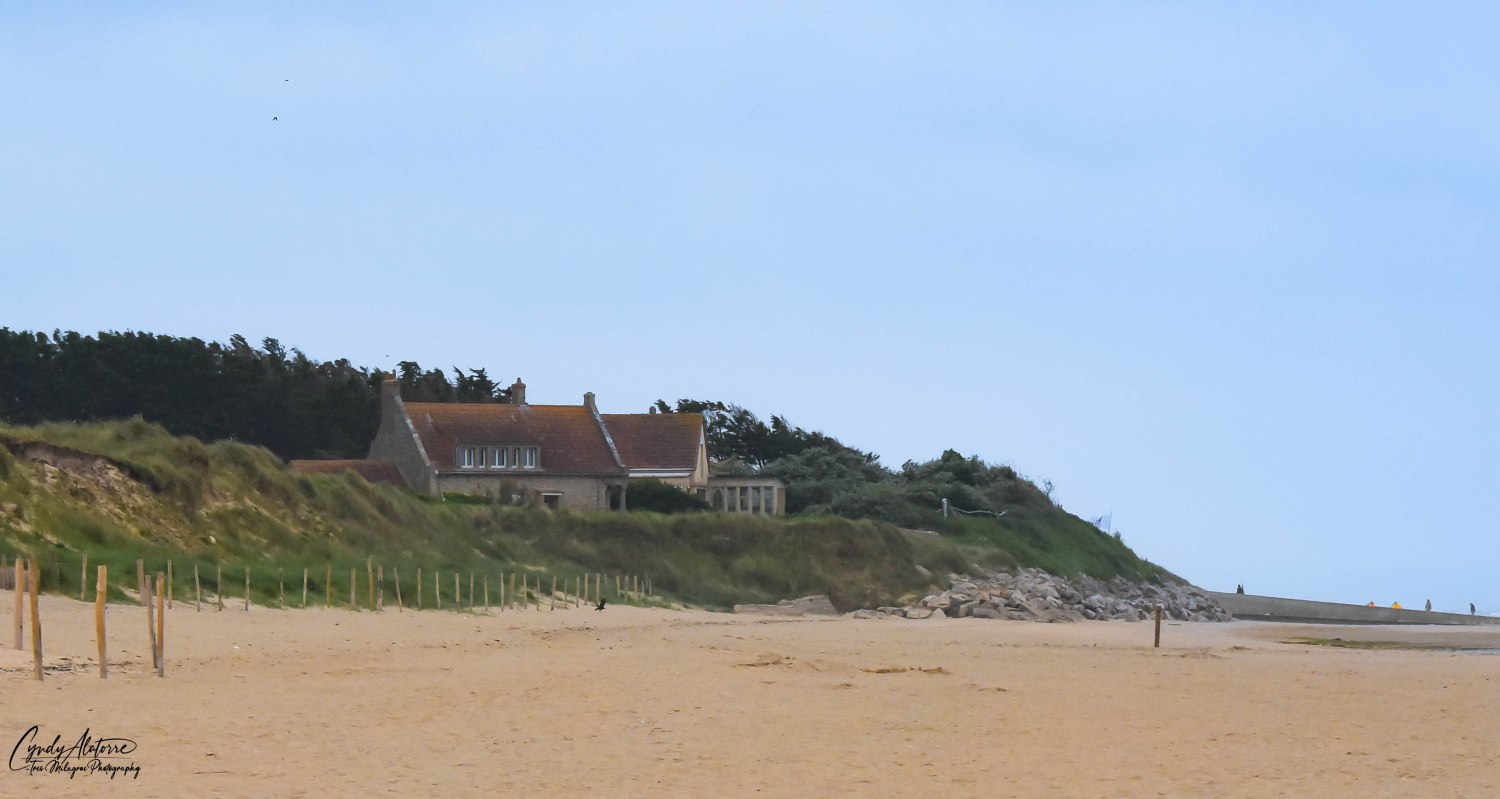
I also noticed a house on the beach that I had seen in a picture while reading about D-Day. Eighty years later this house is still there. I took a picture of it to compare it to the older photo and you can see below too.

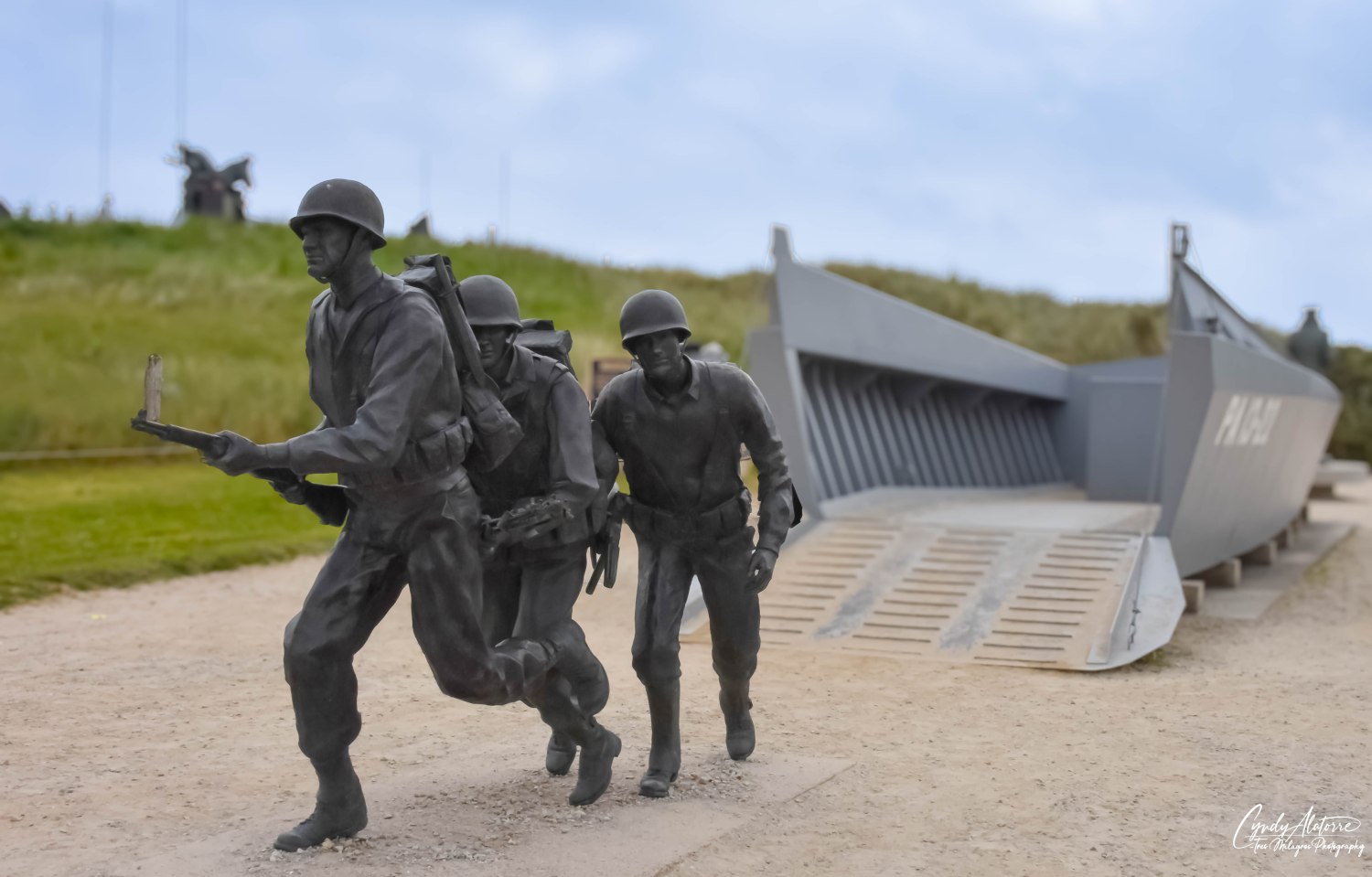
Before I left, I walked the beach and found myself wondering how many men had stood or walked where I was standing and what a contrast their view of the beach was to my mine now. I took a moment to look around and take all of it in. Grateful and honored is the best way to describe my impression to be able to visit this historic place. Our next stop was Pointe du Hoc.

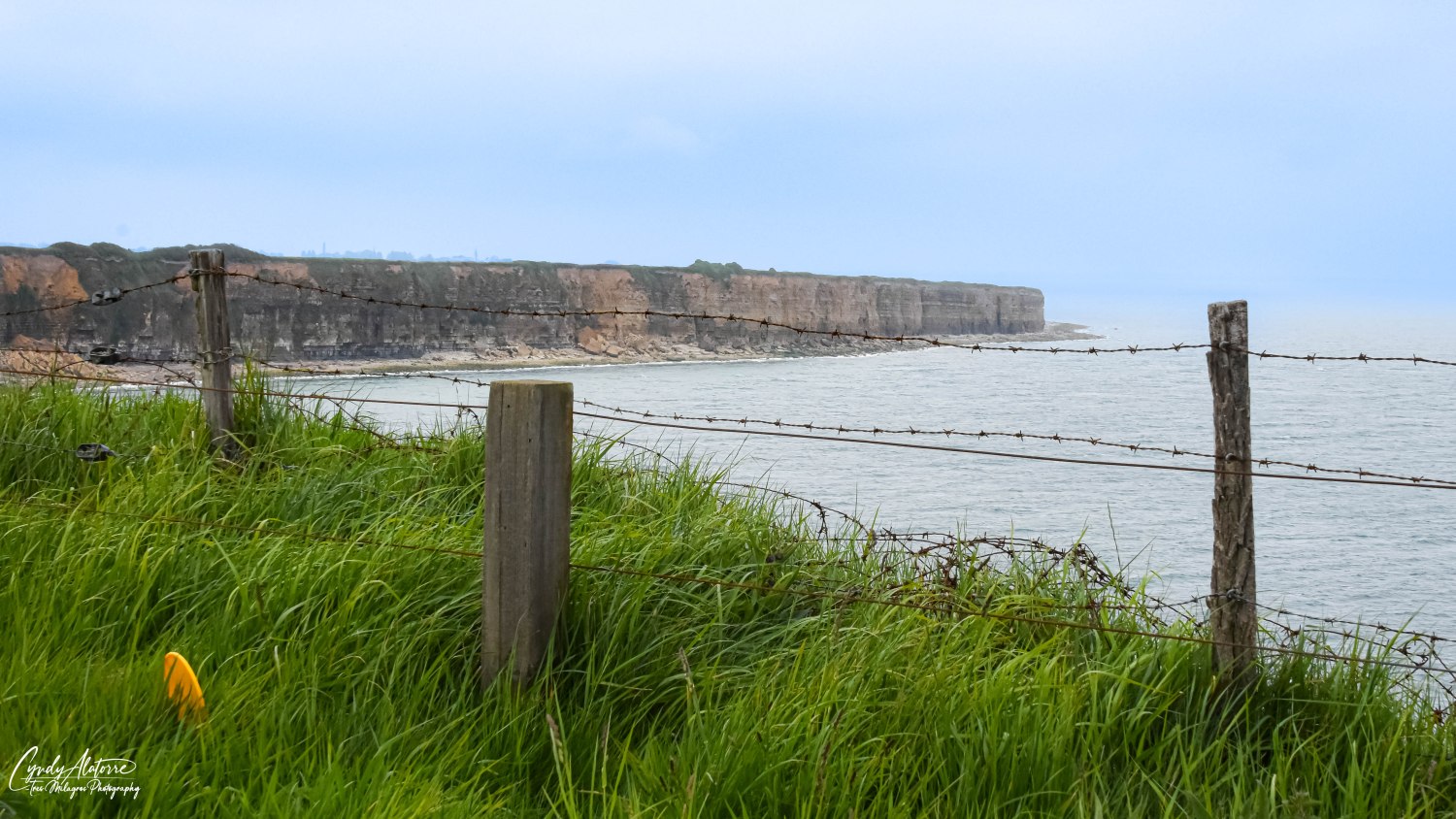
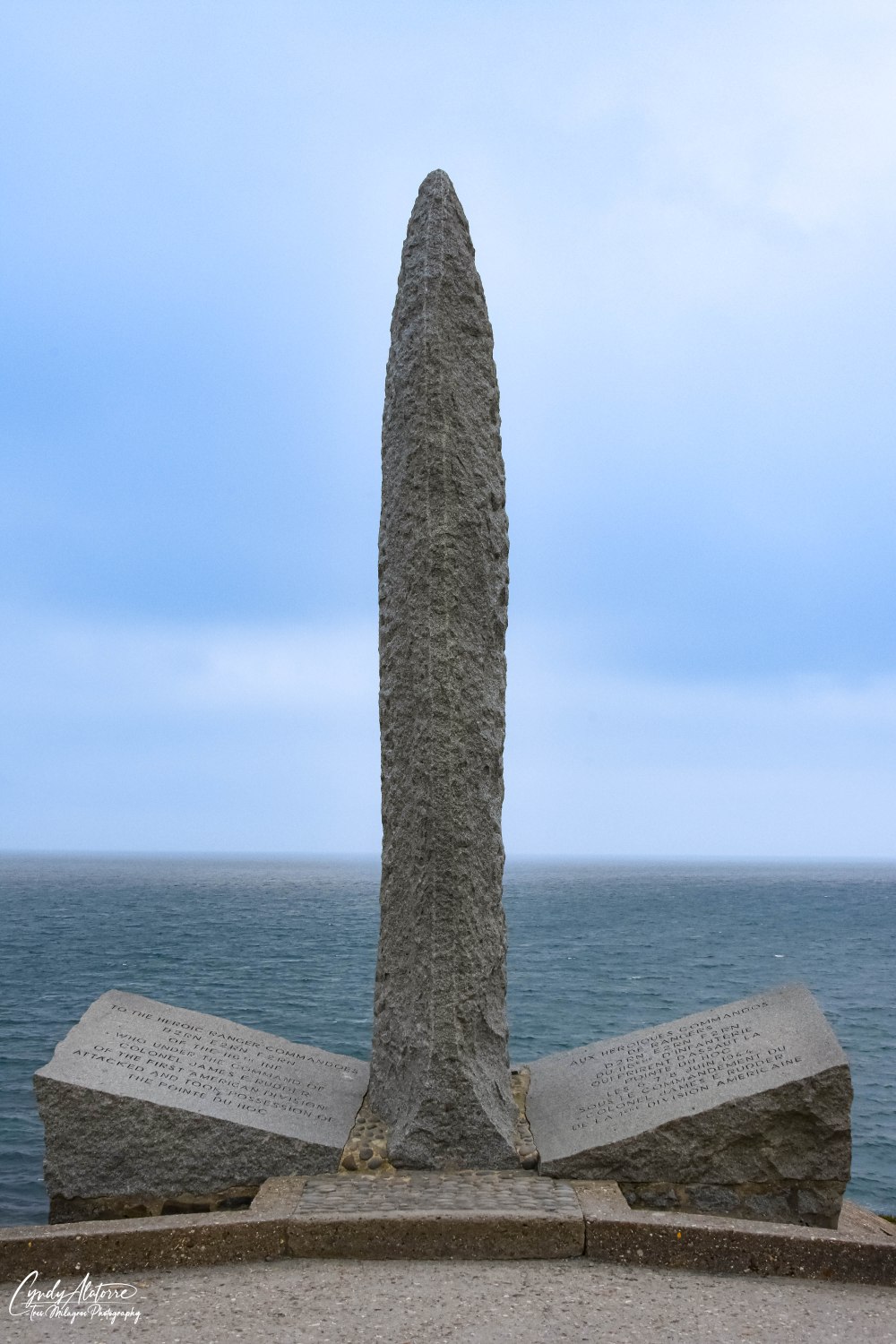
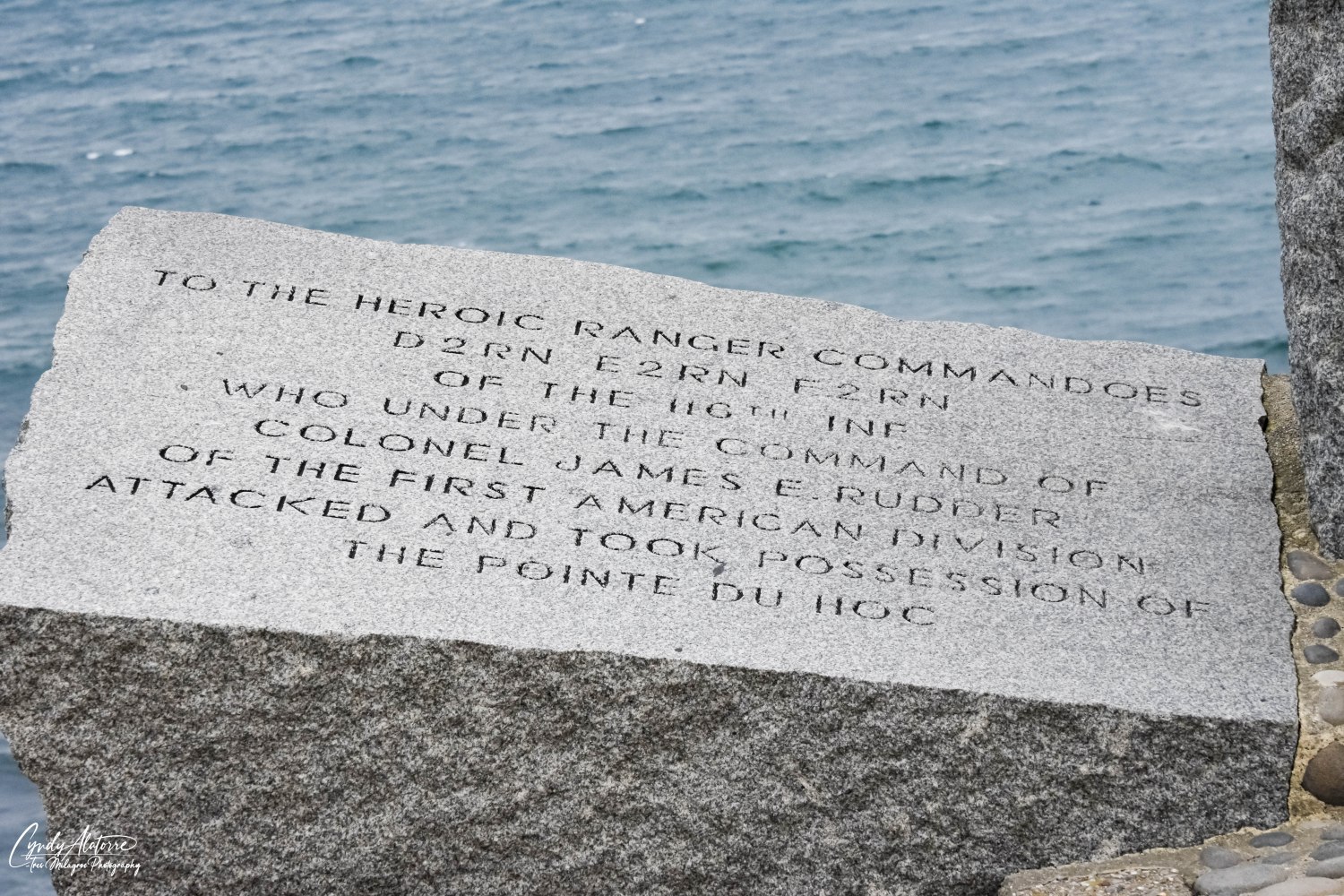
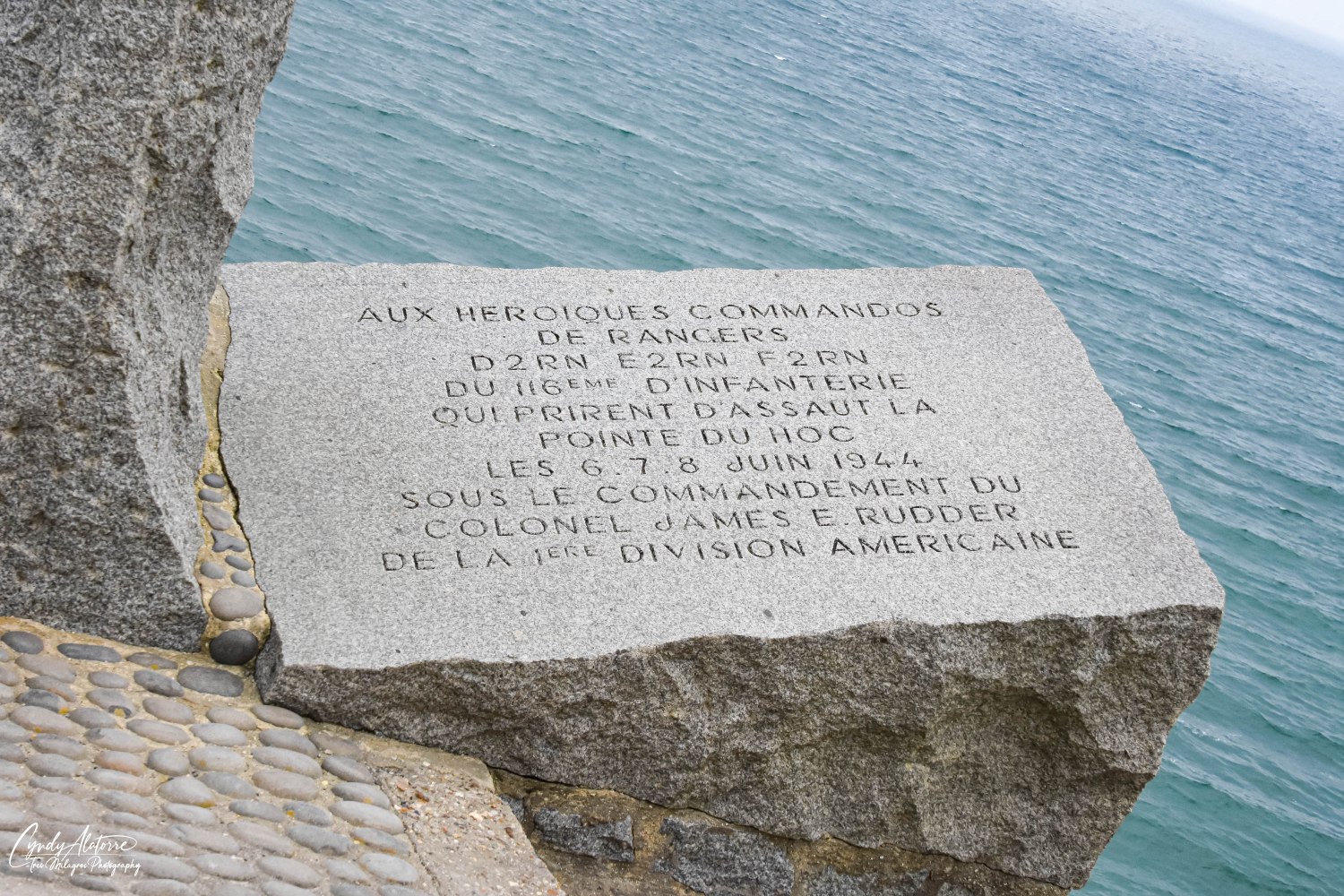
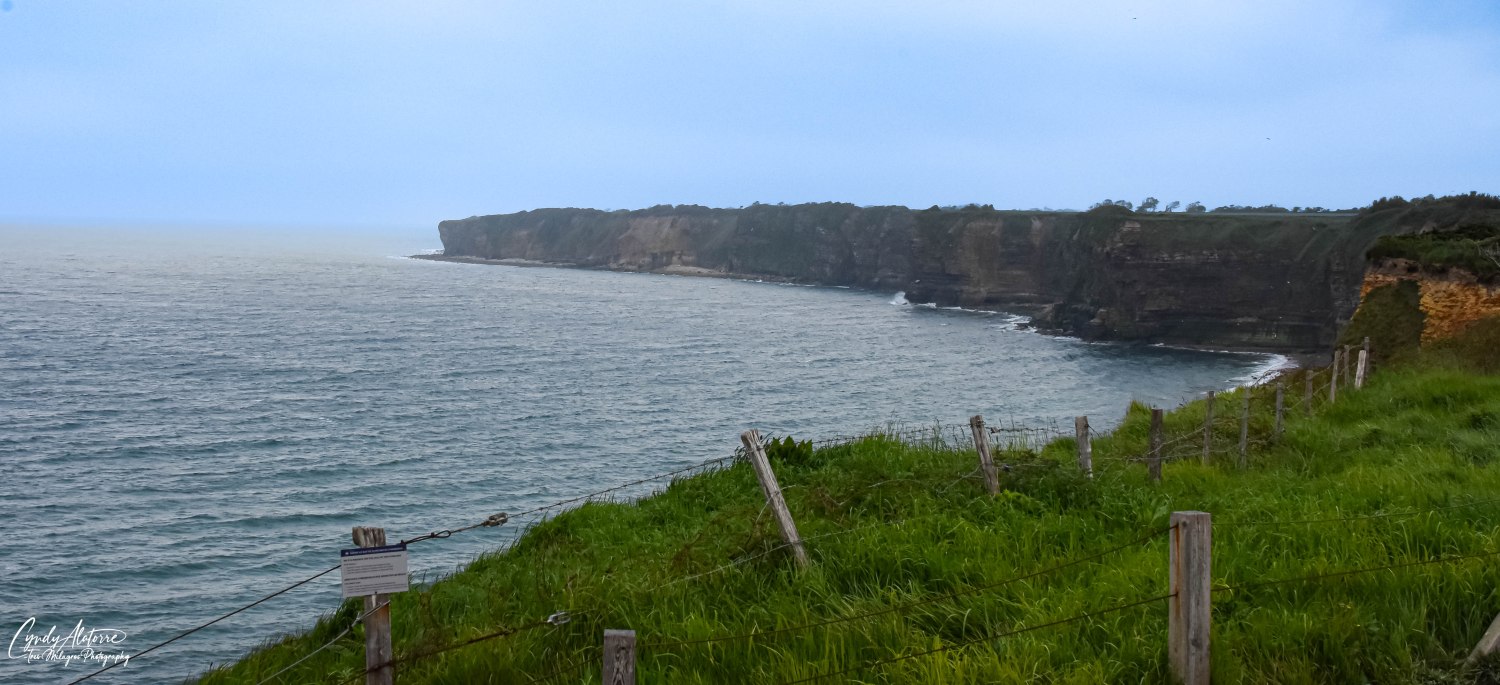
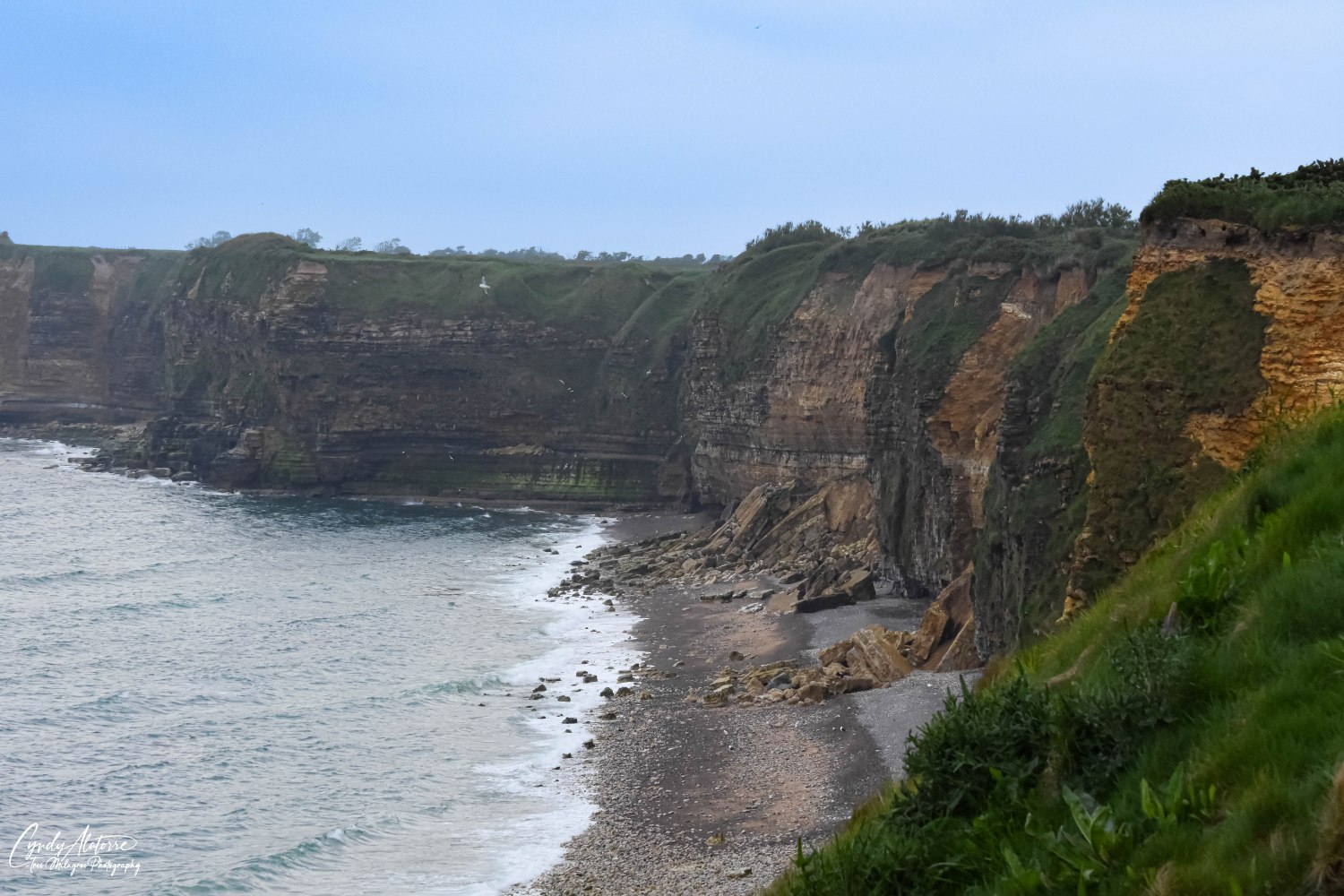
Driving 6.5 km (4.0 miles) east along the coastline, we arrived at Pointe du Hoc. With its 100 foot scenic cliffs and thin beach line, its terrain is vastly different from Utah Beach. A group of 225 U.S. Army Rangers were tasked with landing on this beach and scaling the high cliffs to the top, while under enemy fire. Once at the top of the cliff, they were to engage with the enemy and work their way to destroy the German batterie and get control of the coastal highway. Reading about this is one thing, but looking at it in person you think “how in the world did they accomplish this?”

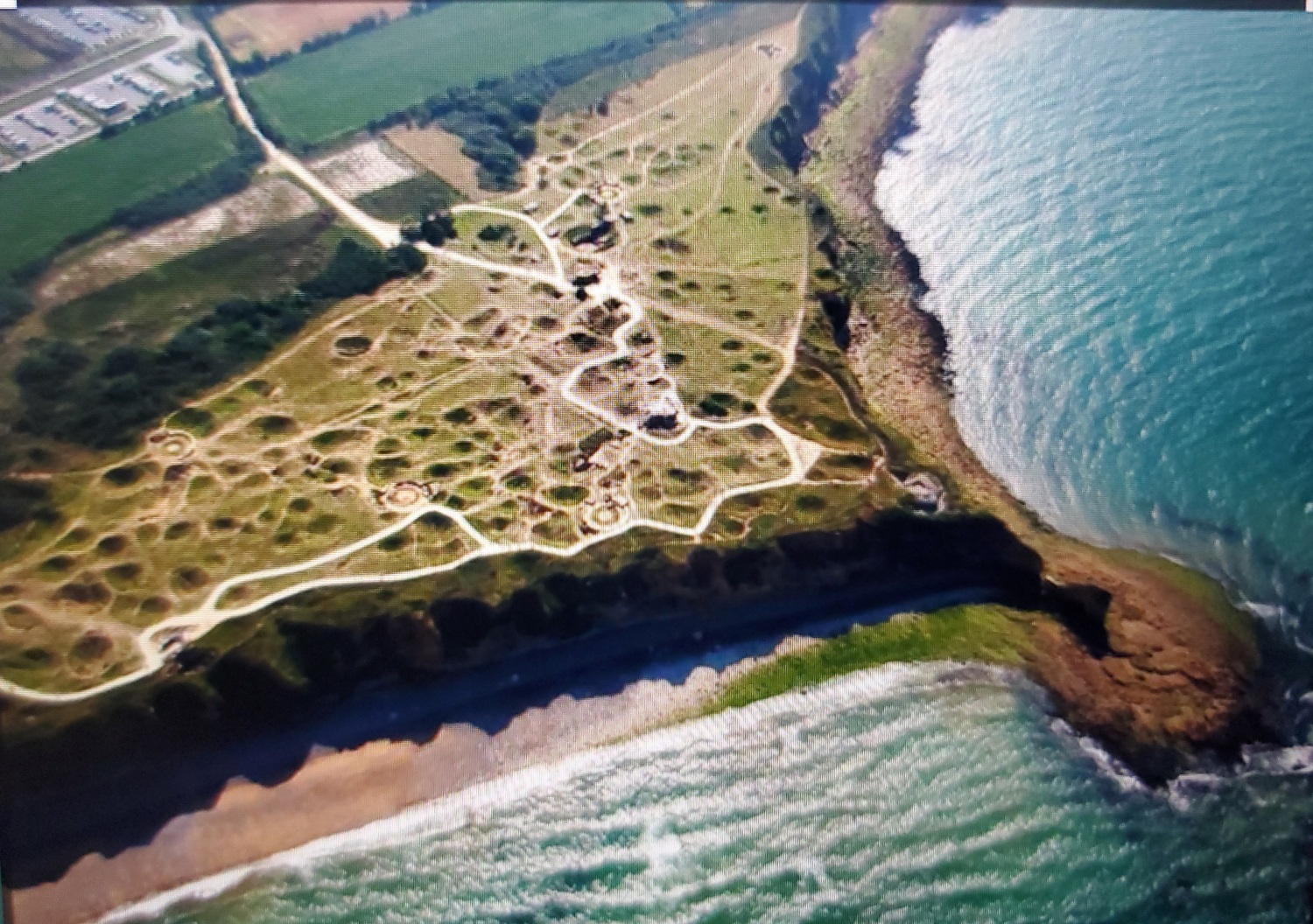
Using ropes, ladders, and their knives along with their sheer grit, these Rangers made it up that cliff to fight their enemy. At one point during the conflict, they were informed that support would not arrive for a few days and they would have to stronghold the area by themselves. After two days of fighting, 77 were killed and only 90 of the original 225 were still able to fight. As I listen to our guide explain what transpired, I was in awe at their ability to accomplish this feat in the midst of so much turmoil. Below are photos of Pointe du Hoc and note the cliffs they had to overcome to fulfill their mission on D-Day.

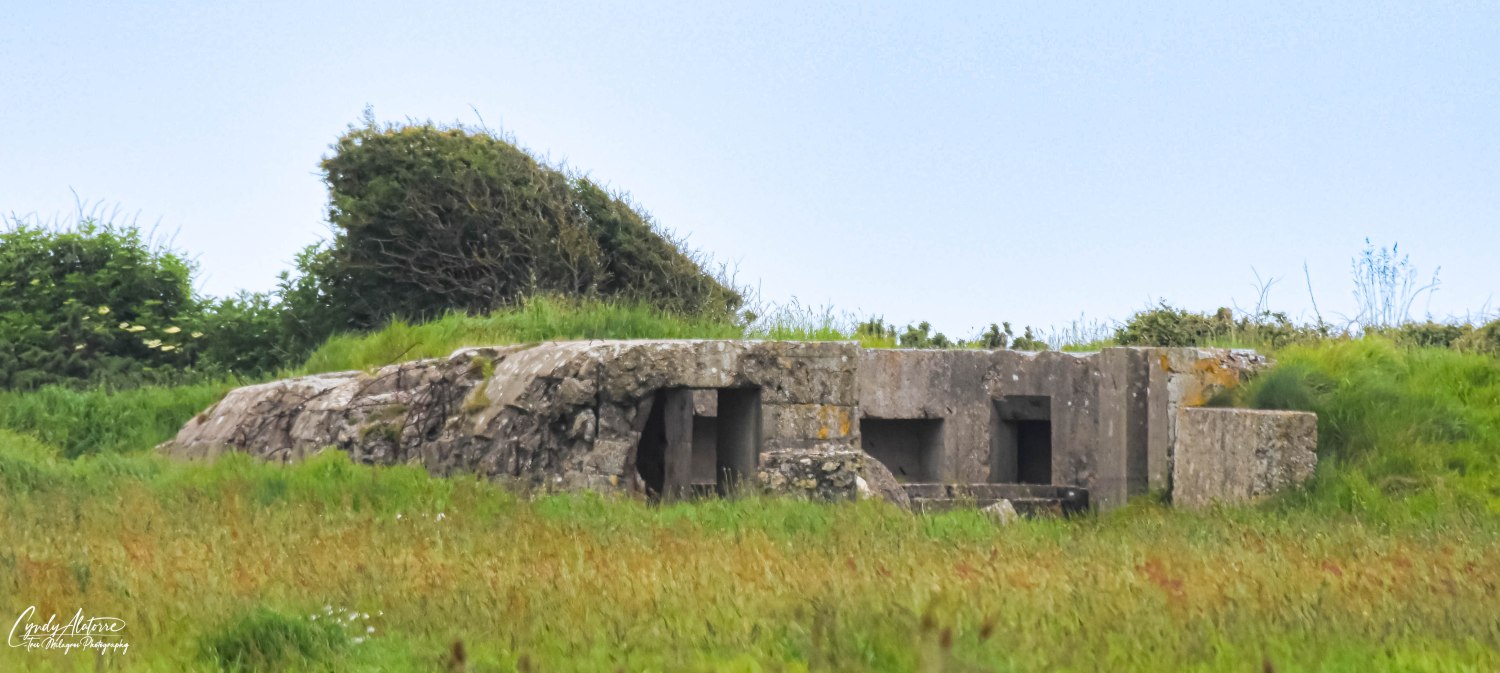
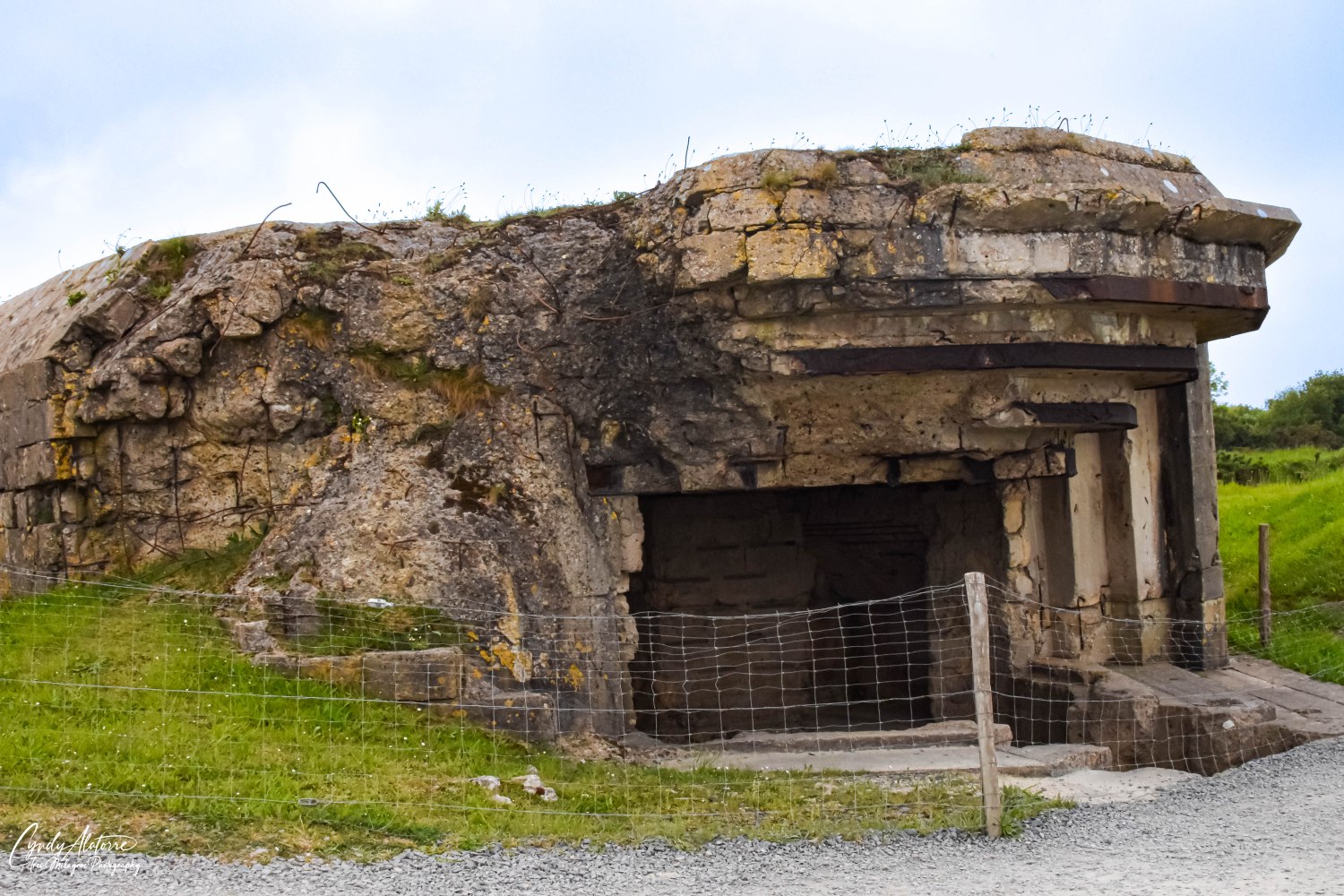
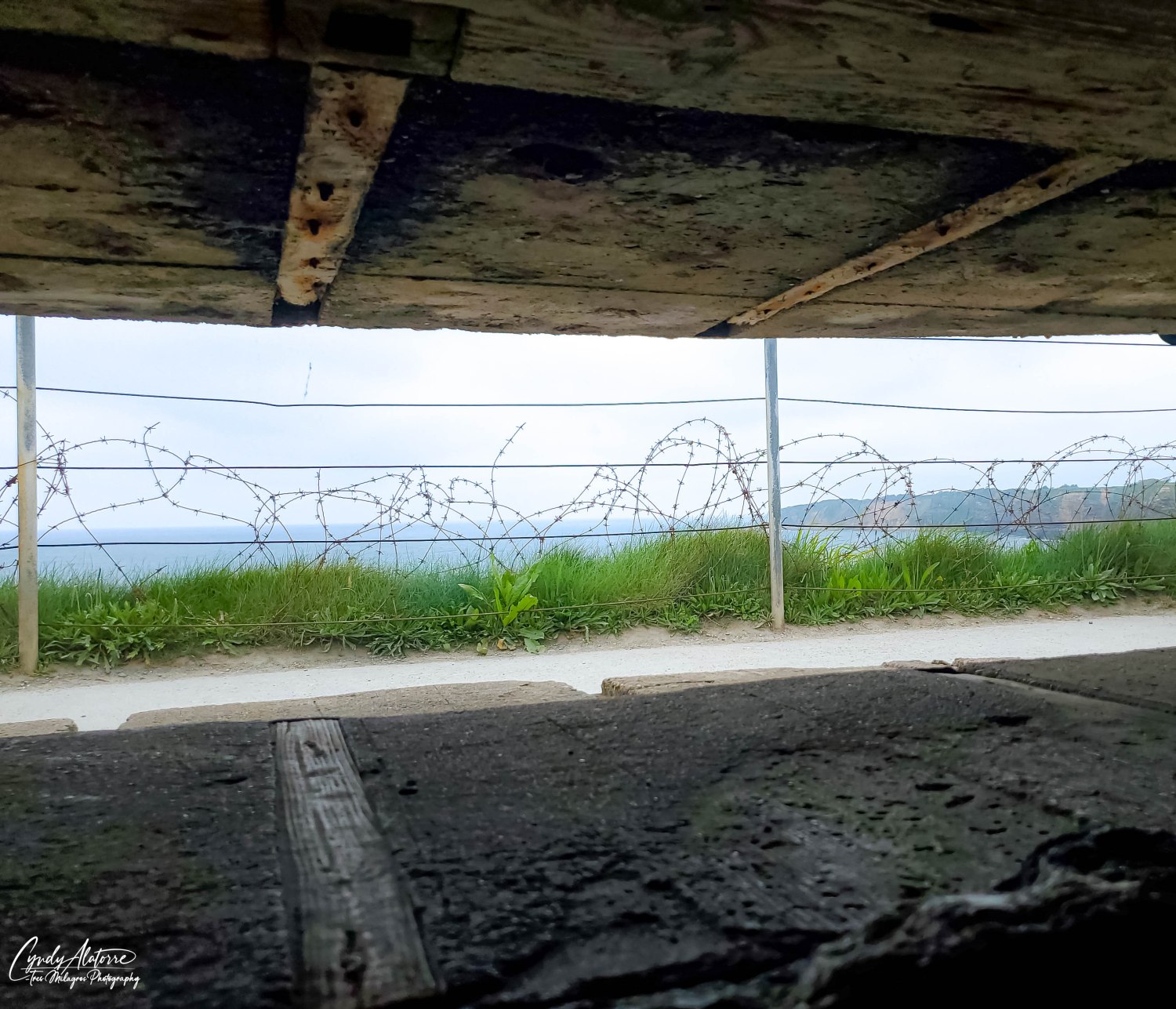
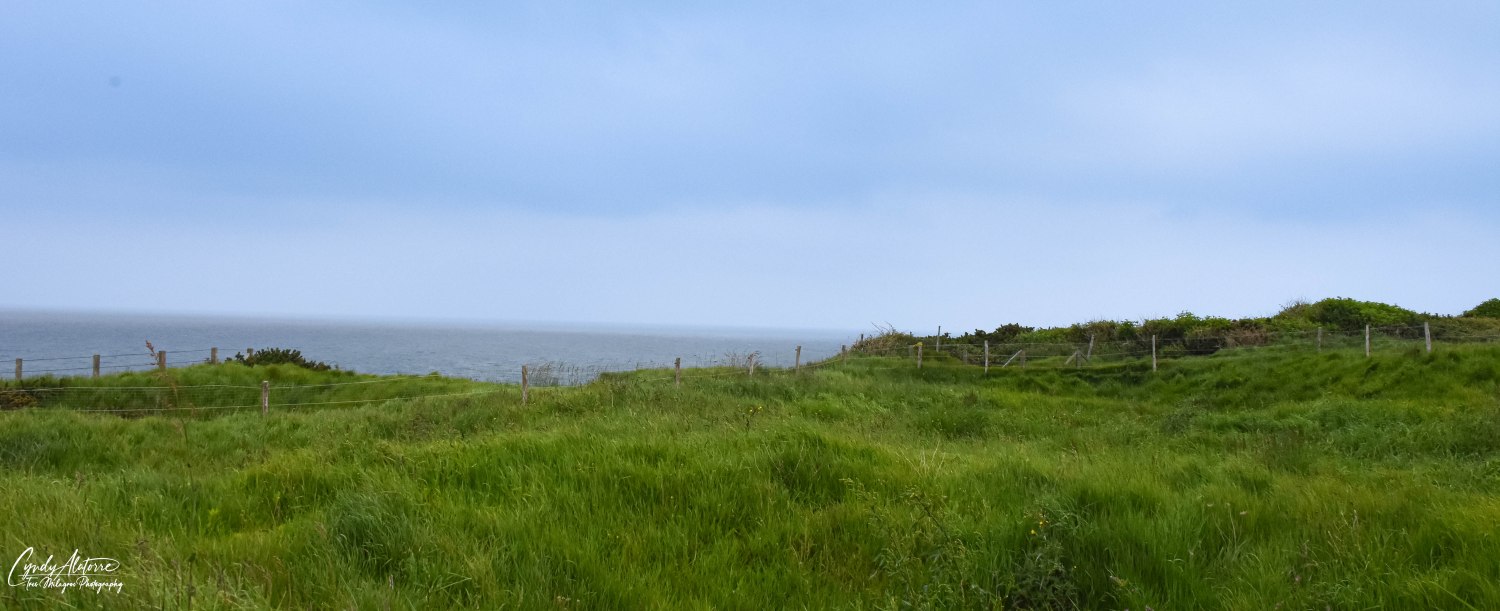
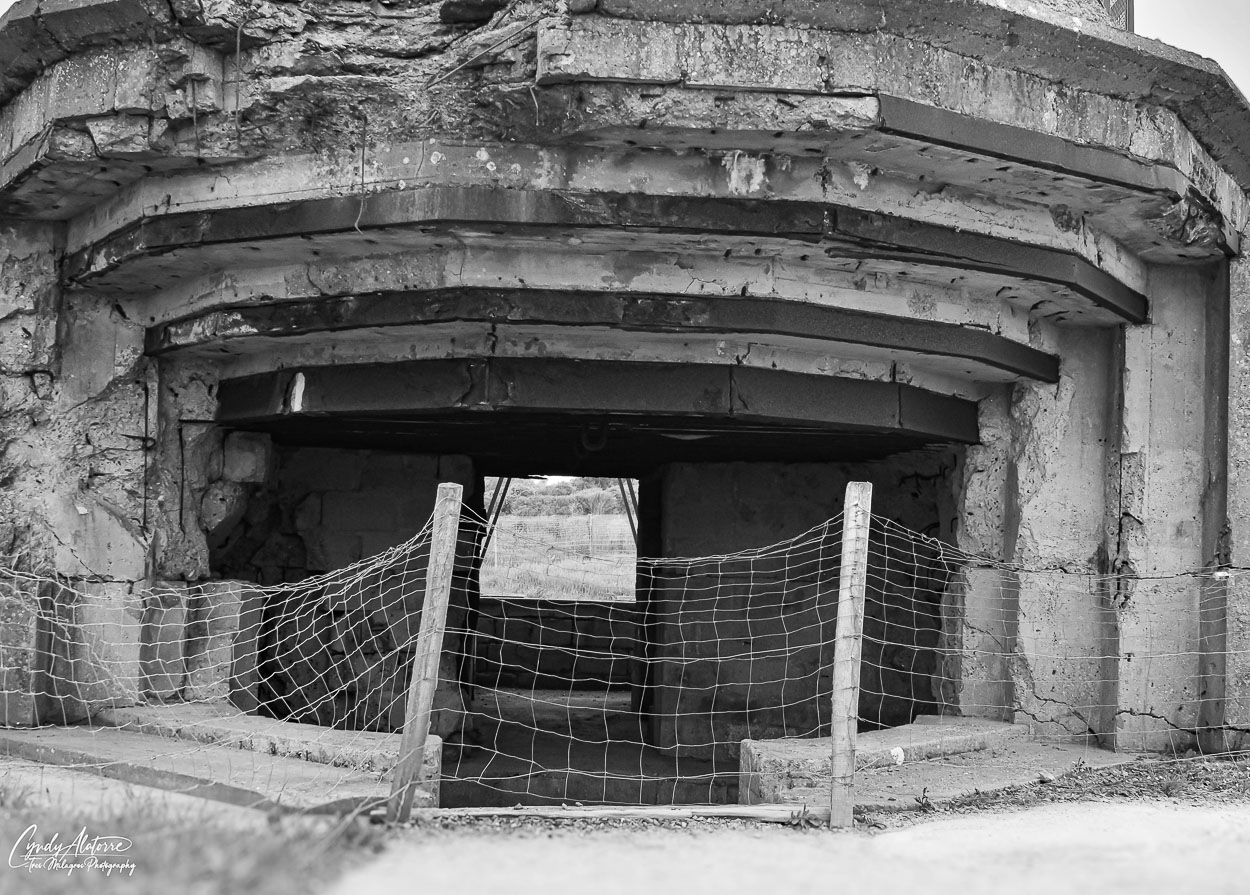
Bombarded by the Allied Forces, many craters are still visible at Pointe du Hoc and the uneven landscape gives you an idea of how intense the fighting was. Seeing the German bunkers and scarred landscape impressed just how powerful the artillery was for both sides. It was time to visit our last site, Omaha Beach, to bring it all together.

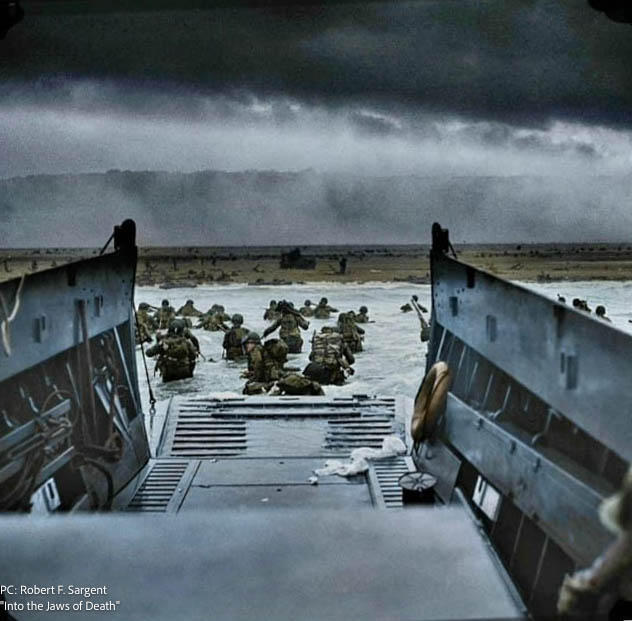
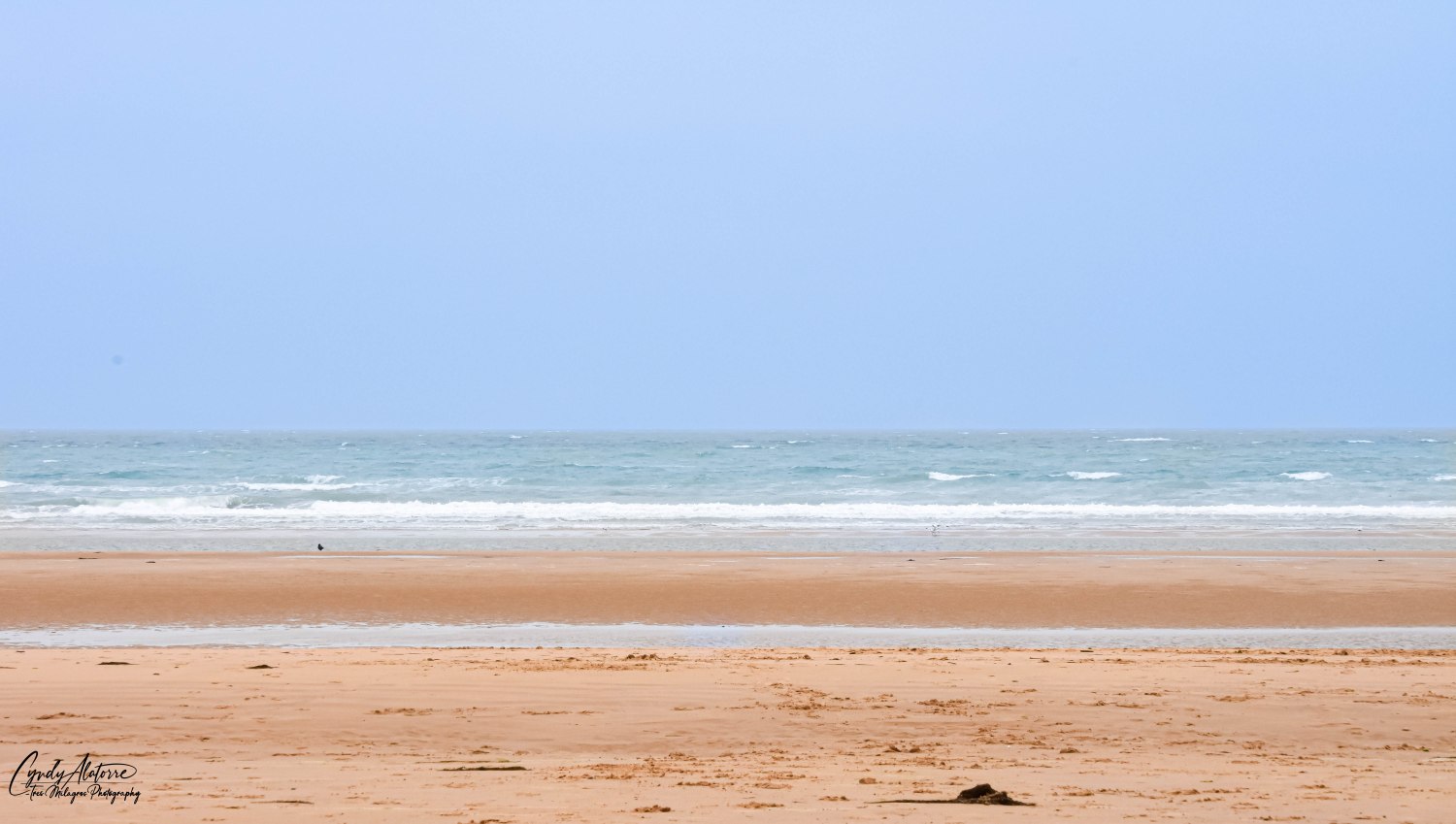
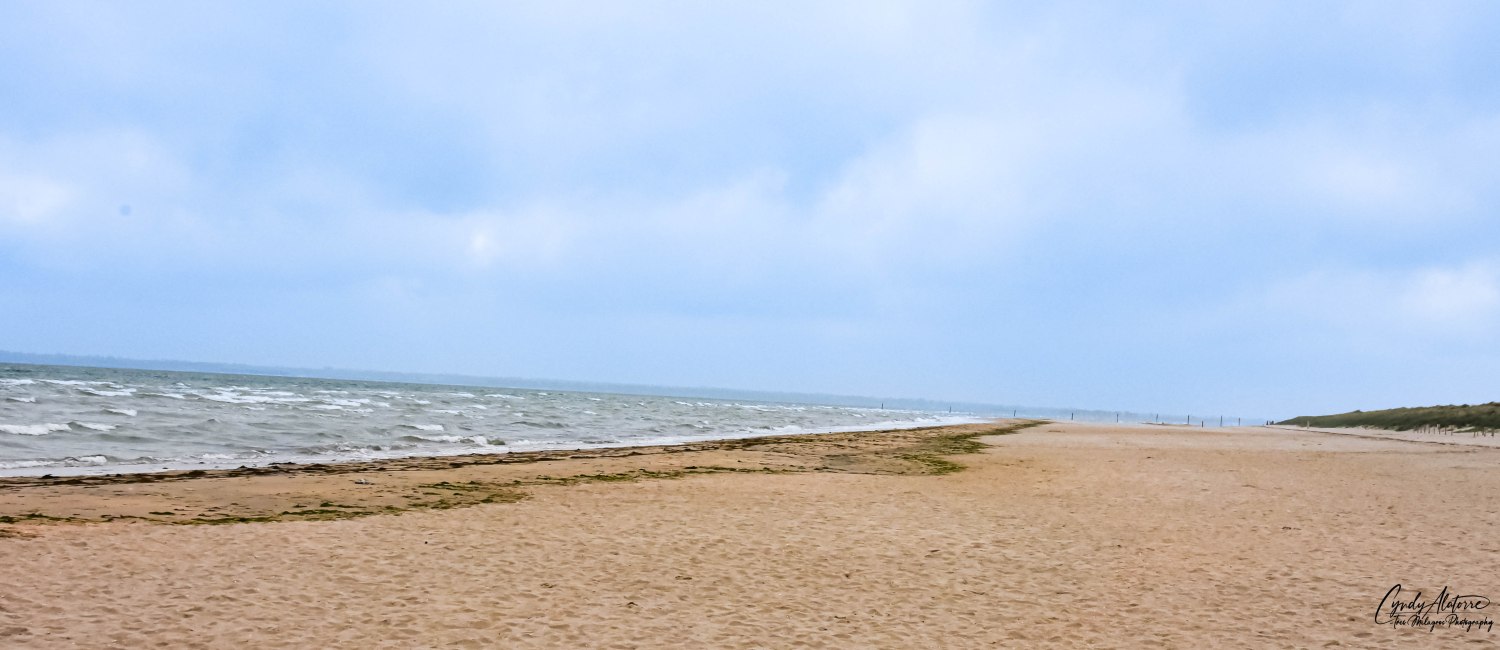
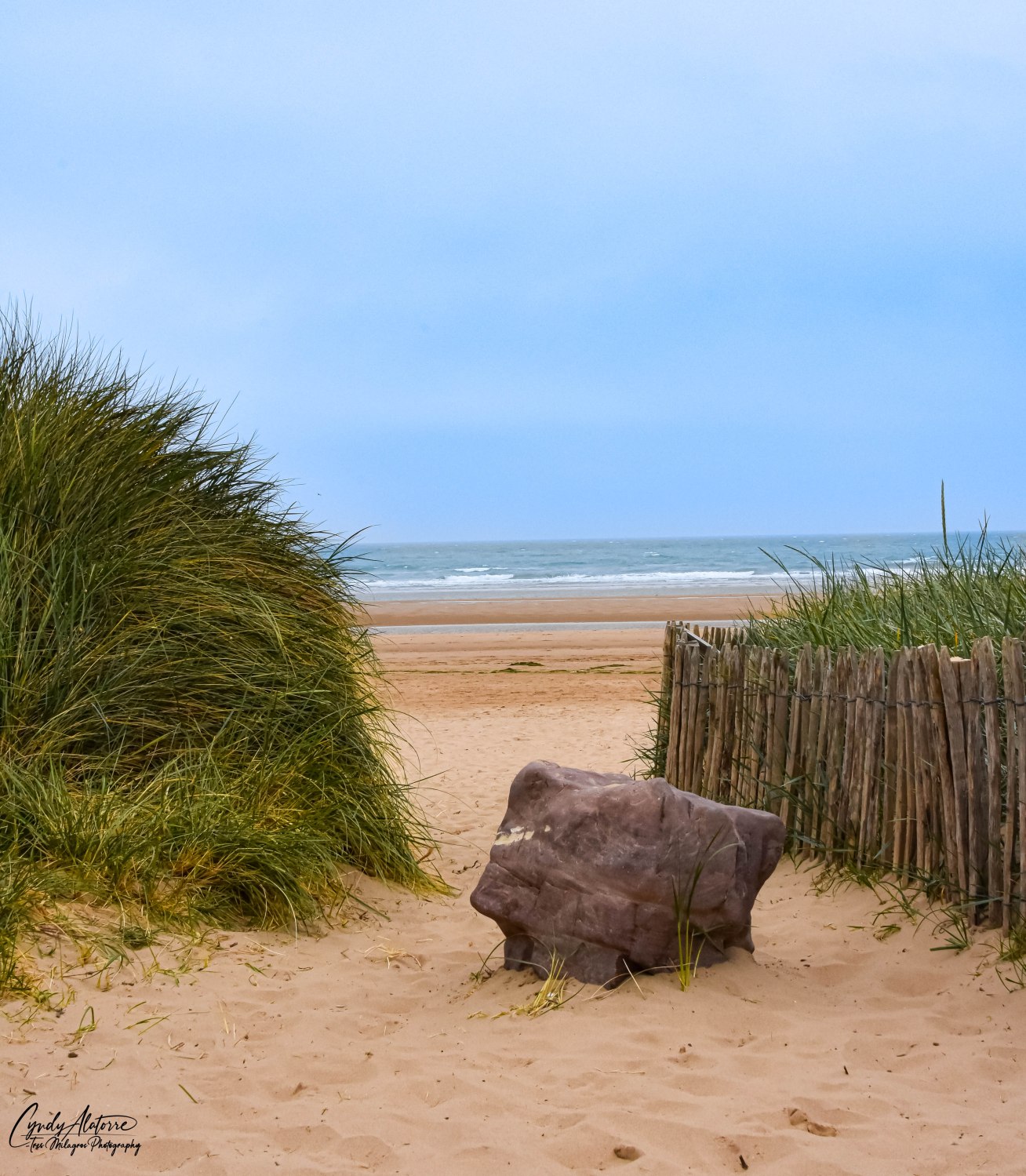
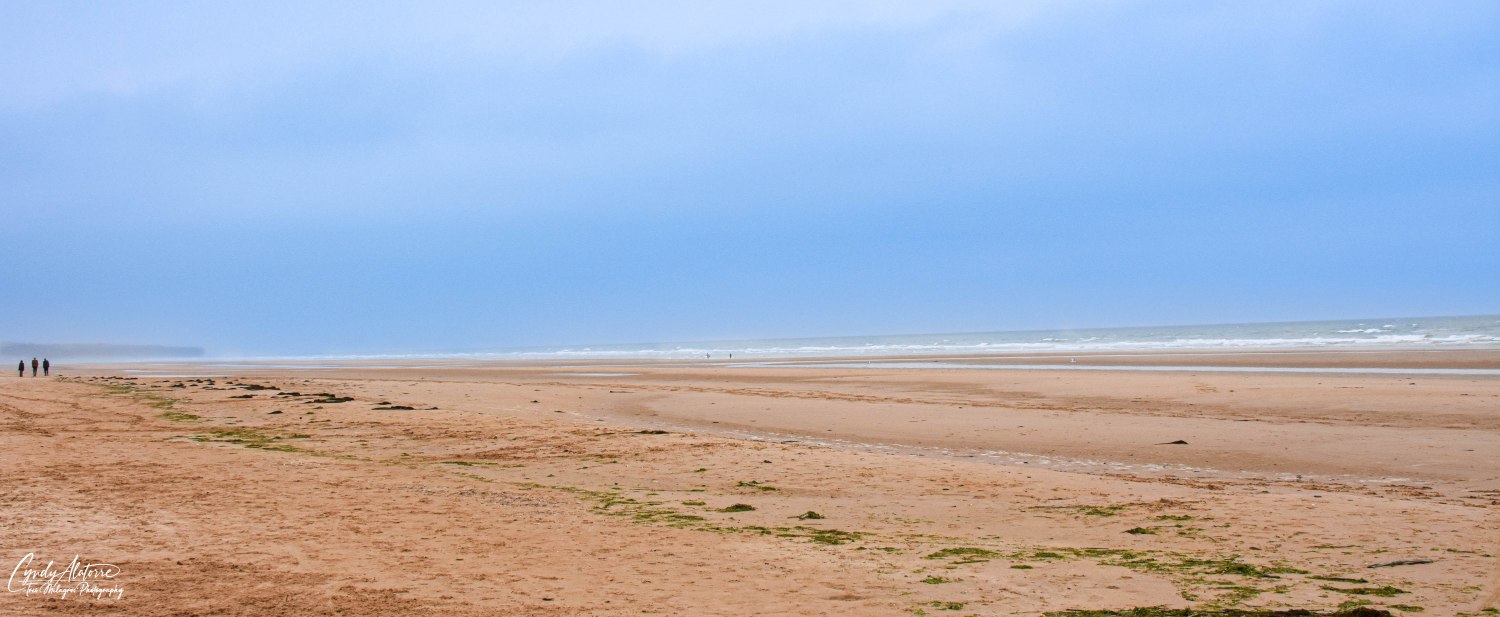
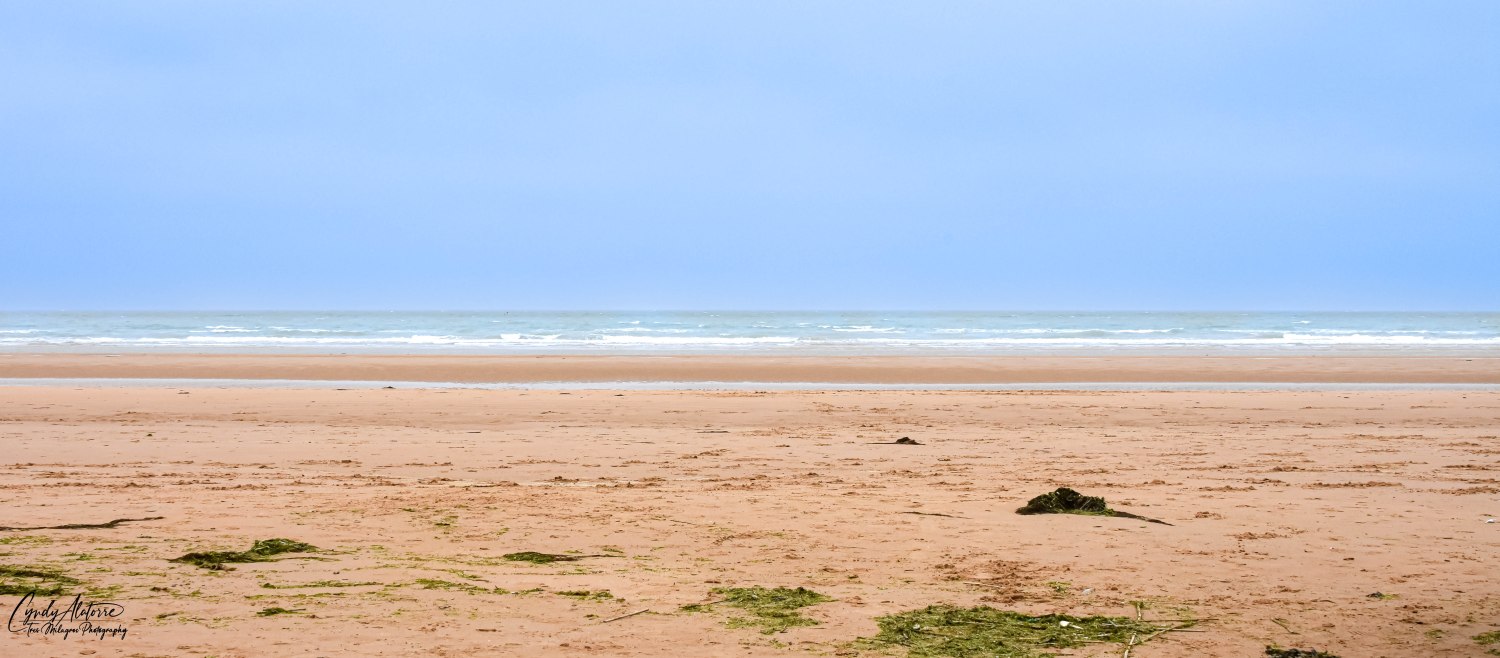
A few minutes east, we arrived at Omaha Beach. Looking at the long beaches, there was no indication of what had occurred 80 years ago. It’s as if nature stepped in and healed the land. With its long shore, 100 foot cliffs and armed German forces already on the shore, a daunting task awaited the men arriving on Omaha Beach. Photographs and film are the only visual documentation that shows the actual scenes of D-Day and even then, it seems surreal. On June 6th at 6:30 a.m., the U.S. 1st and 29th infantry divisions started their assault. 34,250 troops landed on Omaha beach by nightfall, however, they experienced the worst of the whole D- Day operations. Suffering more than 4,400 casualties, the Allied Forces efforts and sacrifice were at a great expense but not in vain as it changed the tide in the war. 

Visiting Omaha Beach and all the other locations in Normandy has been a very personal experience for me.  Appreciation and thankfulness is what I felt for those men who had stormed the beaches and other sites that day in June 1944. I quietly offered my gratitude for those who perished and those that survived. How could you not be thankful? Now having been to Normandy and learn about this historic event, I felt I had just been educated on one of the most important history lessons.

If you want to get a visual depiction of the events involving D-Day and Normandy, the movies “Saving Private Ryan” and “Band of Brothers” are good reference points. The book “D-Day” by Stephen E. Ambrose, is another good resource too.  Out of extraordinary circumstances, remarkable men arise. This couldn’t be more true with the events of World War II. These men deservingly earned the title as “The Greatest Generation”.  

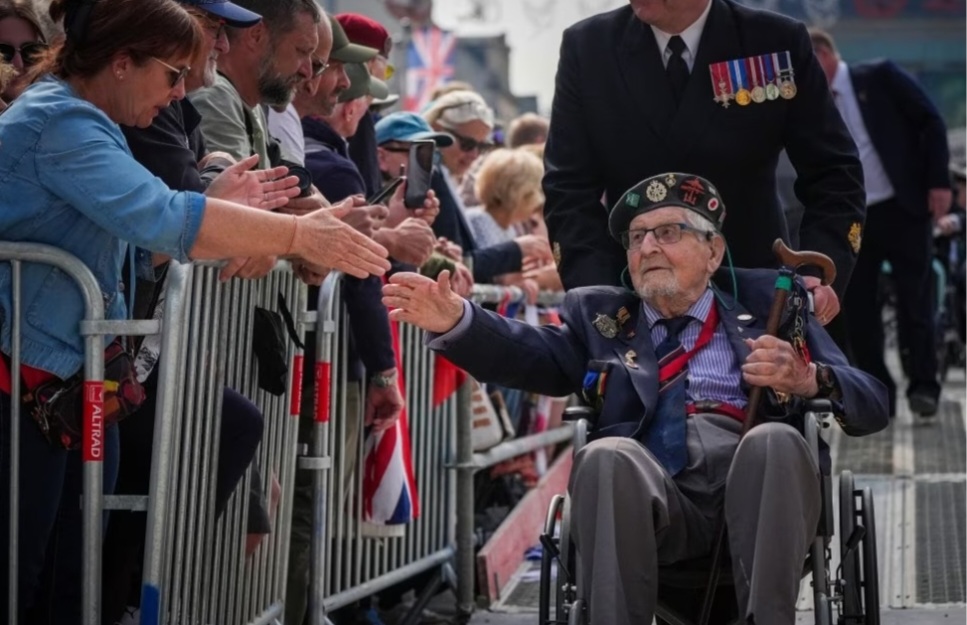
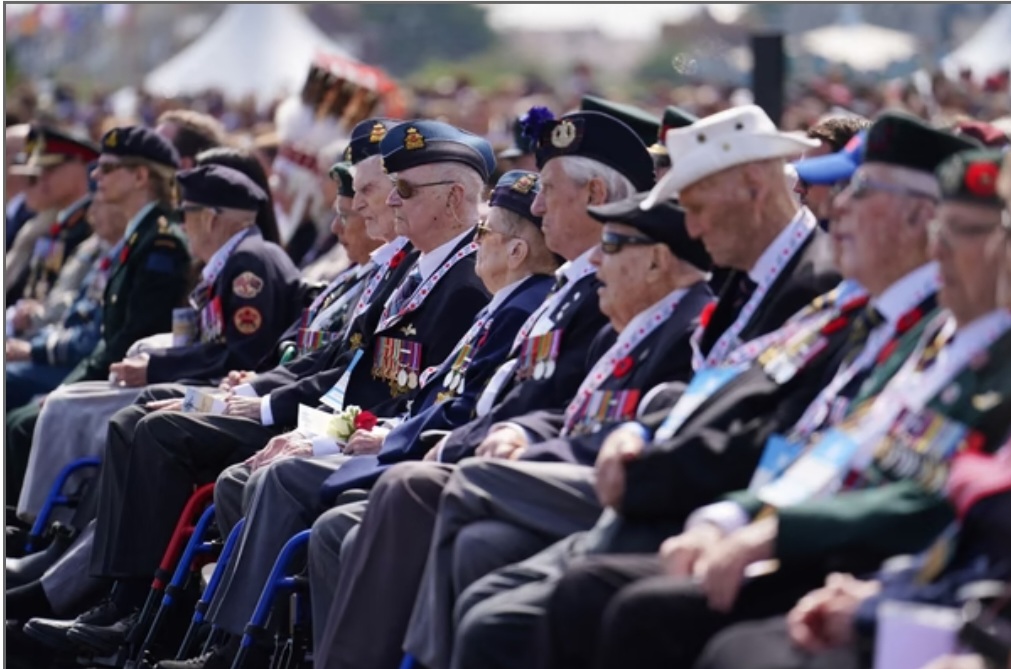
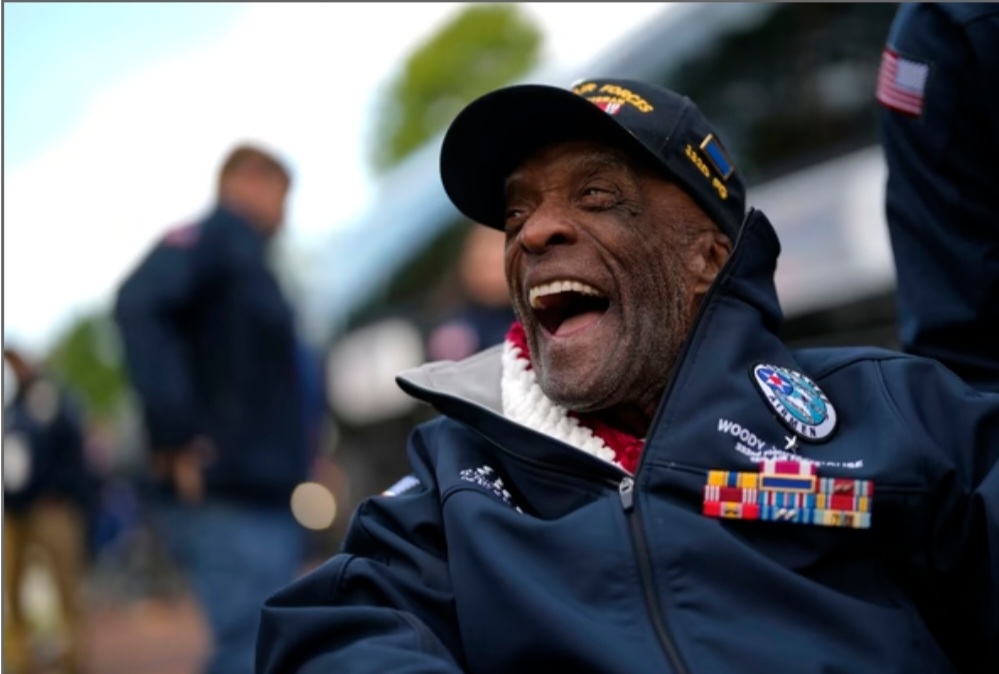
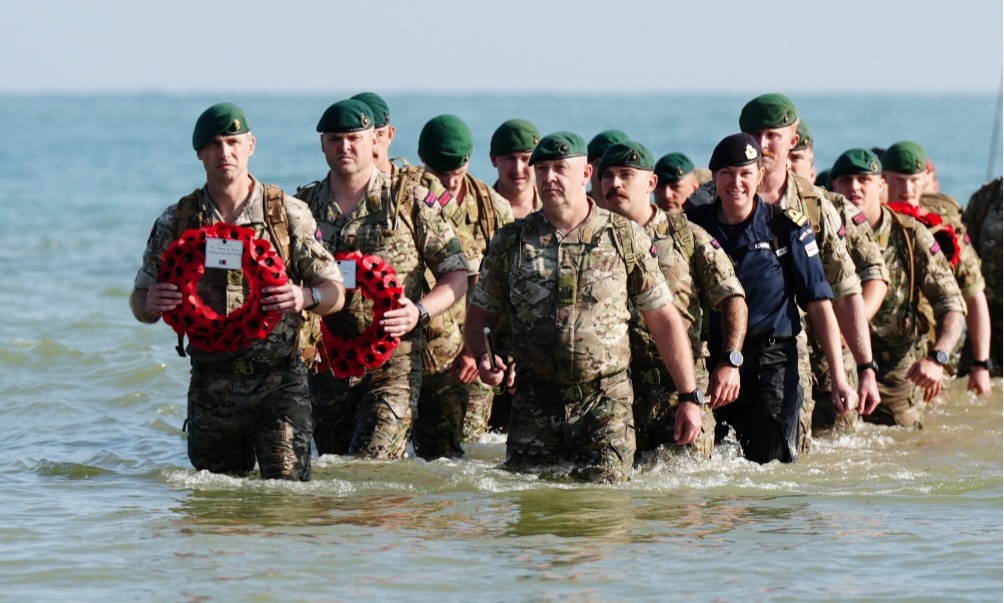
I’ve met a few of these veterans and my lasting impression is that they are “a different breed” and we have so much to learn from them. Recently a news reporter asked a WWII veteran if he had any last thoughts about D-Day and he replied “It was a job we had to do and we did it for freedoms sake”. Now it’s our task to keep sharing the story of D-Day with current and future generations so that they will know of the heroics of the men and women of “The Greatest Generation” and how they changed history.

Until next time, we’ll keep moving on and see were we go via El Camino Thru My Lens.  
Featured

“Port Winston” ~ Arromanches, France

What influences you to decide where to go when traveling? Is it time, money, visiting family or friends? Or do you just throw a dart at a map and go where it lands? Now that is a true adventurist!  For me, it can be little of all the above, but to be honest, this trip to Normandy has been on my bucket list. Both of my grandfathers served in World War II, one in Europe and the other in the South Pacific and their service during the war has always peaked my interest to learn more about the historical events and places involving World War II.

Some time back, I had read about the Normandy region with its beautiful countryside, its local culture and how it played such an important role and changed the tide in World War II and it got my attention. Throw in that I really enjoyed France on previous trips and it was a no brainer…we were going to Normandy.  The 80th anniversary for D-Day is quickly approaching (June 6th), and I wanted to educate myself before I went and so the research started.  I did my homework and read the Stephen E. Ambrose book, “D-Day”, researched other documents as well as watched “Band of Brothers”, “Masters of the Air” and “Private Ryan” and any other documentaries I could find about World War II.  I would soon find out how much more there was to learn and was enlightened about these cities and their role in changing world events. 
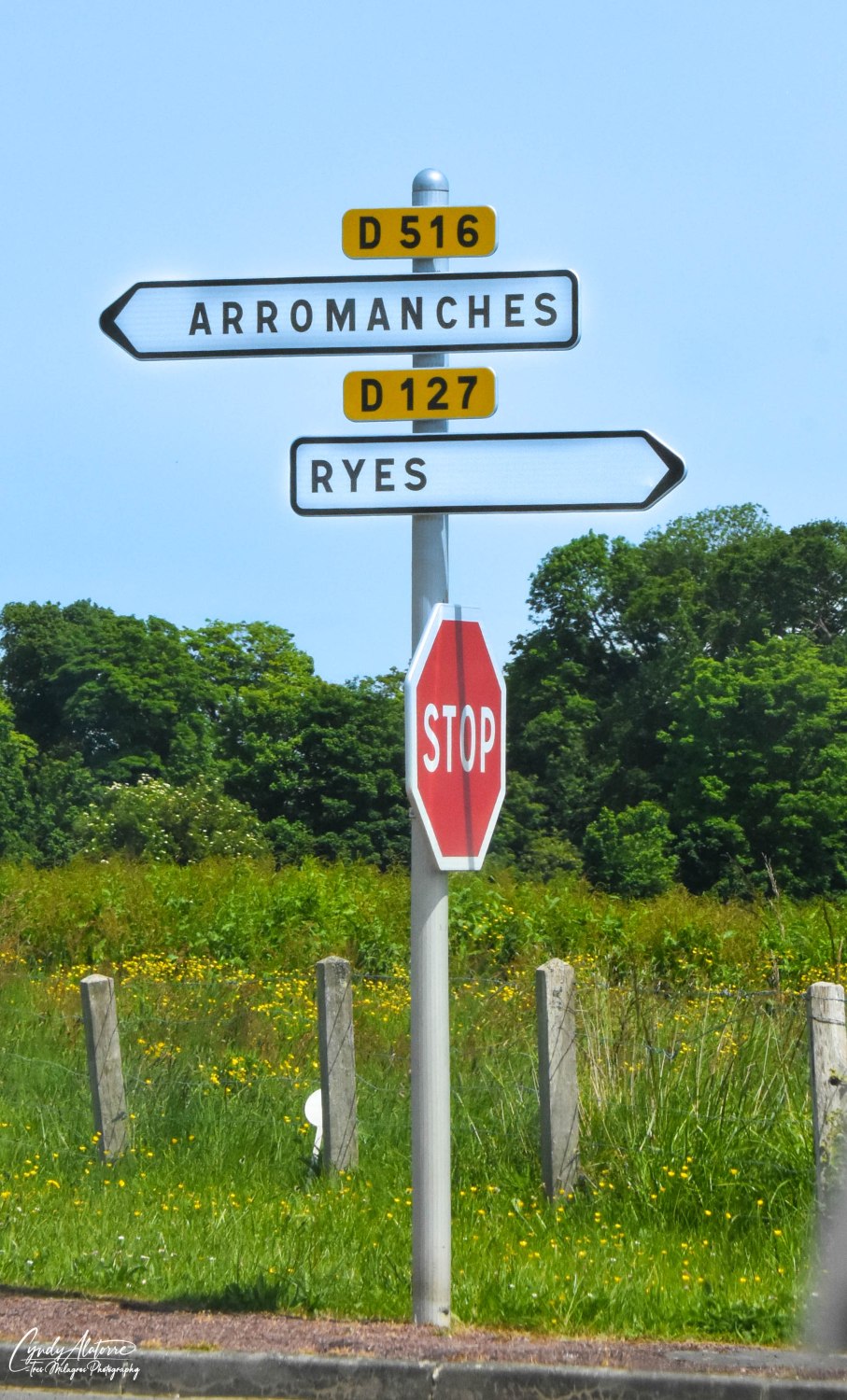
Once we got settled in our home base in Bayeux, it was time to go out and start exploring. Located 20 minutes or 13.2 km from us, our first stop was Arromanches, France or as it’s known “Gold Beach”. On June 6, 1944, as Allied forces landed on the beaches of Normandy to begin the liberation of  France, British and Canadian forces were landing on the beaches at Arromanches to secure this crucial site.  The allied forces needed two ports to off load their supplies to support this massive effort and the nearby deep-water ports of Cherbourg and Le Havre were occupied by the Germans, who would strongly defend these areas. 
Arromanches, was chosen to be one of two ports that the allied forces would use to bring supplies to support this massive operation and became known as “Mulberry Harbor B”.  A similar port was constructed in Saint-Laurent-sur-Mer and was named “Mulberry A”, however, it was destroyed shortly after D-Day in a storm. To say that the construction of these man made ports was an enormous and remarkable engineering feat is an understatement.

The idea of a floating harbor came from British prime minister Winston Churchill, who knew creating a harbor at sea was preferable to attempting to seize a well defended port. All of the necessary elements were there to make this happen as Arromanches was mostly untouched by the bombing on D-Day, its close proximity to the other allied forces and flat beaches would make it quick and easy to construct. 

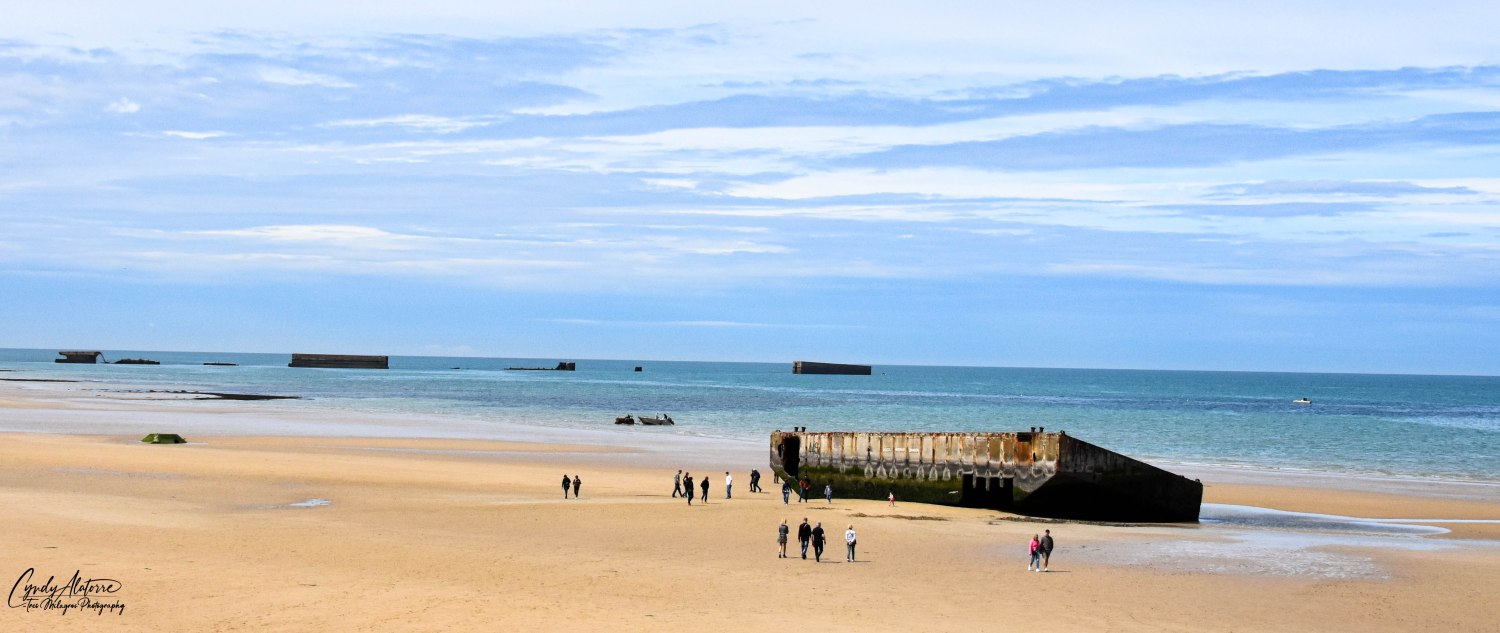
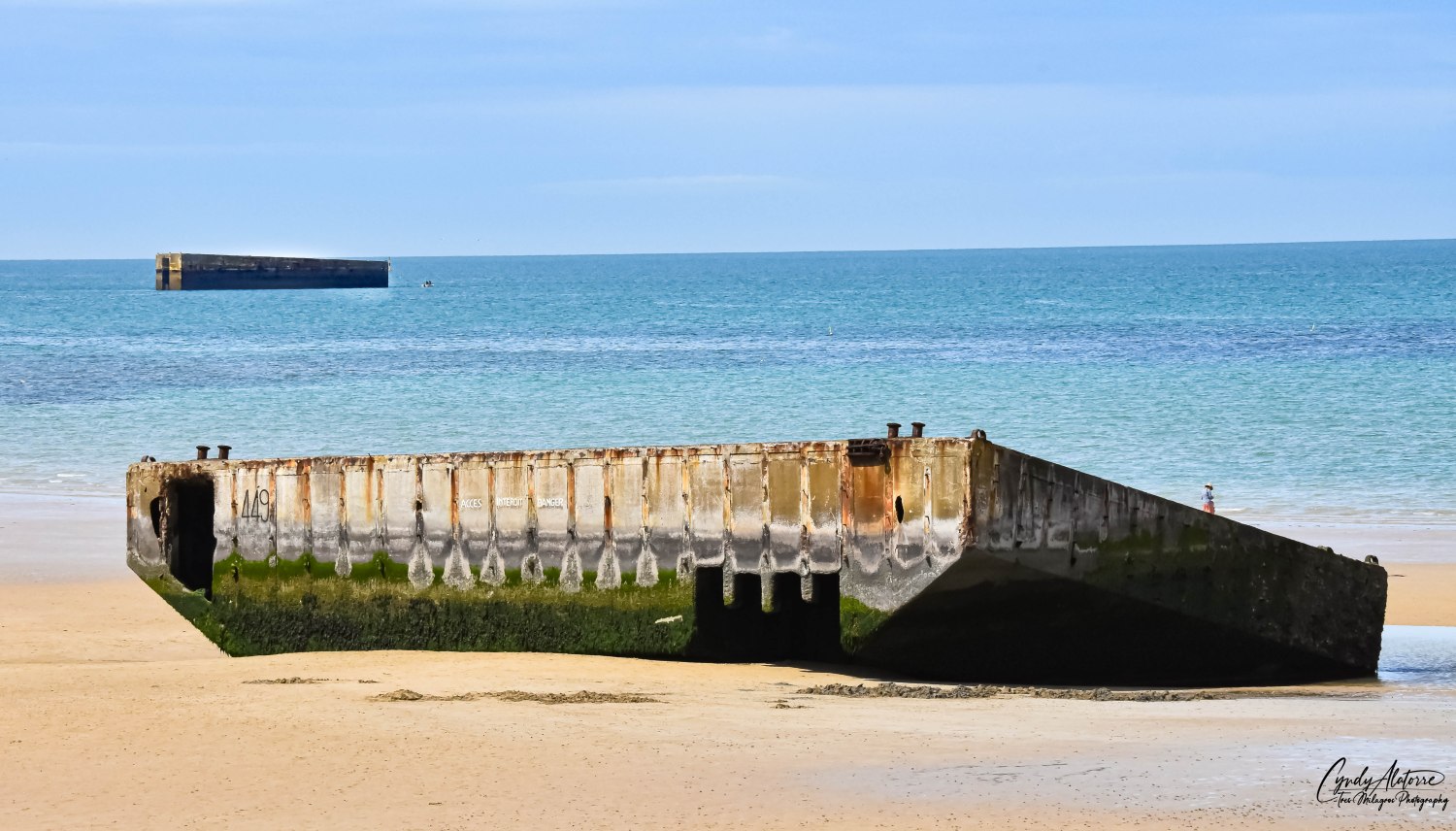
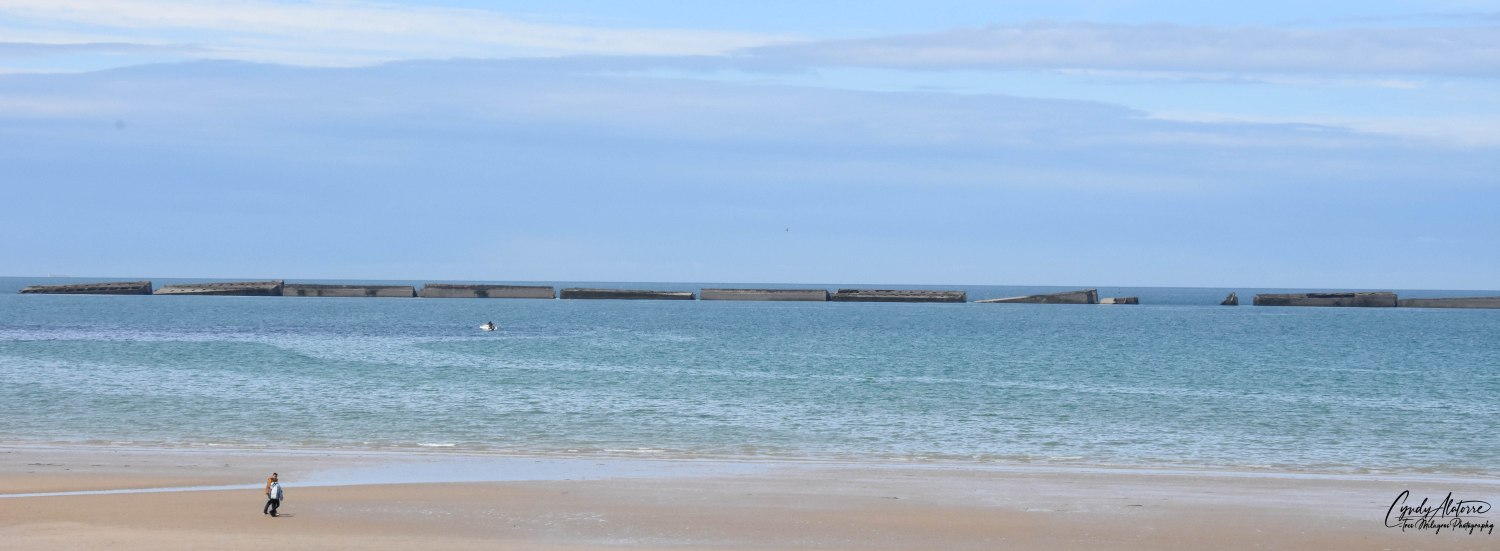
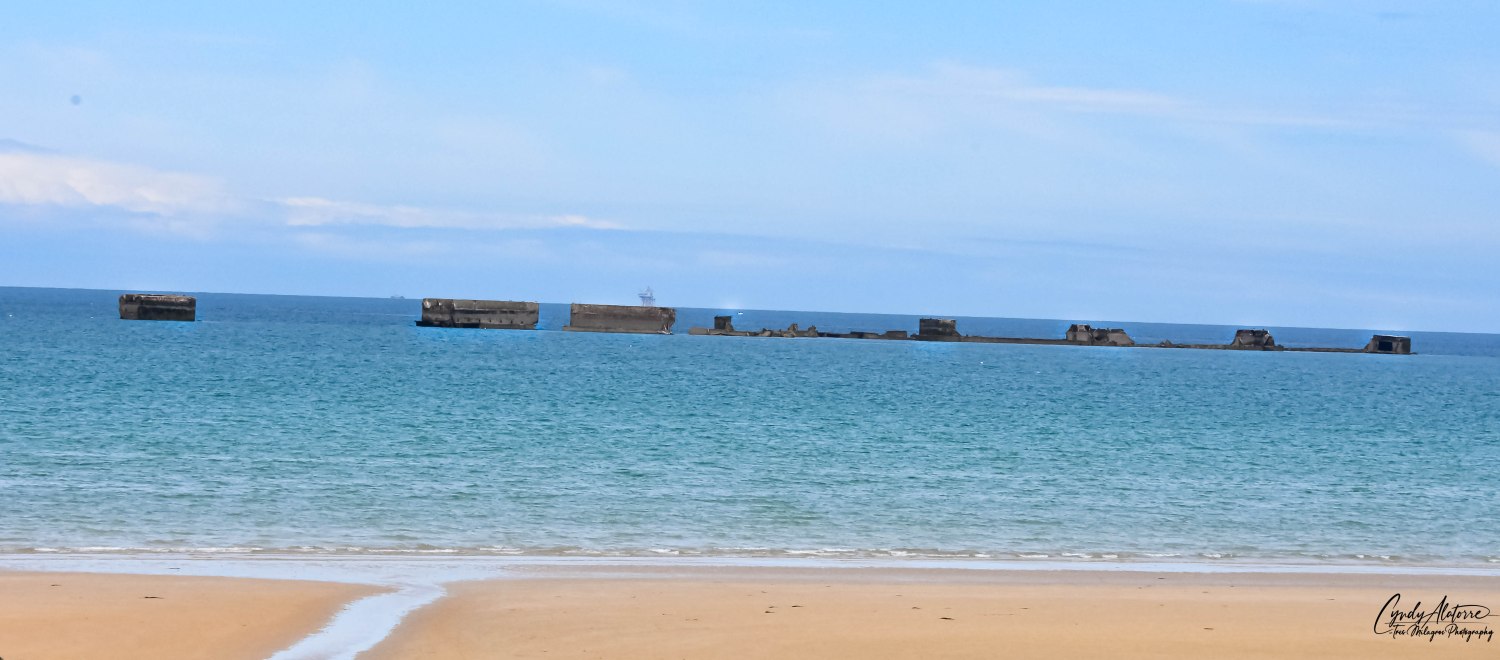
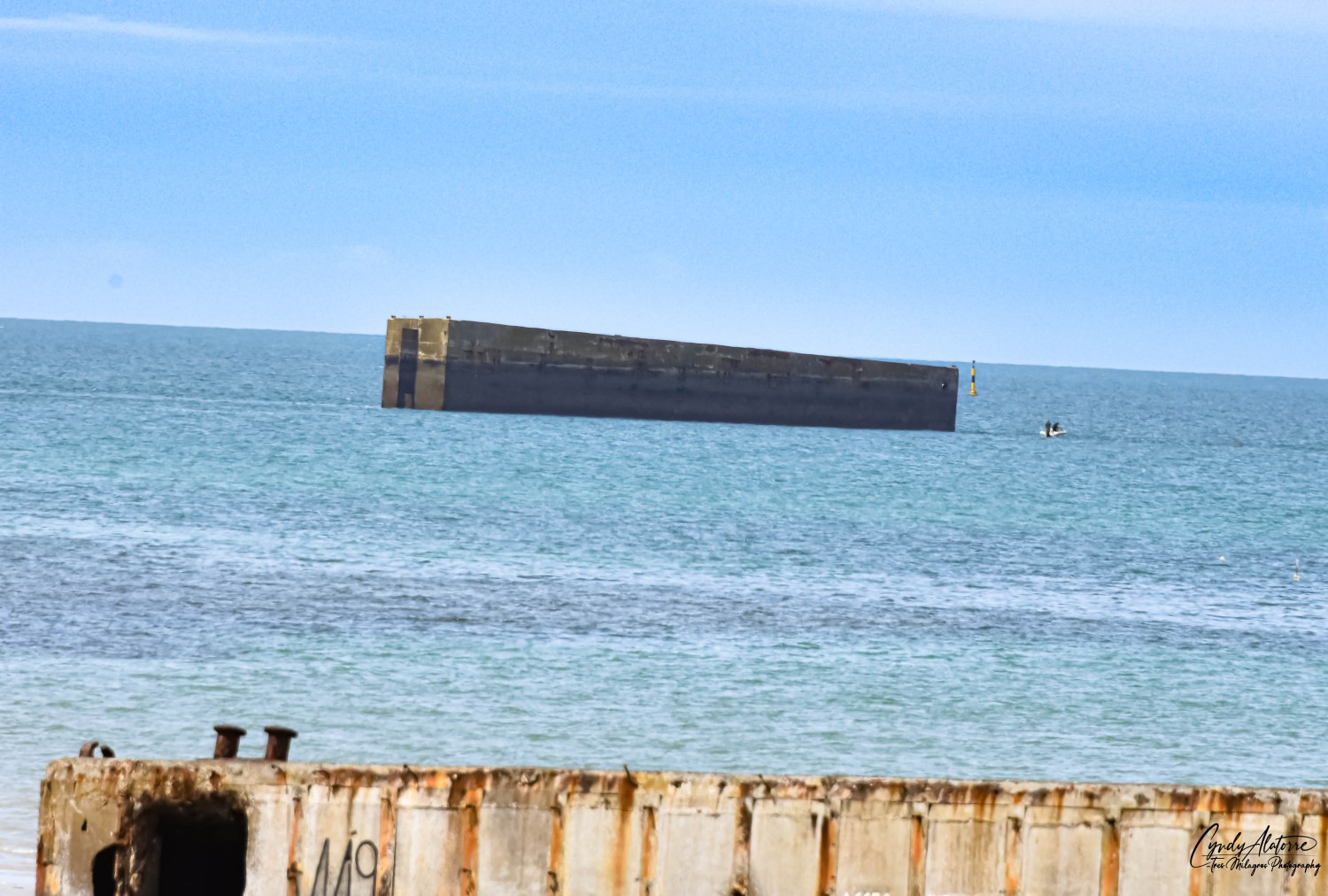
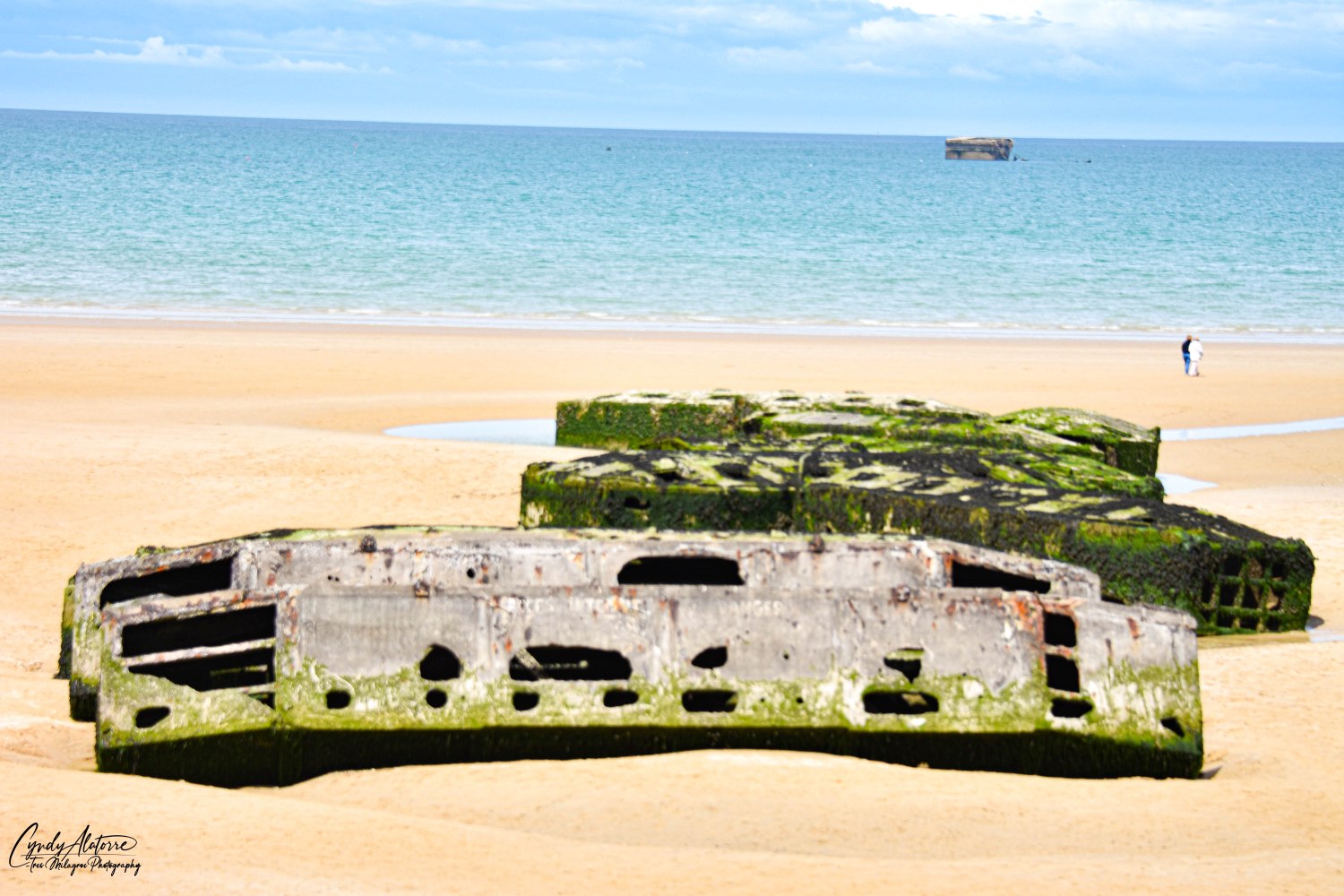
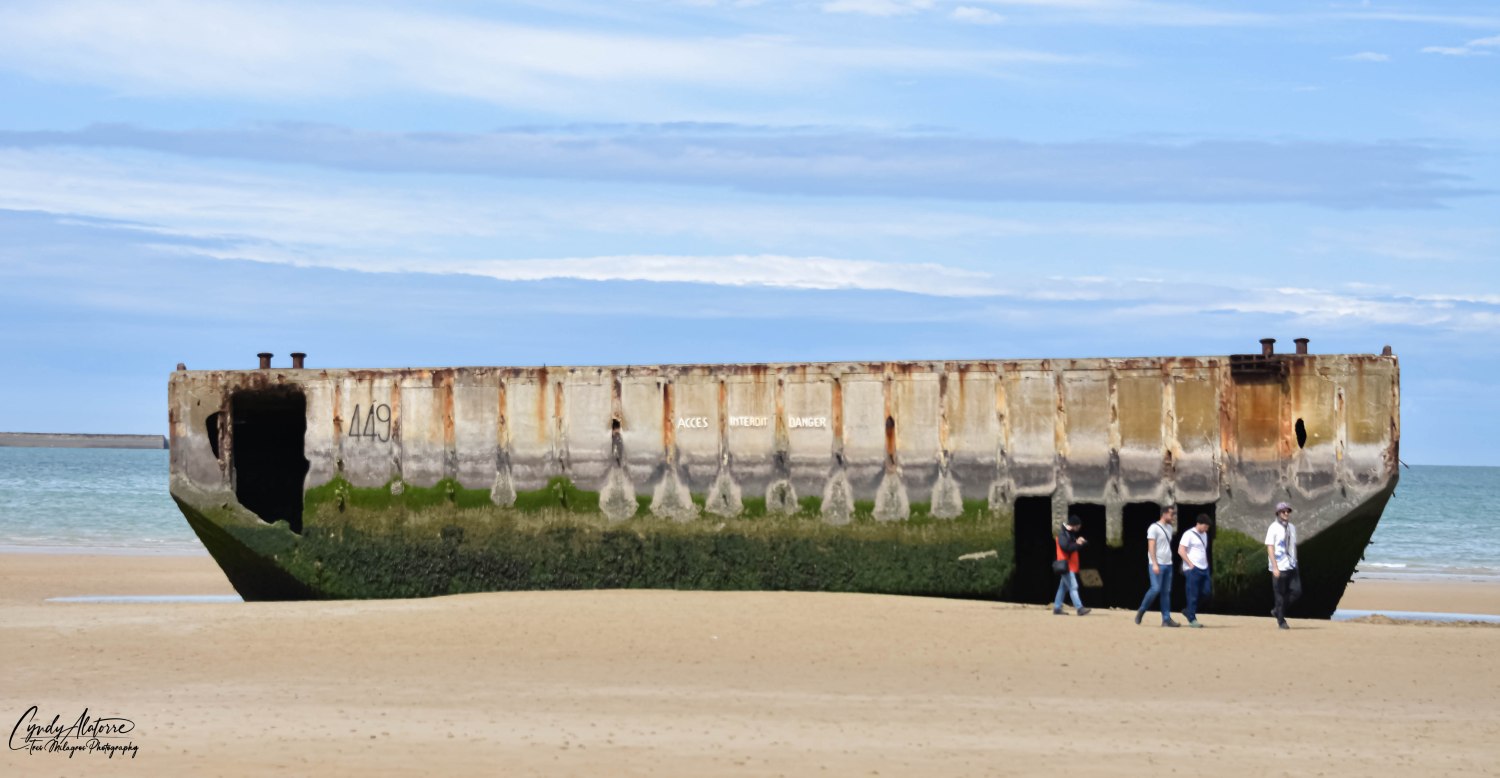
British engineers designed these portable harbors in complete secrecy between 1943-44 and utilized 50,000 workers across the British Isles to construct these harbors. As you will see in the photos that follow each of these sections were large, weighed 6,000 tons a piece and were 60ft high, 204ft long, 62ft wide.  In total approximately 250 of these large sections were used to construct the two harbors and each one was towed across the channel by boat to use in the construction of the harbor.  Can you imagine designing these large floatable sections then transporting approximately 250 of them across the English channel over to France?

It was thought that “Mulberry B” would be used for three months however, it proved to be an efficient and significant hub for the allied forces and was instead utilized for approximately five months. During its time in service a staggering 2.5 million men, 500,000 vehicles and four million tons of supplies arrived via the port at Arromanches.  In a nod to Winston Churchill for his valiant leadership and conception of this idea, the Mulberry harbor B became known as Port Winston.

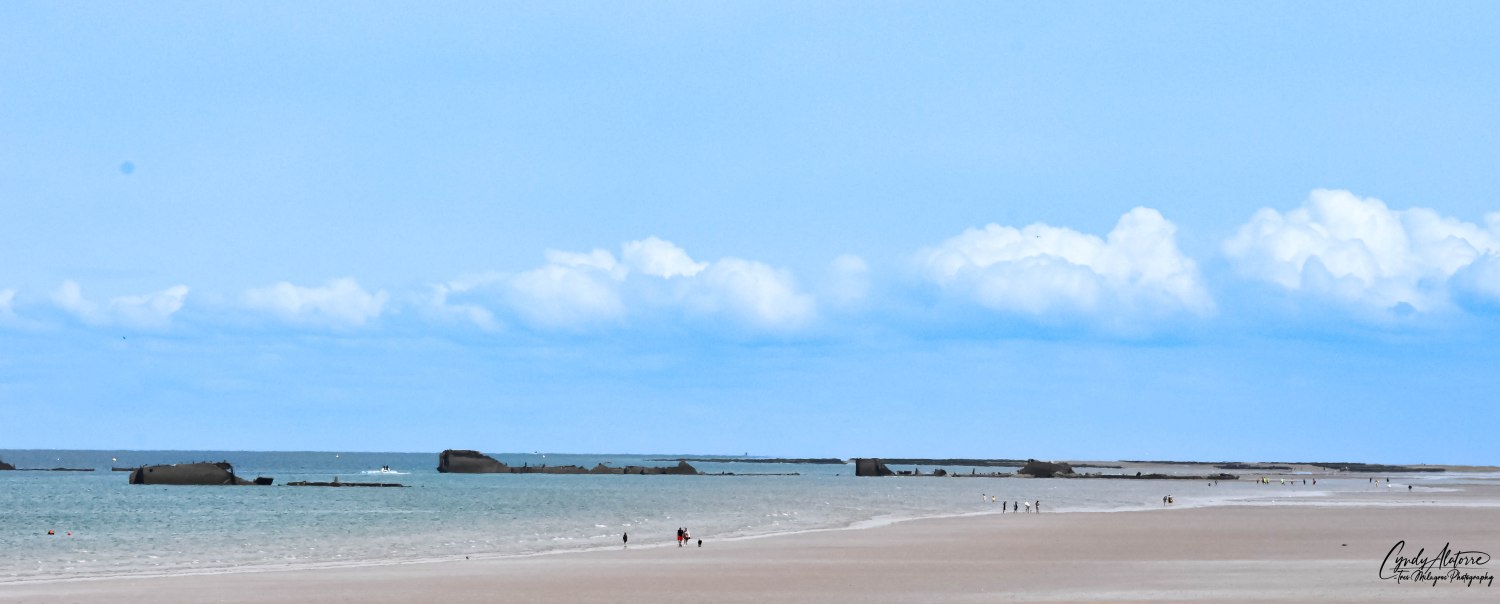
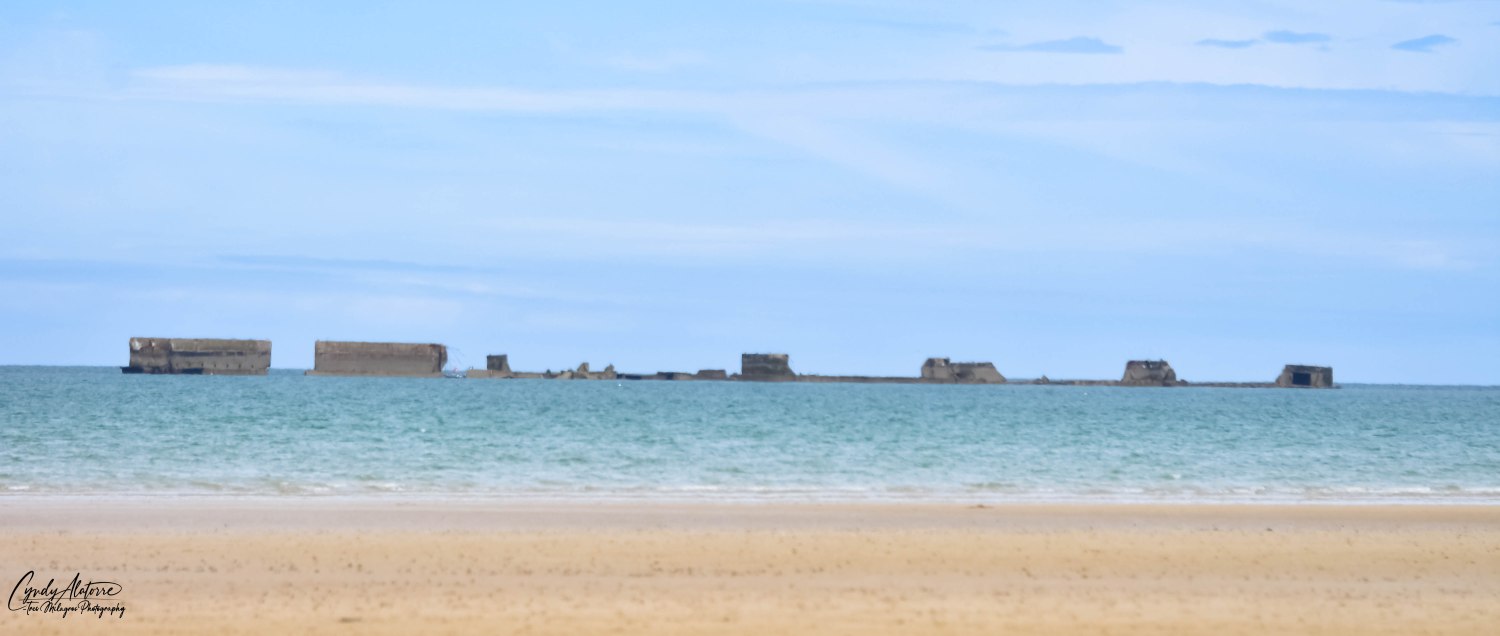
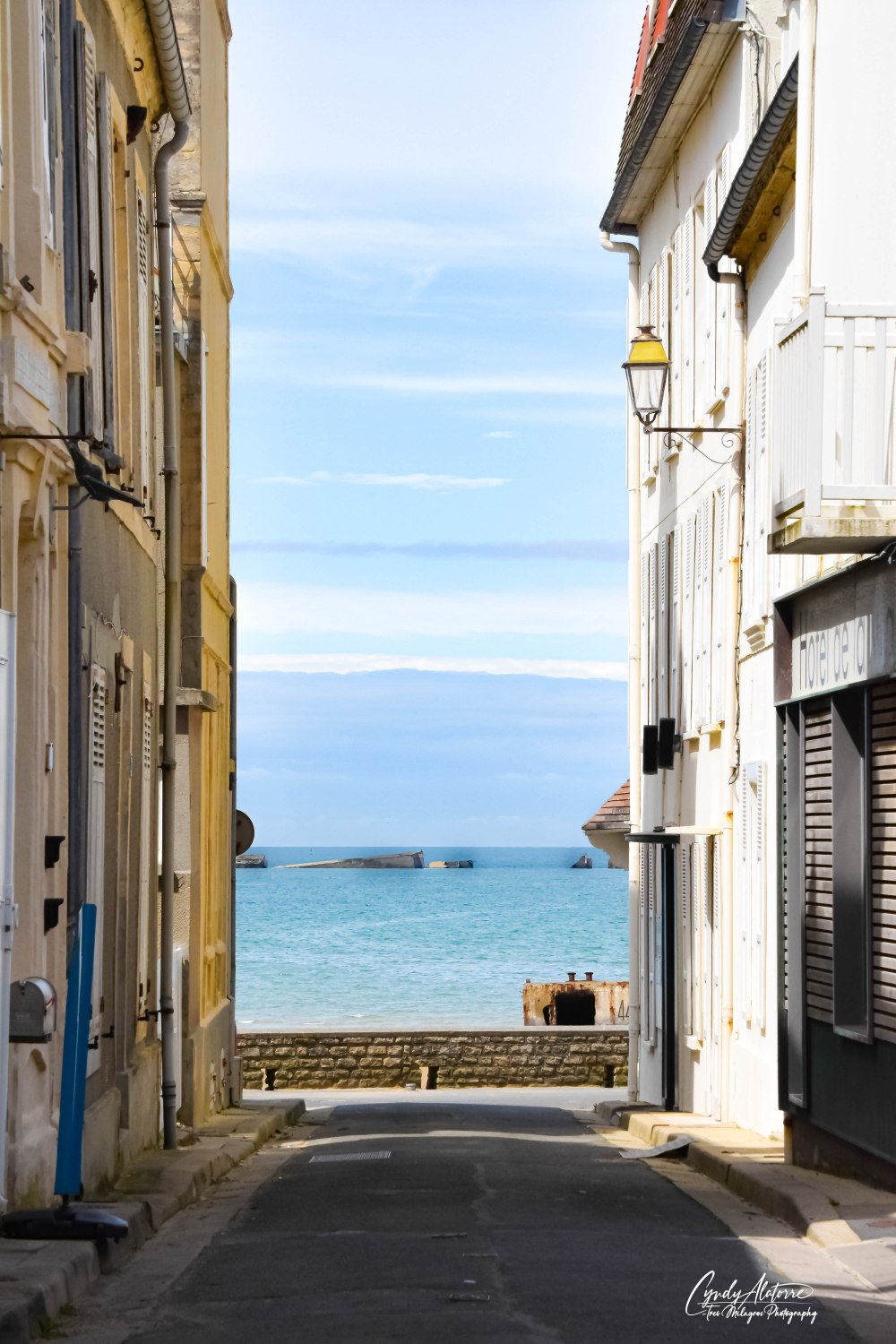
Sometime after the war, several units were towed to different locations for other projects while a good number of them still remain at Gold Beach and serve as a breakwater for the area and natural monument to educate future generations and remind them of what occurred there. When looking at the pictures that will be at the end of the post, notice how small some individuals walking by them are and it’ll put their size in perspective. And note how many are still visible and that a good number are still lurking below in the water.

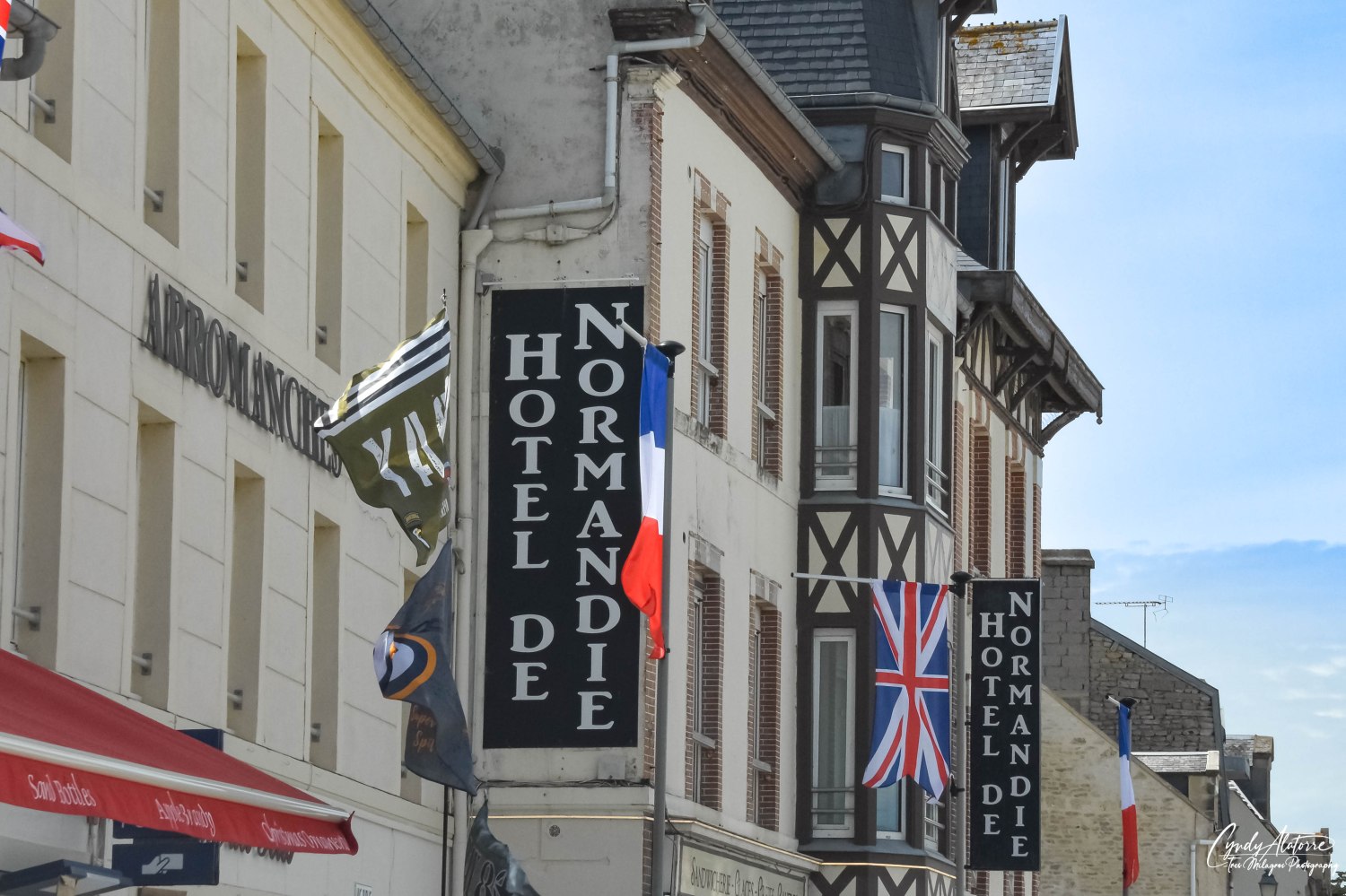
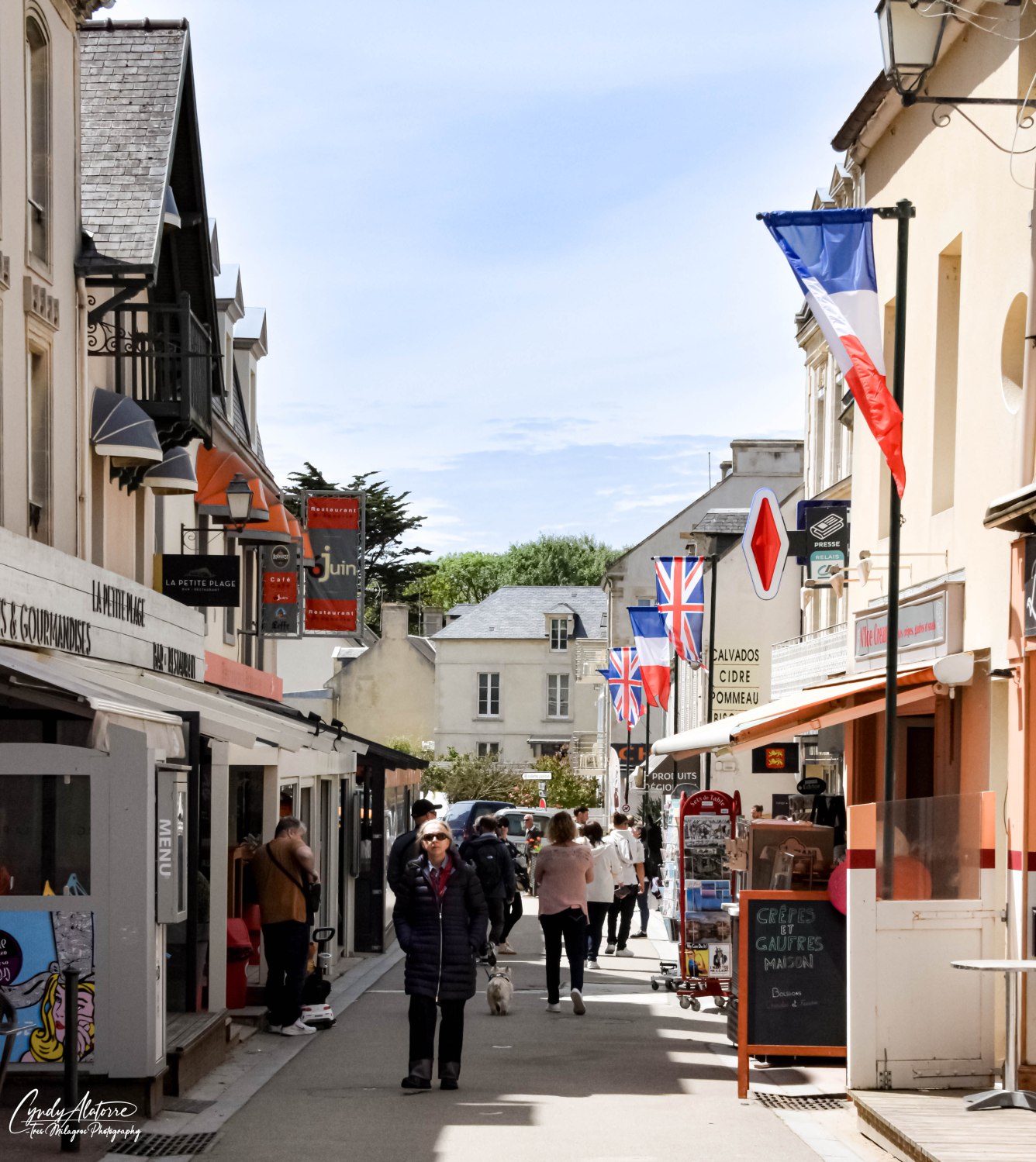
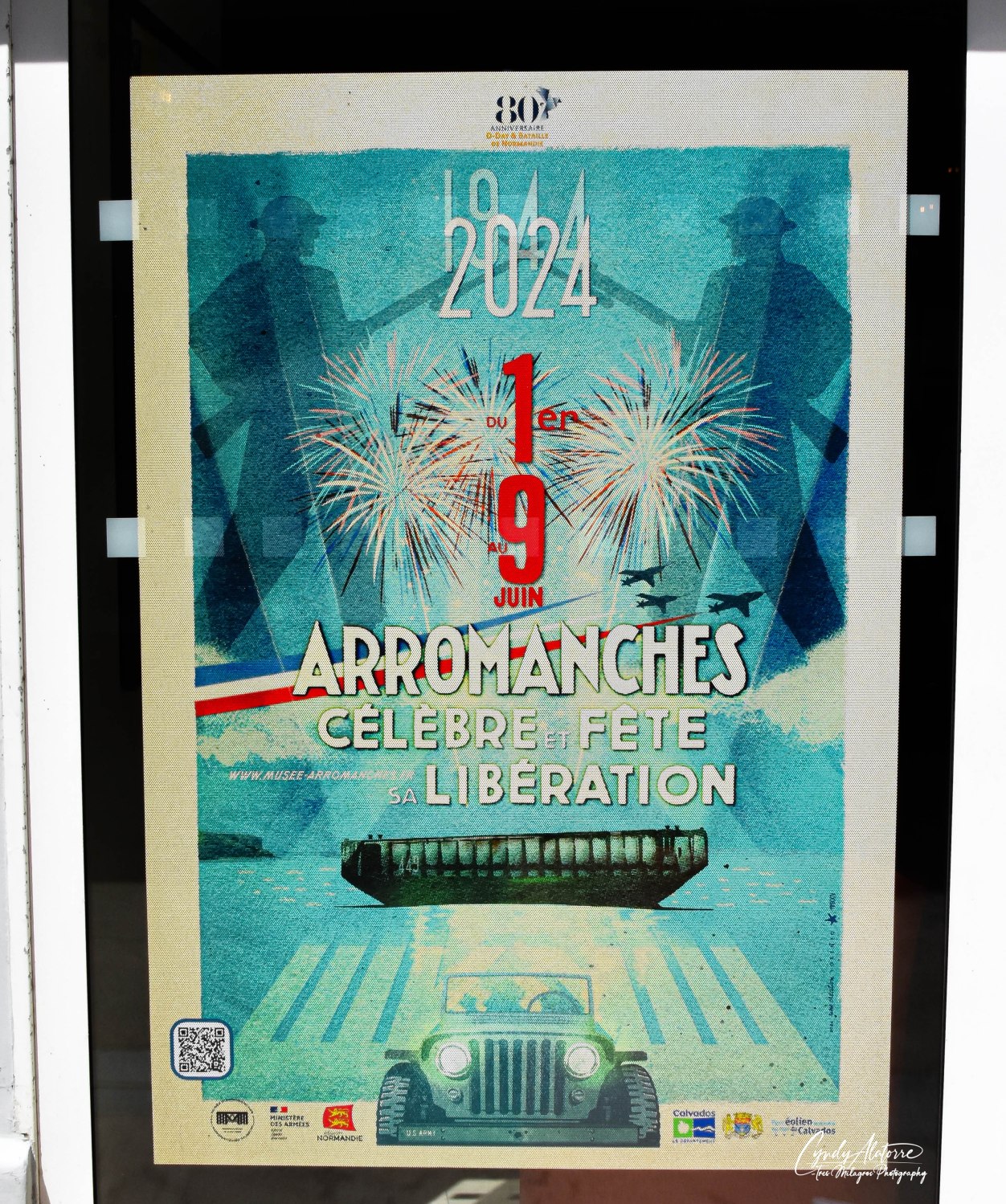
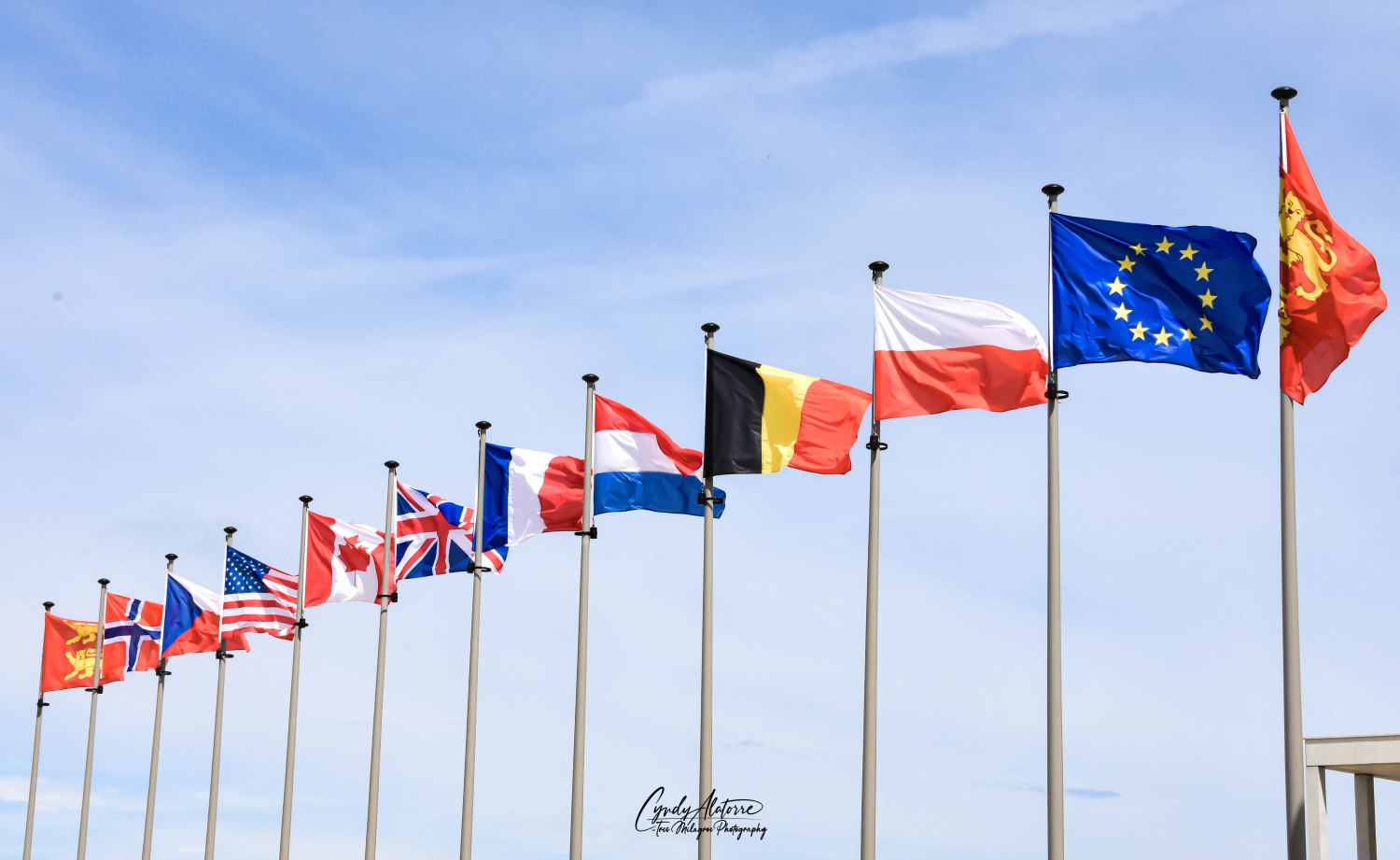
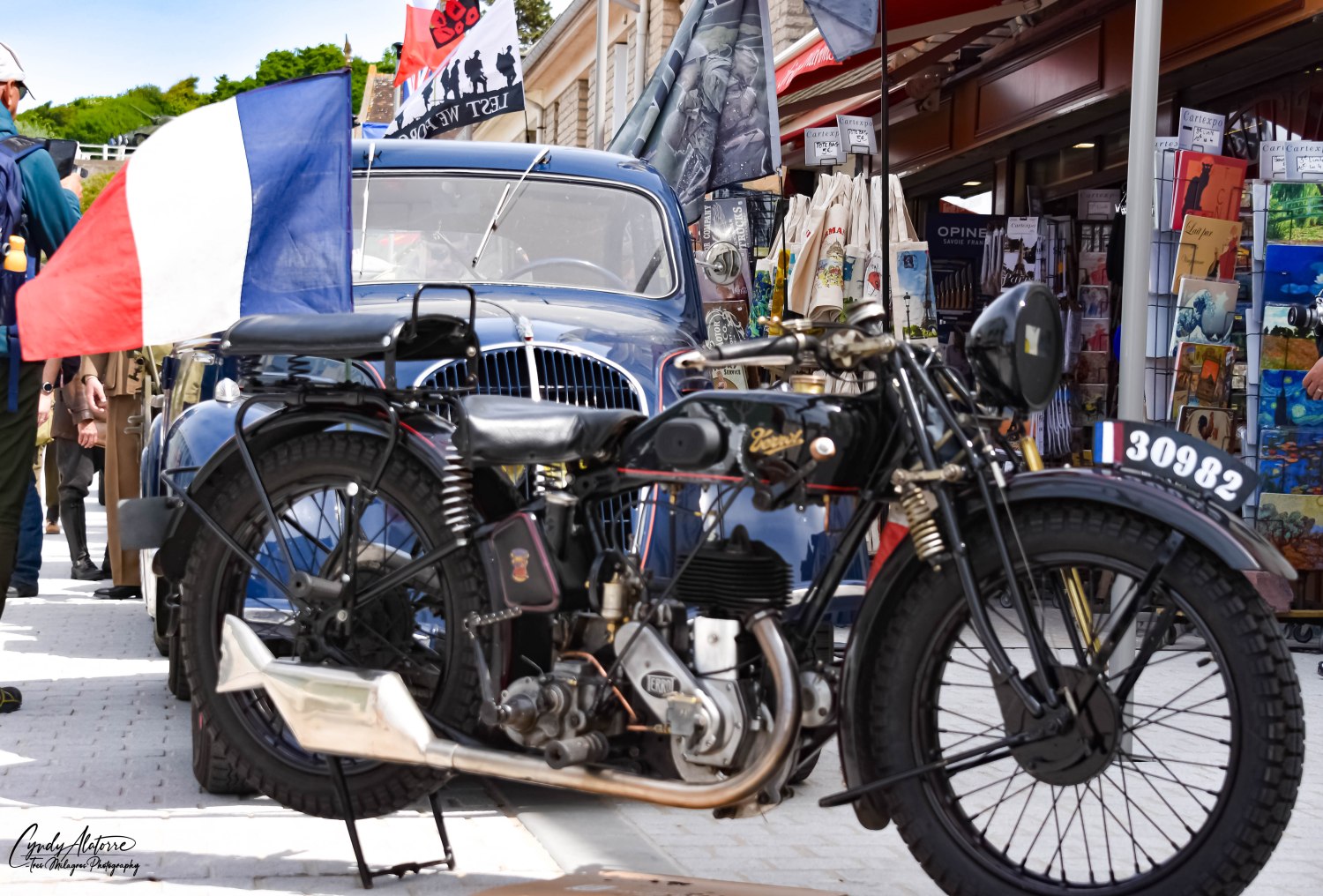
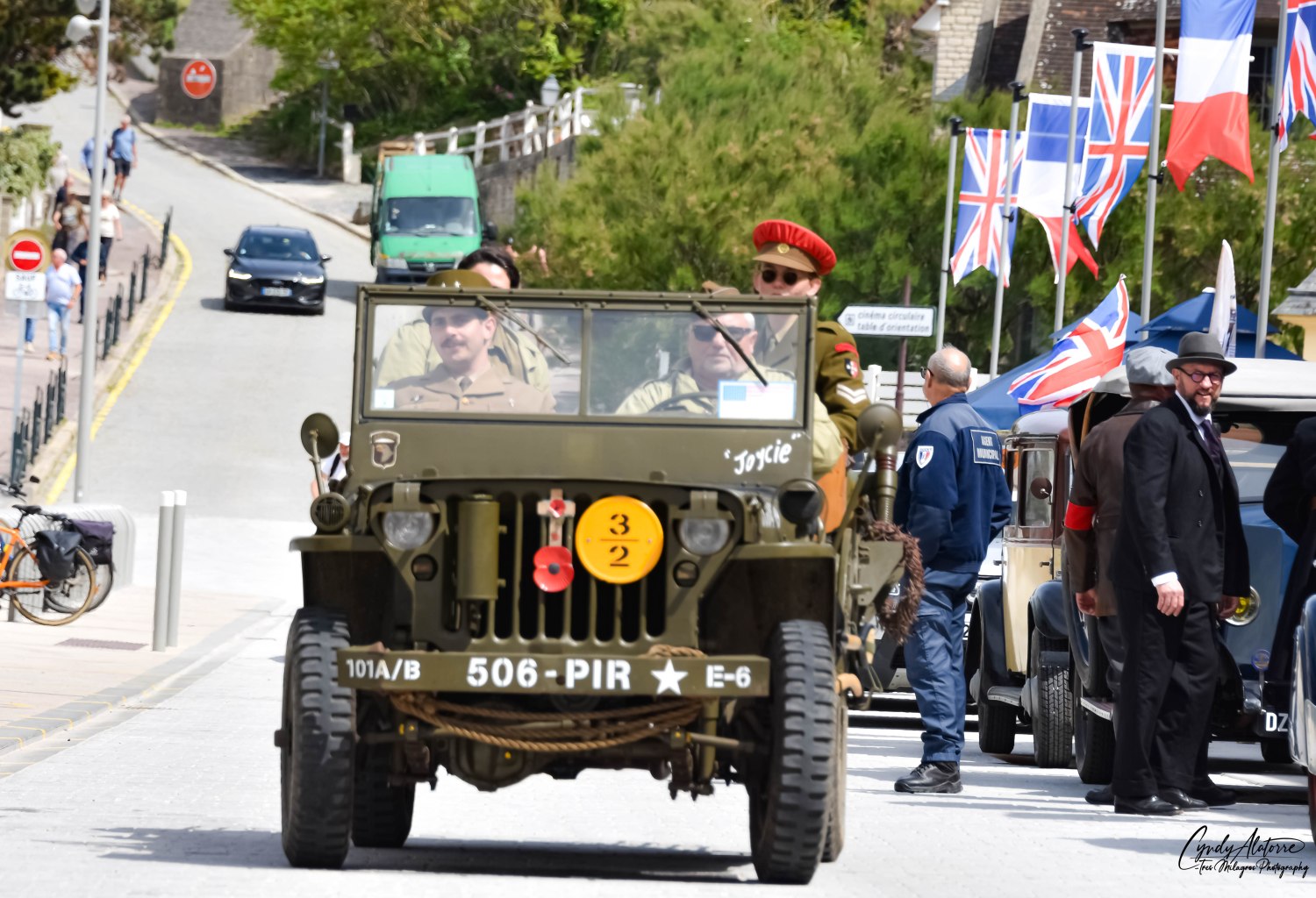
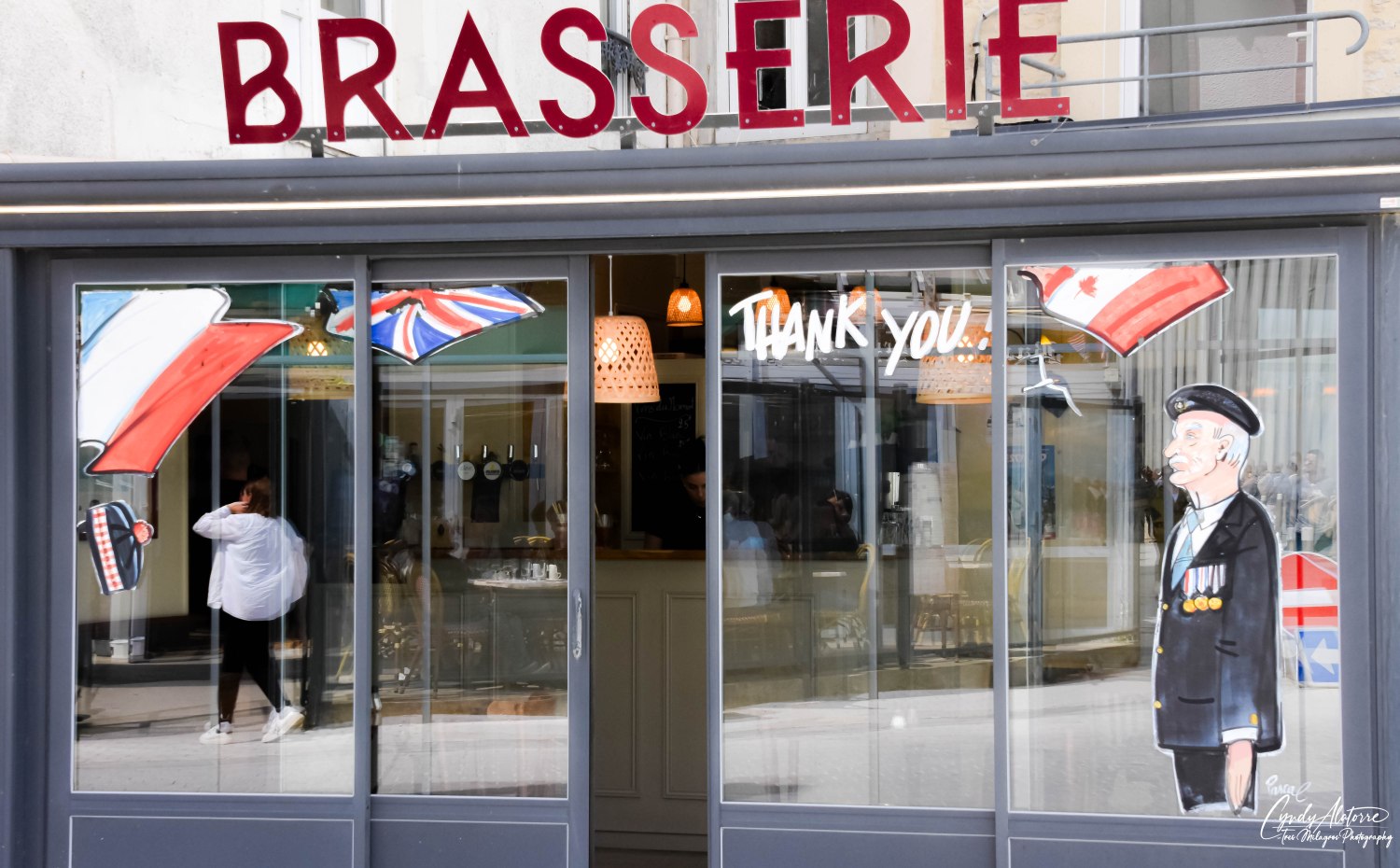
Now fast forward almost 80 years later and as you drive into this proud shore community you can see that it has not forgotten it’s past nor the sacrifices made by so many for the greater good of all. Navigating through the city streets, you are met with homes that proudly fly the American and French flags and some that also include the British and Canadian flags too. Imagine the fourth of July in your neighborhood and seeing a good number of flags being flown. Arromanches does the same thing but all year round. 

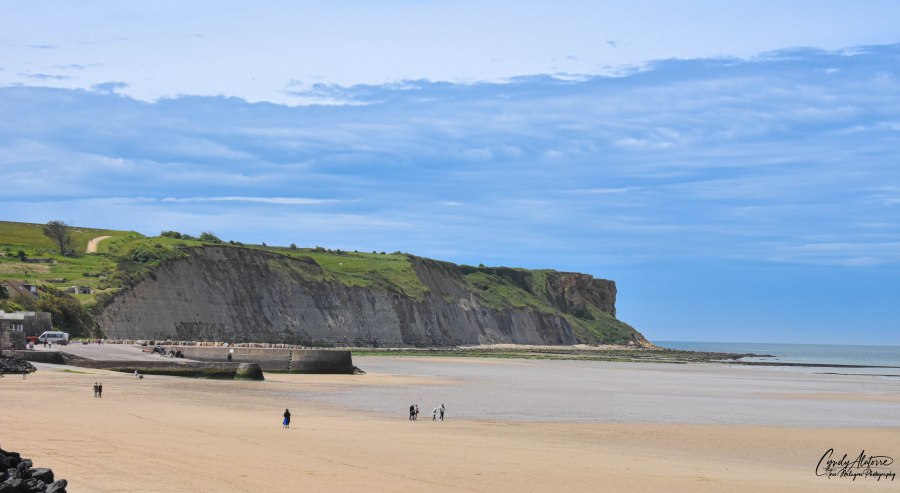
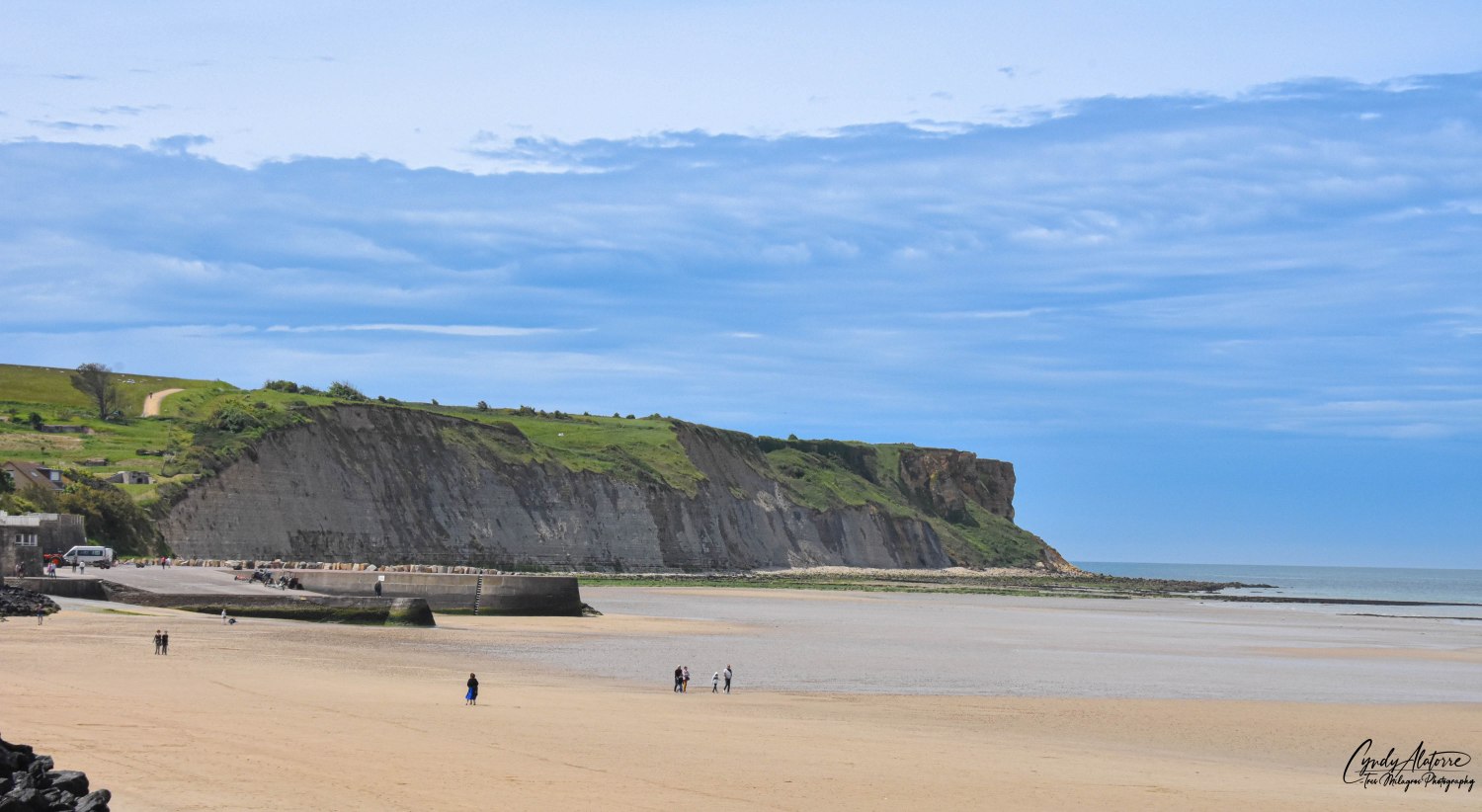
Despite all its somber history, Arromanches is surrounded by beautiful and scenic cliffs. While walking on the generous beach landscape, you can stroll on the shore and appreciate the beauty of the coastline, feel the cool sea breeze blowing against your face or take in the historical weight of this area. The drive through the scenic countryside is very appealing and it is probably a stark contradiction to how the landscape might of looked some eighty years ago on D-Day.  Like it’s neighboring towns, Arromanches has it place in history and contributed to one of the greatest invasions that changed the course of World War II.

So once again, traveling has proved to be one of my best teachers. I am appreciative to the local residents who graciously welcome visitors to their small town, grateful for the opportunity to be able to see this and other historical places that changed history and lastly thankful for those who keep telling the story of Normandy so that we can avoid the same mistakes and hopefully not have history repeat itself again.

Until next time, we’ll keep moving on and see where we go via El Camino Thru My Lens.